Site Architecture and URL Structure That Doesn't Fight Your SEO

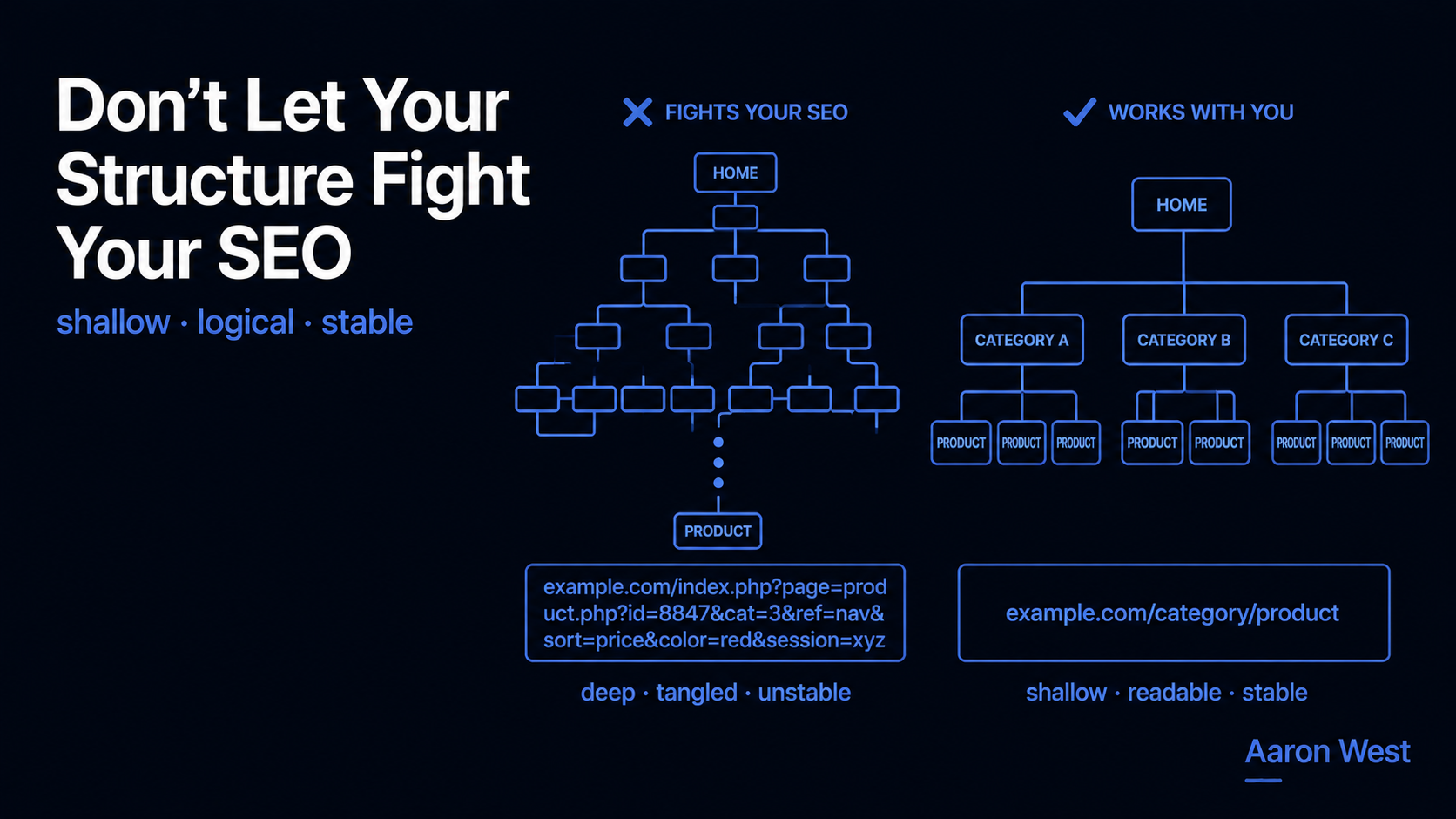
Table of Contents
Site architecture is how your pages are organised and linked together, and URL structure is the addresses that result from it. Together they decide how easily both people and search engines can understand and navigate your store. Good architecture is shallow, logical, and stable: important pages reachable in a few clicks, a structure that mirrors how customers actually think about your catalog, and URLs you never have to change. Most architecture damage to SEO is self-inflicted, pages buried too deep, messy URLs, and structures that keep changing.
This is a core of the Platforms & Tech Stack cluster. Architecture is the invisible foundation: nobody notices when it's good, everybody suffers when it's bad, and the damage is slow and hard to trace back to its cause.
What these two things actually are
Site architecture is the hierarchy and linking of your pages, the way home leads to categories, categories to subcategories, subcategories to products, and how everything links to everything else. It's the skeleton of the store.
URL structure is the set of addresses that hierarchy produces, the actual text in the address bar, like /category/subcategory/product. The URLs are the visible expression of the skeleton. Get the skeleton right and clean URLs tend to follow; build a tangled skeleton and you get tangled URLs that are painful to fix later. The two are really one decision viewed from two angles.
Why it matters, for machines and for people
Search engines understand your site largely through its structure and its internal links. A logical hierarchy tells them what's important and how things relate, the pages you link to most, and place highest in the structure, are read as your most important pages. A page buried many clicks deep, with few links pointing to it, signals "not important," and a page that's hard for a crawler to reach is hard for it to rank. The same internal-linking logic is what builds topical authority through clusters, structure isn't separate from SEO, it's a large part of it.
And exactly the same is true for people. A shallow, logical structure means customers find what they want in a few clicks; a deep, confusing one means they give up. Architecture is a conversion lever and an SEO lever at the same time, which is why getting it right pays twice and getting it wrong costs twice.
The principles that hold up
Four principles cover most of what good architecture needs:
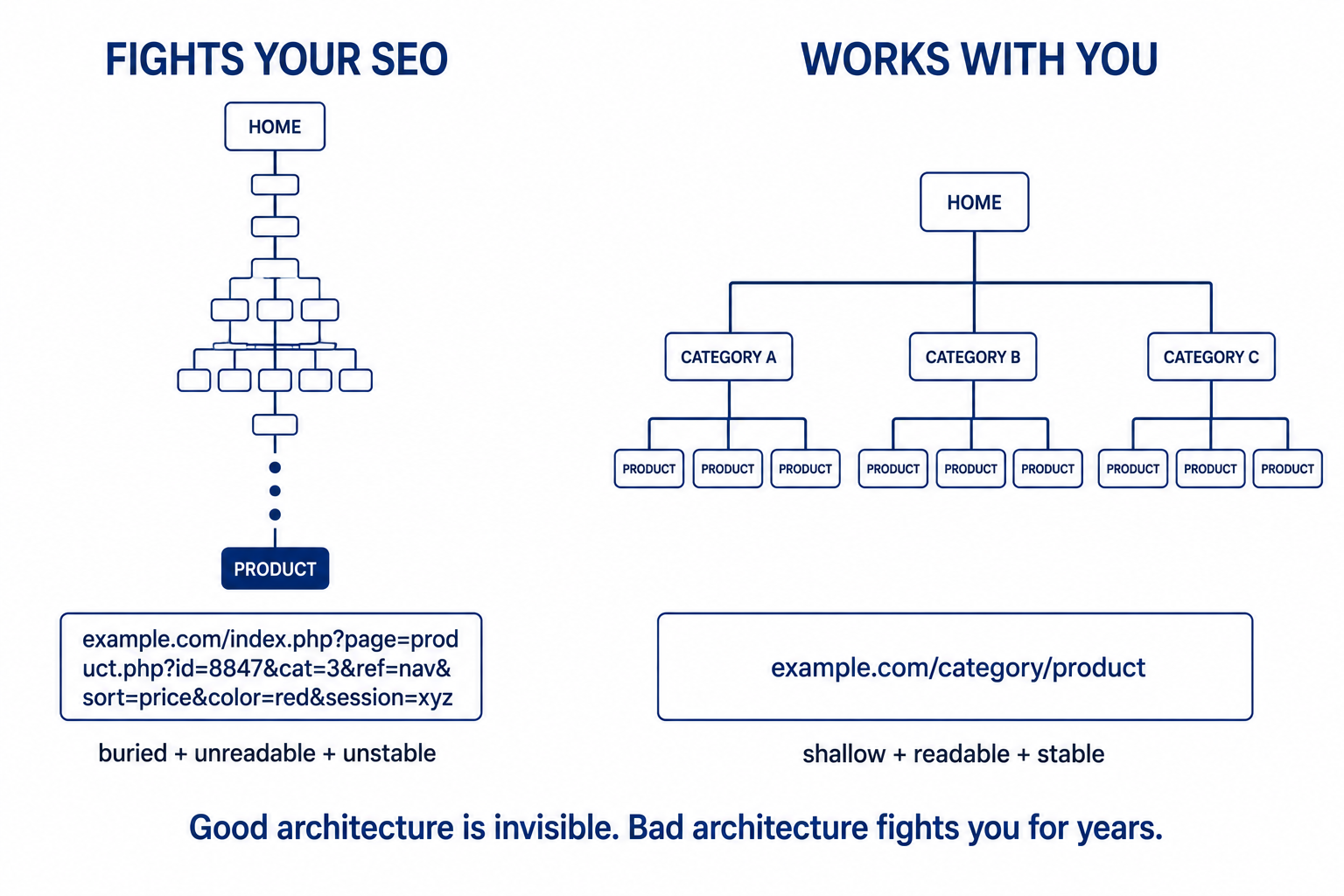
- Shallow, not deep. Important pages should be reachable in a few clicks from the home page. Don't bury products five layers down where neither customers nor crawlers will dig.
- A logical hierarchy that mirrors how customers think. Group things the way a shopper expects to find them, not the way your internal org chart or supplier list happens to be arranged. The structure should match the customer's mental model, which ties directly to merchandising and taxonomy.
- Clean, readable, stable URLs. Human-readable words, not strings of parameters and IDs; logical and lowercase-hyphenated; and above all stable. A URL you change is a URL you have to redirect forever.
- Internal linking that reflects the structure. Link the way the hierarchy implies, cornerstone pages and their supporting pages pointing to each other, so both people and engines can see what relates to what. This is the exact cluster logic this very hub is built on.
The mistakes that fight your SEO
Most architecture damage is one of a small set of self-inflicted wounds:
- Burying pages too deep. Products reachable only after many clicks signal unimportance to engines and exhaust customers.
- Messy URLs. Addresses stuffed with parameters, IDs, and gibberish are unreadable to people and unhelpful to engines, and they're brittle.
- Changing URLs without redirects. This is the re-platforming killer in miniature: change a URL, fail to set a 301 redirect, and you throw away the value that address had earned.
- Duplicate paths to the same page. The same product reachable under several different category URLs creates duplicate-content confusion, the engine can't tell which version is canonical, and the value splits across them.
- Structure built around the company, not the customer. Organising the site to match how your business is internally structured, rather than how customers shop, quietly costs you findability and sales.
None of these throws an error. They just slowly suppress your rankings and frustrate your customers while you wonder why a well-built store underperforms.
The stability rule
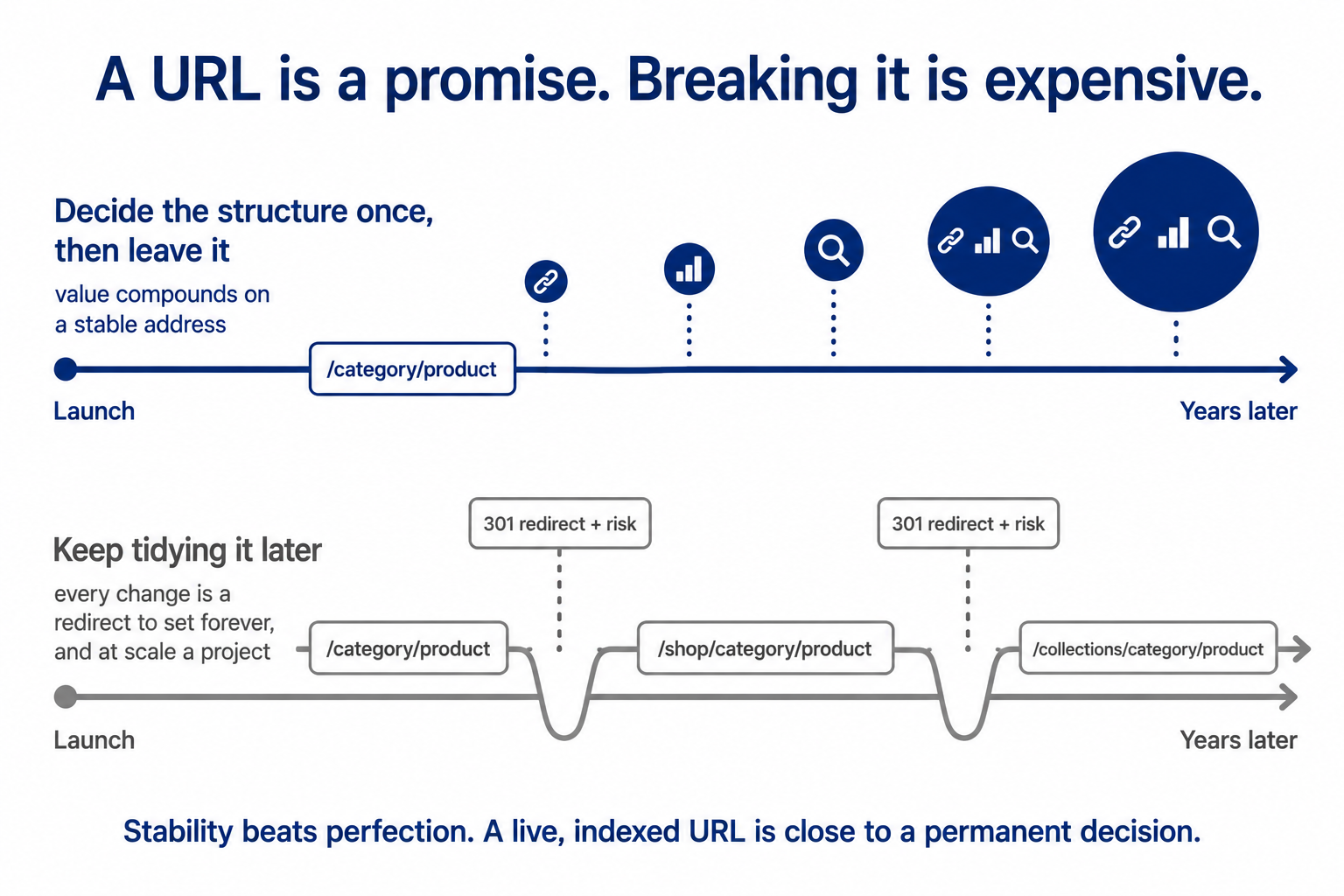
Of all of this, one rule deserves special weight: decide your URL structure deliberately at the start, because changing it later is genuinely costly. Every URL change is a redirect to set and a risk to manage, and at scale that becomes a project in itself. Slugs and structure are close to permanent decisions, a URL is a promise that an address will keep working, and breaking that promise is expensive.
This is why I treat slugs as fixed once chosen, even when a "better" slug occurs to me later: the cost of changing a live, indexed, linked-to URL almost always outweighs the marginal improvement. Decide the structure thoughtfully up front, then resist the urge to keep tidying it. Stability is worth more than perfection here.
The honest note
You don't need a flawless structure on day one, and chasing one can paralyse a launch. What you need is a sane one: shallow, logical, and stable, good enough that you won't be forced to rip it up later. Because retrofitting architecture onto a grown store, re-nesting categories, fixing URLs, untangling duplicate paths, is one of the more painful jobs in e-commerce, full of redirects and risk. A little deliberate thought at the start saves a great deal of expensive surgery later.
What this comes down to
Good site architecture is invisible: pages easy to find, URLs that read like plain words and never change, a structure that matches how customers actually think about what you sell. Bad architecture is invisible too, until you notice it's been quietly fighting your rankings and frustrating your customers for years, and tracing the cause back through everything else.
Get the skeleton right early, shallow, logical, stable, because it's the one part of your store that's genuinely painful to fix later. Everything else you can iterate on. The structure underneath, you mostly get one good chance to set.
A few common questions
What's the difference between site architecture and URL structure? Site architecture is how your pages are organised and linked, the hierarchy from home to categories to subcategories to products, and how everything links together. URL structure is the set of addresses that hierarchy produces (like /category/subcategory/product). The architecture is the skeleton; the URLs are its visible expression. Get the skeleton right and clean URLs tend to follow; build a tangled one and you get tangled, hard-to-fix URLs.
Why does site architecture affect SEO? Search engines understand your site through its structure and internal links: a logical hierarchy tells them what's important and how pages relate, while a page buried many clicks deep with few links signals "unimportant" and is harder to crawl and rank. The same is true for people, a shallow, logical structure means customers find things fast, a deep confusing one means they give up. Architecture is a conversion lever and an SEO lever at once, so it pays twice when right and costs twice when wrong.
What makes a good URL? Human-readable words rather than parameters and IDs, logical, lowercase-hyphenated, and above all stable, because a URL you change is a URL you must redirect forever. A clean, readable URL helps both people and search engines understand what the page is, and a stable one preserves the value (links, rankings, indexing) that the address accumulates over time.
What are the most common architecture mistakes? Burying important pages too deep; URLs full of parameters and gibberish; changing URLs without setting 301 redirects (throwing away earned value); duplicate paths to the same page (creating duplicate-content confusion); and structuring the site around your internal org chart instead of how customers shop. None throws an error, they just quietly suppress rankings and frustrate customers, which is why a well-built store can underperform for reasons nobody traces back to the structure.
You should also read:
Re-Platforming Without Torching Your SEO and Your Sanity
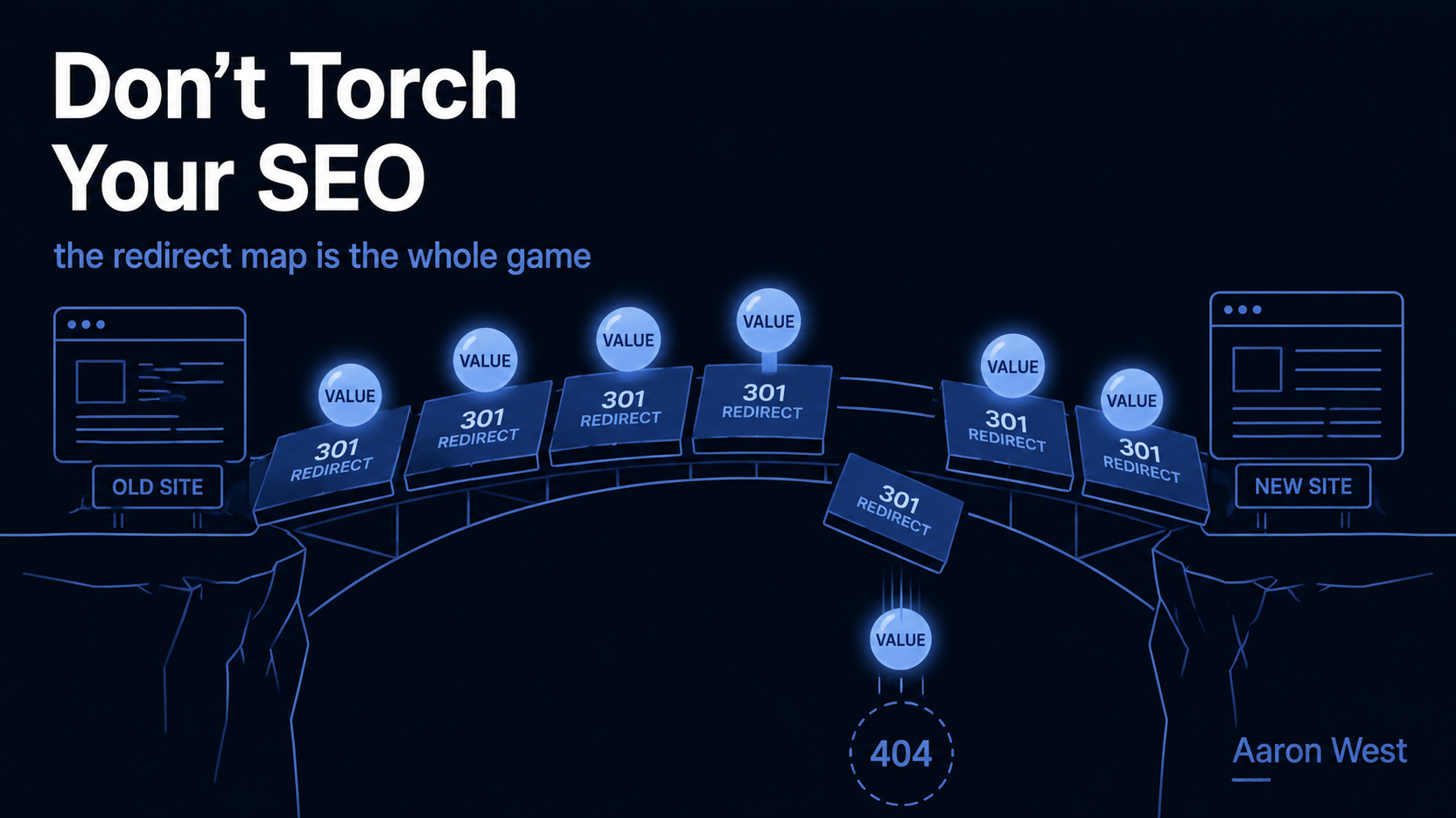
Re-platforming, moving your store onto a new platform, is one of the riskiest projects in e-commerce, and the damage almost always shows up in the same place: the SEO you spent years building, gone overnight because the URLs changed and nothing told search engines where…
Continue reading...
Why Your Product Images Are Slowing Down Your Conversion Rate
The single biggest thing slowing down your online store is almost certainly the very thing you put there to sell the product: the images. On a typical e-commerce page, images make up more than half of everything the browser has to download, and unoptimised product…
Continue reading...
AI vs Machine Learning vs Deep Learning: The Distinction That Actually Matters
Artificial intelligence, machine learning, and deep learning are not three competing things you choose between. They are three nested ideas, each one a more specialised part of the one before it. AI is the big outer goal: machines doing things that would normally need human…
Continue reading...