Multichannel Without Losing Your Margin or Your Mind

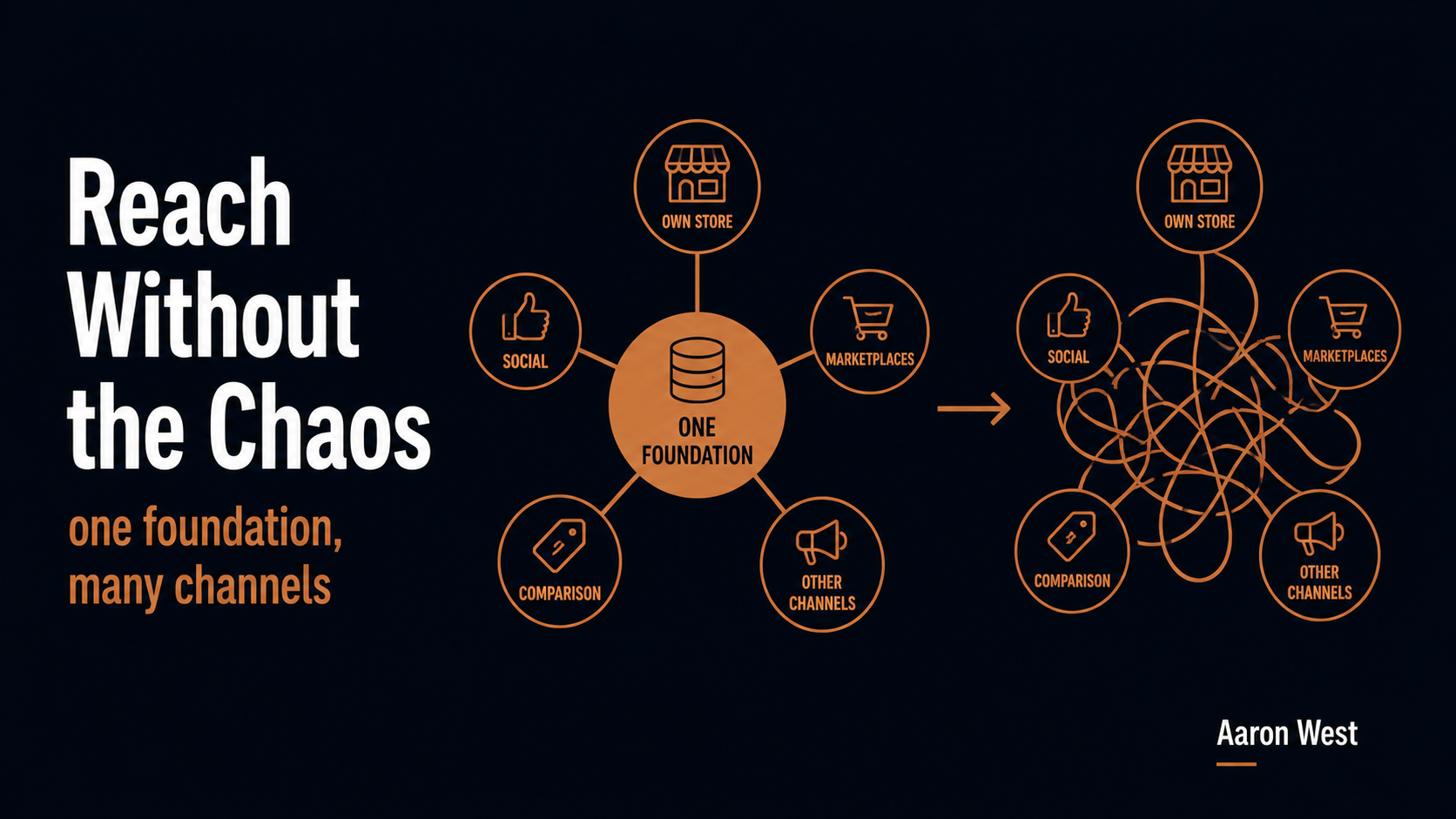
Table of Contents
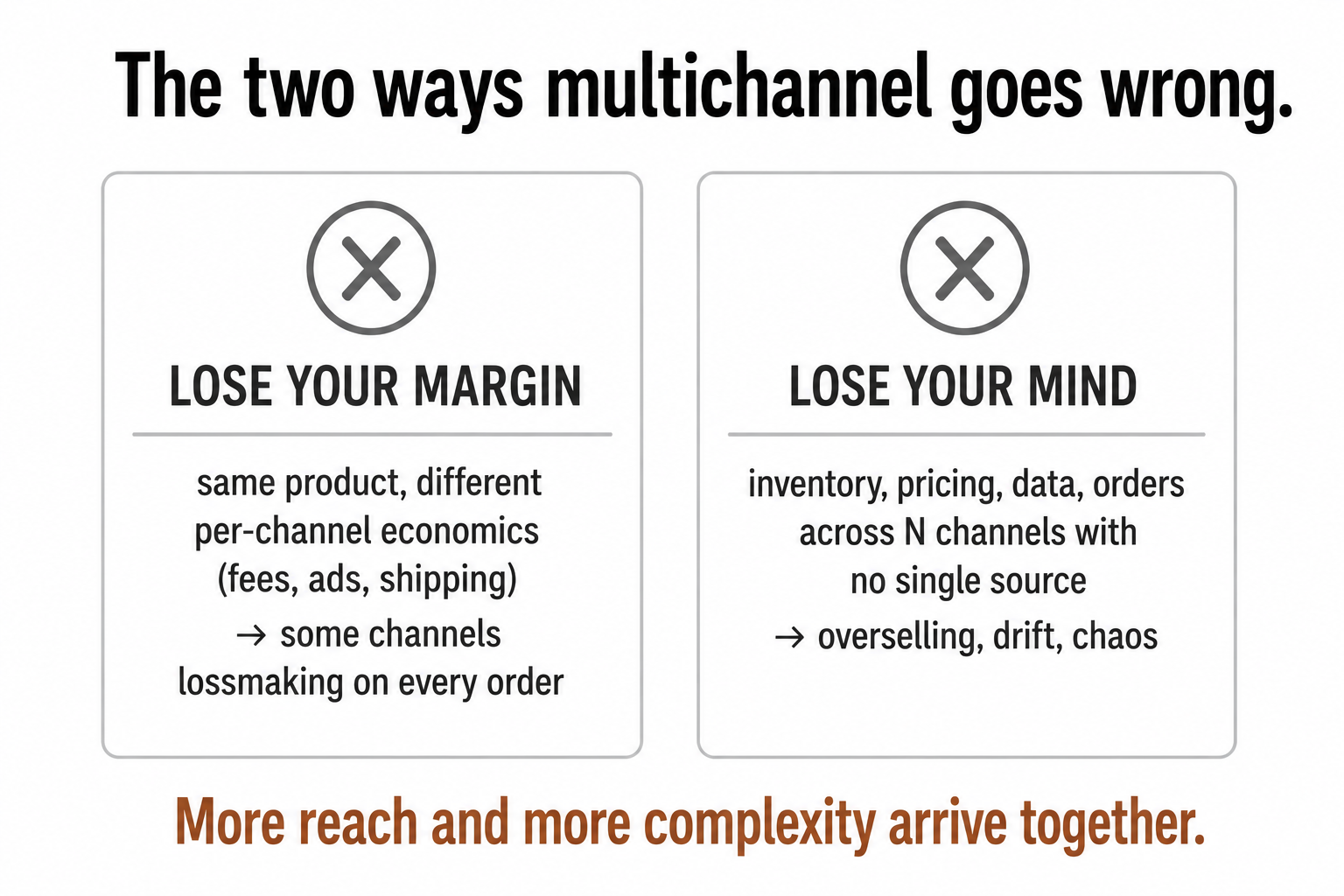
Selling across multiple channels multiplies your reach and your complexity at the same time, and it goes wrong in two predictable ways. You lose your margin: every channel has different costs and fees, so selling the same product everywhere without per-channel margin awareness quietly bleeds money. And you lose your mind: managing inventory, pricing, data, and orders across many channels without one source of truth produces overselling, drift, and chaos. Multichannel only works when it sits on one operational foundation that feeds every channel, rather than each channel being run as a separate manual business.
This closes the Marketplaces & Multichannel pillar's core, under the cornerstone that own store versus marketplace is a reach-versus-control trade-off. The cornerstone argued for running more than one channel. This is the piece about doing it without the wheels coming off.
The promise and the trap
The case for multichannel is the cornerstone's case: more channels mean more reach, more places a customer can discover and buy from you. That's genuinely good, and it's why businesses expand beyond their own store.
The trap is that every channel you add multiplies the operational surface, not just the reach. Another set of listings to maintain, another fee structure, another set of rules, another inventory to keep in sync, another stream of orders to fulfil. Add channels naively and you haven't built one bigger business; you've built several small ones that compete for the same stock and the same slice of your attention, and that's where both failure modes live.
Losing your margin
The first failure is financial, and it's quiet, which is what makes it dangerous. Each channel has different economics: a marketplace takes fees, some channels demand ad spend to get seen, shipping terms vary. So the same product can be healthily profitable on your own store and lossmaking on a marketplace once the fees come off, and if you sell everywhere at the same price and the same strategy without per-channel margin awareness, some channels are quietly losing money on every single order while you celebrate the rising revenue.
The discipline is unglamorous and decisive: know your true margin per channel, and let it drive where and how you sell each product. Some products belong on some channels and not others. Some need a different price on a marketplace to stay profitable after fees. Reach you lose money on isn't growth; it's subsidised volume, and revenue that grows while margin shrinks is a trap that looks like success right up until it isn't.
Losing your mind
The second failure is operational, and it's the one that produces the dramatic disasters. Inventory is the classic: sell the last unit on two channels at once because the counts aren't synced, and you've oversold, which means cancelling an order and breaking a promise, the worst day from the inventory work, now multiplied across channels. Add pricing that drifts out of step between platforms, product data that's inconsistent from one channel to the next, and orders scattered across half a dozen dashboards, and you've got a business that's exhausting to run and easy to get wrong.
Without one source of truth underneath, multichannel is manual chaos that gets worse with every channel you add, because the work doesn't add up, it multiplies.
The one foundation that makes it work
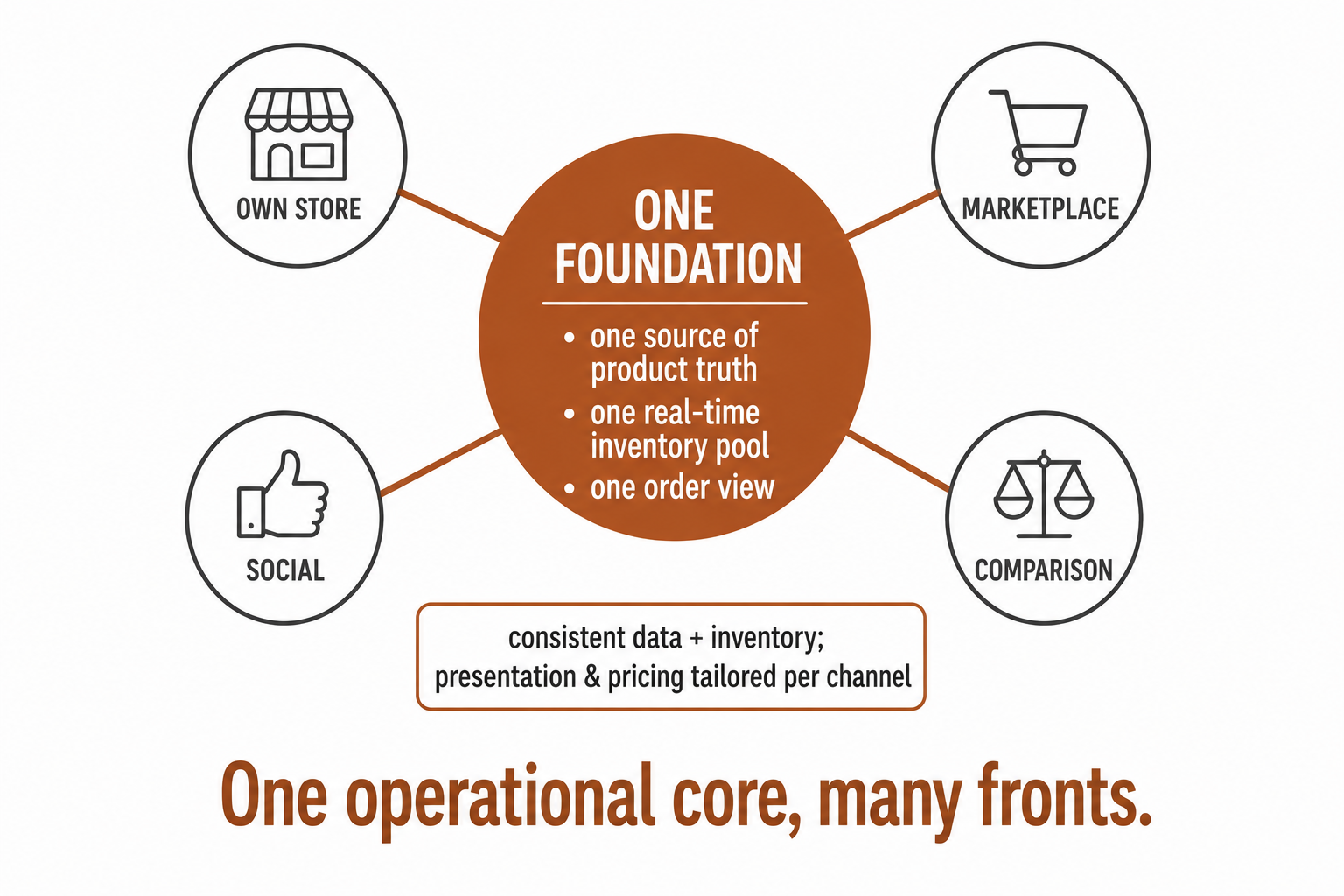
Here's the resolution, and it's the payoff of the catalogue pillar applied to channels: multichannel works when it sits on a single operational foundation feeding many fronts.
- One source of truth for product data. The clean, structured catalogue feeding consistent listings to every channel through feeds, so you maintain the product once and it's right everywhere, rather than editing the same product in six places.
- One real-time inventory pool, synced across all channels. So selling a unit anywhere decrements it everywhere, instantly, and you can't oversell. This is the inventory discipline and the event-driven sync that should be automated, the textbook high-frequency, low-judgment, high-downside automation.
- One place orders land. So fulfilment isn't a scavenger hunt across dashboards.
Multichannel, in other words, is an integration problem before it's a marketing one. The businesses that do it well aren't manually replicating a store across platforms; they're running one operational core that presents itself on many channels. Get that core right and adding a channel becomes configuring an output, not standing up another manual business.
One nuance that mirrors the feeds principle: the data and inventory should be consistent (one truth, everywhere), while the presentation and sometimes the pricing should adapt per channel (because channel economics genuinely differ). One source, many tailored outputs, exactly the model the whole catalogue pillar argued for.
The complexity budget
A closing discipline that follows from all of this: every channel has a real, ongoing management cost, even on a good foundation. So adding a channel is only worth it when its reach genuinely exceeds its complexity and margin cost. More channels is not automatically better, the same "more isn't better" lesson that runs through the catalogue and merchandising work, and a business spread thin across eight half-managed channels usually does worse than one focused on three it runs well.
Pick channels deliberately. Sit them on one clean foundation. Automate the foundation, the sync, the feed updates, the order routing are textbook automation, while the channel strategy, which channels, which products, what margin, stays a human judgment. That's how you get the reach without the chaos.
What this comes down to
Multichannel multiplies reach and complexity in equal measure, and the businesses that win aren't the ones on the most channels. They're the ones running their channels off one clean foundation: one source of product truth, one synced inventory pool, one view of orders, with the true margin of each channel known and respected.
Add channels deliberately, sit them on that foundation, and you get the reach without losing the margin or the mind. Bolt them on by hand, chasing reach for its own sake, and you'll lose both at once, money on the channels you never costed, and sanity on the inventory you can't keep straight. Multichannel is an operations problem wearing a growth opportunity's clothes, and the operations are what decide whether the growth is real.
A few common questions
What does it mean to sell multichannel, and why is it hard? Selling across more than one channel, your own store plus marketplaces, social, comparison sites, and so on. It's hard because each channel you add multiplies the operational surface, not just the reach: more listings, fee structures, rules, inventory to sync, and orders to fulfil. Done naively, you end up running several small businesses that compete for the same stock and attention, which is where the two failure modes (losing margin, losing your mind) come from.
How does multichannel quietly lose money? Through per-channel economics. Marketplaces take fees, some channels need ad spend to be seen, shipping terms vary, so the same product can be profitable on your own store and lossmaking on a marketplace after fees. Sell everywhere at the same price and strategy without per-channel margin awareness, and some channels lose money on every order while total revenue rises. The fix is knowing your true margin per channel and letting it decide where and how you sell each product. Reach you lose money on isn't growth.
What's the operational key to running multiple channels well? One operational foundation feeding every channel: a single source of truth for product data (a clean catalogue plus feeds), one real-time inventory pool synced across all channels so you can't oversell, and one place orders land. Multichannel is an integration problem before it's a marketing one, the winners run one core that presents on many fronts rather than manually replicating a store across platforms. Keep the data and inventory consistent everywhere, while tailoring presentation and pricing per channel.
Should I be on as many channels as possible? No. Every channel has a real ongoing management cost, so a channel is only worth adding when its reach genuinely exceeds its complexity and margin cost. More channels isn't automatically better; a business spread thin across many half-managed channels usually does worse than one focused on a few it runs well. Pick deliberately, sit them on one clean foundation, automate the foundation (sync, feeds, order routing), and keep the channel strategy a human judgment.
You should also read:
Your Own Store vs the Marketplace: The Strategic Trade-Off
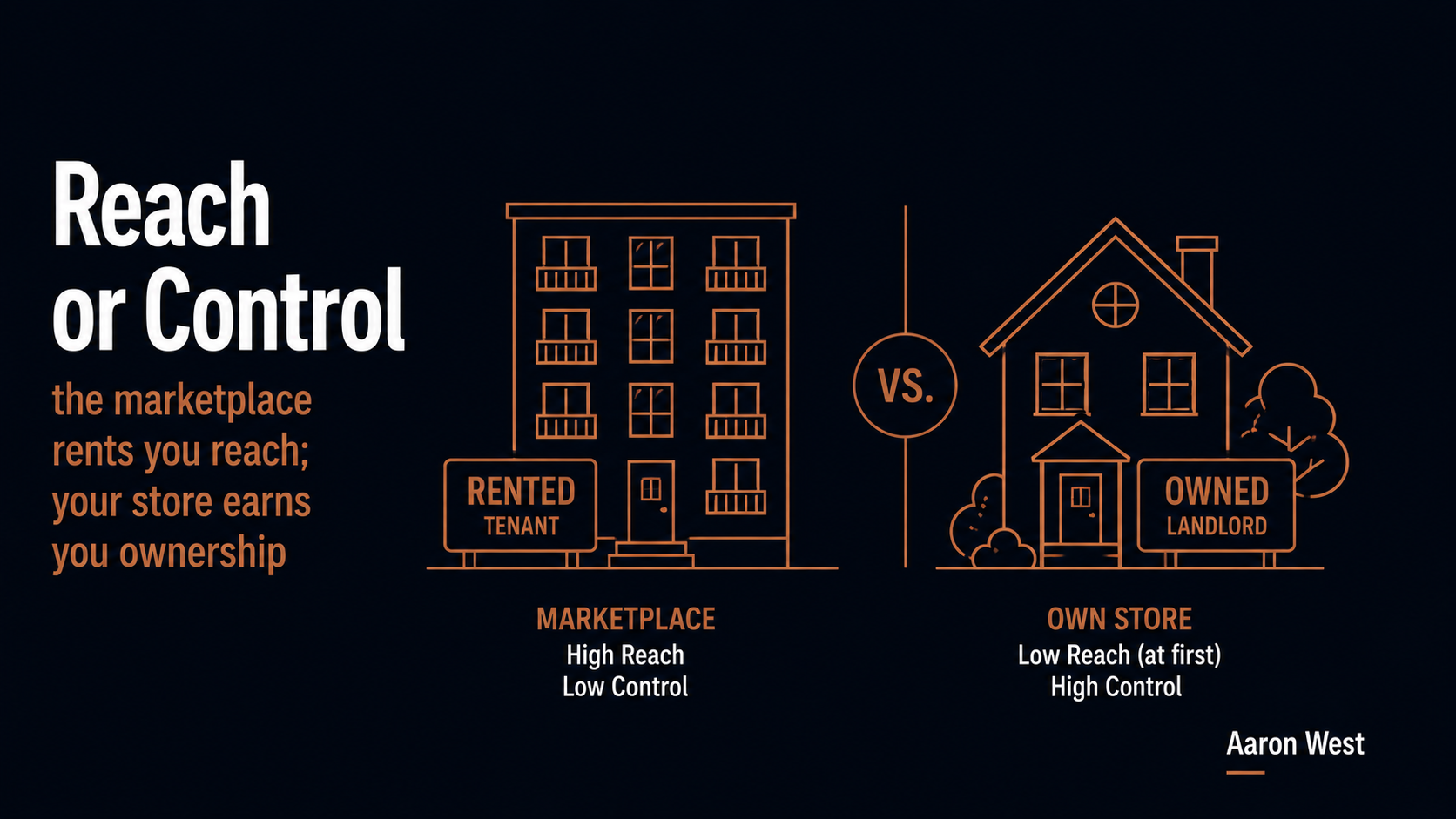
The choice between selling on your own store and selling on a marketplace isn't about which is better. It's about what you're willing to trade. A marketplace gives you instant reach, access to enormous existing demand, in exchange for operating in someone else's house: their…
Continue reading...
Why Your Product Images Are Slowing Down Your Conversion Rate
The single biggest thing slowing down your online store is almost certainly the very thing you put there to sell the product: the images. On a typical e-commerce page, images make up more than half of everything the browser has to download, and unoptimised product…
Continue reading...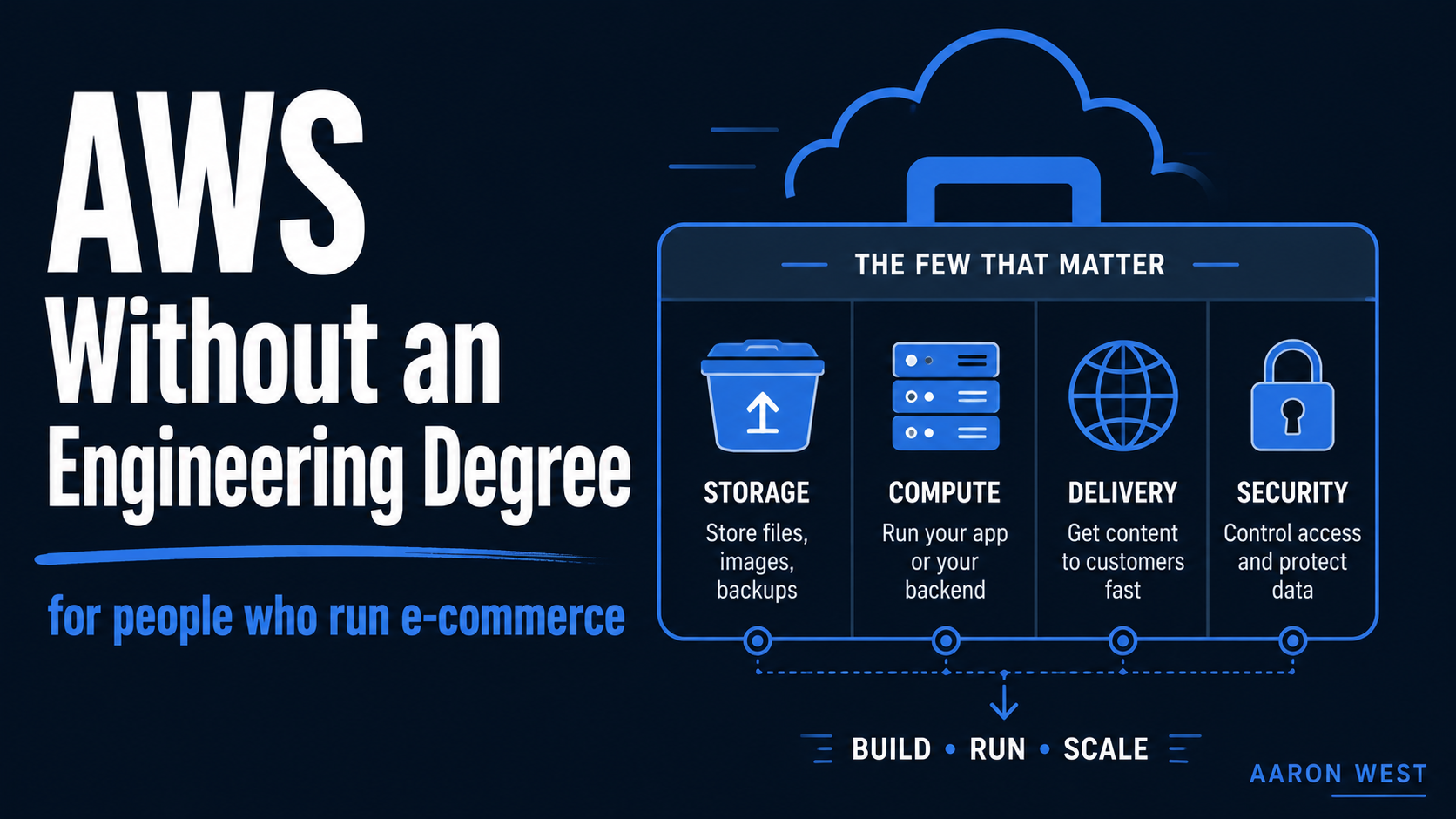
The E-Commerce Manager's Guide to AWS Without an Engineering Degree
You do not need to understand all of AWS. You need to understand maybe six services and one mental model, and that is enough to make good decisions, ask the right questions, and stop nodding along blankly when your developers or a vendor start talking…
Continue reading...