GDPR and Consent for E-Commerce, in Plain English

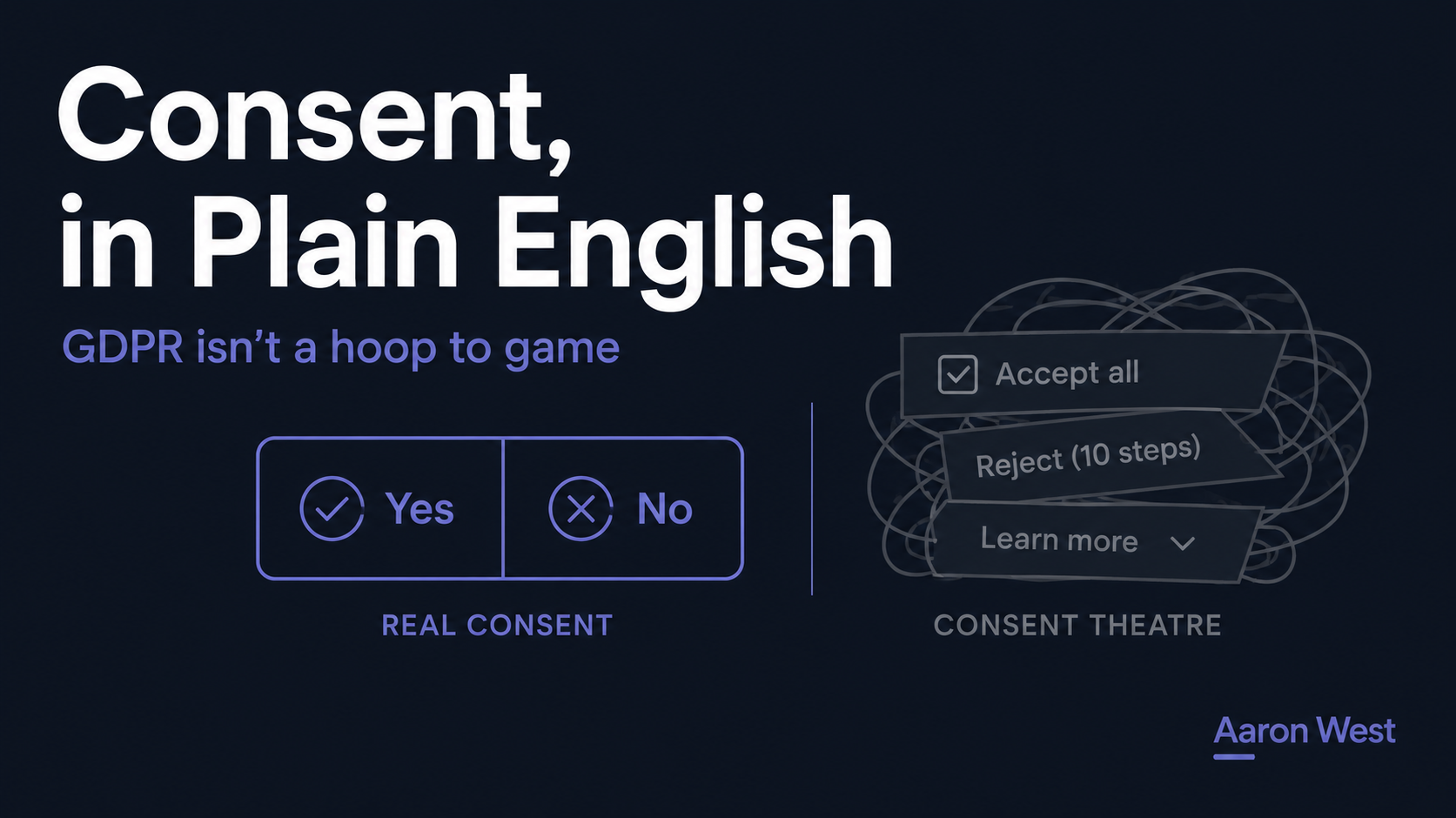
Table of Contents
GDPR isn't a compliance hoop to game; it's the law treating what you should already be doing, handling customer data with genuine consent and care, as a legal requirement. The stores that struggle with it are the ones trying to do the minimum to dodge a fine instead of the thing the law actually asks for, which is to handle people's data the way they'd consider fair. Get the posture right and most of the compliance follows.
This is a core of the Data, Privacy & Compliance pillar, under the cornerstone that data is a trust you hold. One important caveat first, stated plainly: this is a plain-English explainer of the ideas, not legal advice. GDPR and related laws are detailed, your specifics matter, and for anything binding you should read the official guidance and get qualified counsel. What follows is how to think about it, not what to do in your exact case.
The reframe that makes it simple
Most stores meet GDPR with a single question: "how do I tick the boxes with the least effort and avoid the fine?" That mindset produces the worst of both worlds, annoying compliance theatre that customers hate, like the hostile cookie wall, and an approach that often misses what the law is actually after, because gaming a proxy isn't the same as doing the thing the proxy stands for.
There's a better question, and it's simpler: "am I handling this data the way a reasonable customer would consider fair?" The law, for the most part, codifies exactly that. So if you handle data fairly, transparently, with genuine consent and restraint, you're doing most of what the regulation wants by default, and the compliance becomes a description of your practice rather than a costume you put on over it. That ties straight back to the trust framing of the cornerstone: fair handling is the goal, and the law is mostly that goal written down.
What consent actually means
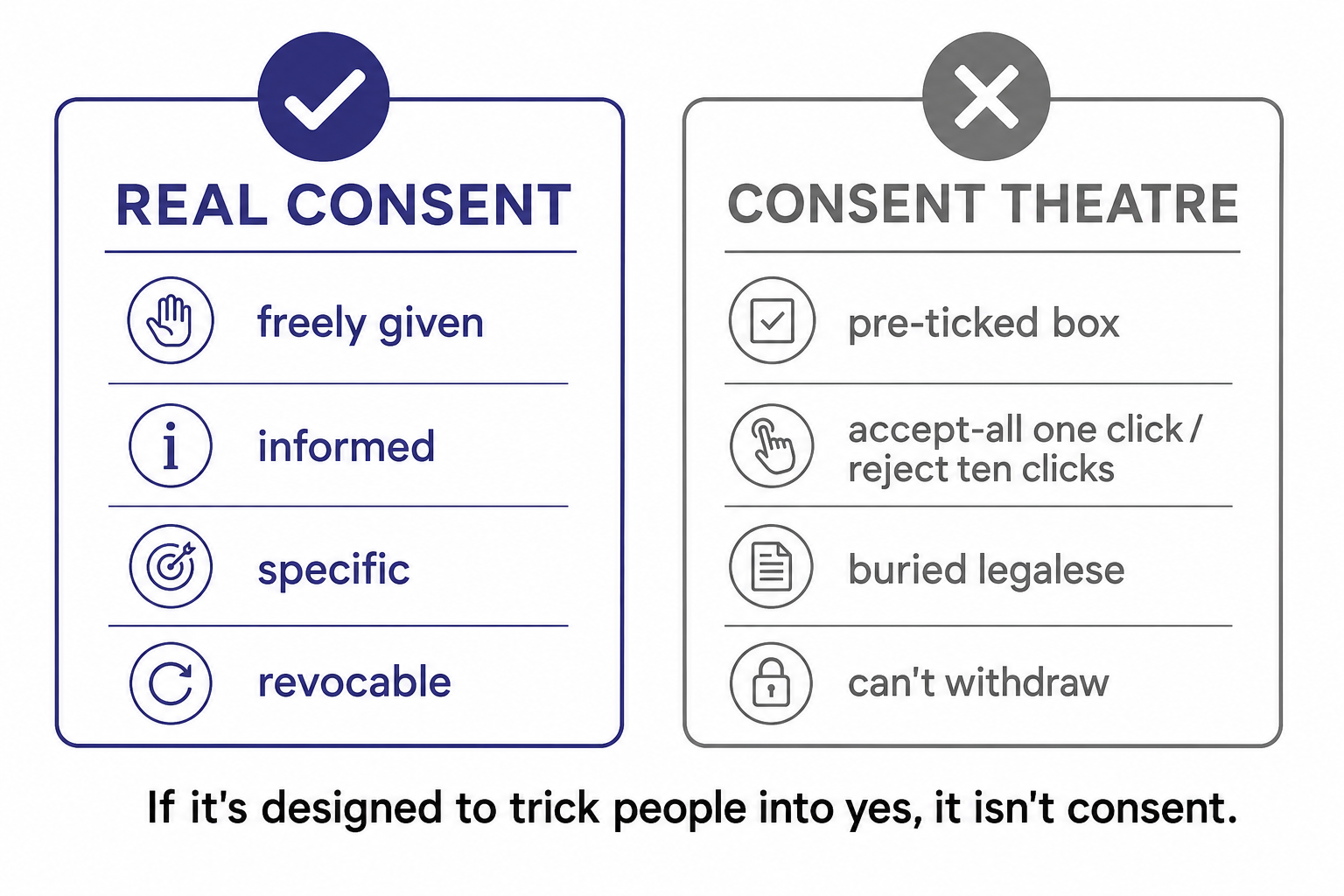
Consent is the part stores most often fake, so it's worth being precise about what real consent is. In plain English, valid consent is:
- Freely given. A choice, not a trap. A cookie wall where "accept all" is one click and "reject" is buried ten clicks deep isn't a free choice, it's a nudge dressed as one.
- Informed. The person understands what they're agreeing to. Burying it in dense legalese nobody reads isn't informing anyone.
- Specific. Consent for one purpose isn't consent for everything you later think of.
- Revocable. The person can withdraw it as easily as they gave it. Consent you can't take back isn't consent.
The test is simple: if your consent mechanism is designed to trick people into yes, it's both bad practice and, broadly, not the genuine consent the law has in mind. A pre-ticked box isn't consent. Consent theatre isn't consent. Real consent is a real choice, clearly offered.
The core principles, in plain English
You don't need the statute to understand what GDPR broadly asks, because the principles are mostly common sense about fairness:
- Lawful basis. You need a legitimate reason to process someone's data. Consent is one such reason; there are others (for example, data you genuinely need to fulfil an order). The point is you can't just process data because you'd like to.
- Data minimisation. Collect only what you actually need, which is the cornerstone's "collect what you can justify" as a legal principle. Hoarding data you don't need is both bad practice and a liability.
- Transparency. Tell people what you collect and why, clearly. No surprises.
- Purpose limitation. Use the data for what you said you'd use it for, not whatever new idea comes along later.
- The customer's rights. People can ask what you hold, ask for it to be corrected or deleted, and so on. Honouring those requests is part of the deal.
None of these are tricks or traps. They're what "handle people's data fairly" looks like when it's written into law, which is exactly why doing the fair thing and complying are mostly the same activity.
The cookie banner: where most stores meet GDPR, and fail it
For most e-commerce stores, the most visible point of contact with all of this is the cookie consent banner, and it's also where stores most often get it wrong. The dark-pattern banner, the one that makes accepting everything effortless and refusing a chore, is the perfect symbol of the game-the-proxy mindset: it's hostile to the customer, it's transparent theatre, and it often doesn't even deliver the genuine, freely-given consent it's supposed to.
Done right, a consent banner is a clear, honest choice: here's what we'd like to use, here's why, yes or no, equally easy either way. Done wrong, it annoys the customer (eroding the very trust the cornerstone is about) and leaves you exposed, because tricked consent may not be valid consent. The honest version is, conveniently, also the better-converting and lower-risk version. The hostile banner manages to fail on every axis at once.
Why "do the real thing" is the easy path
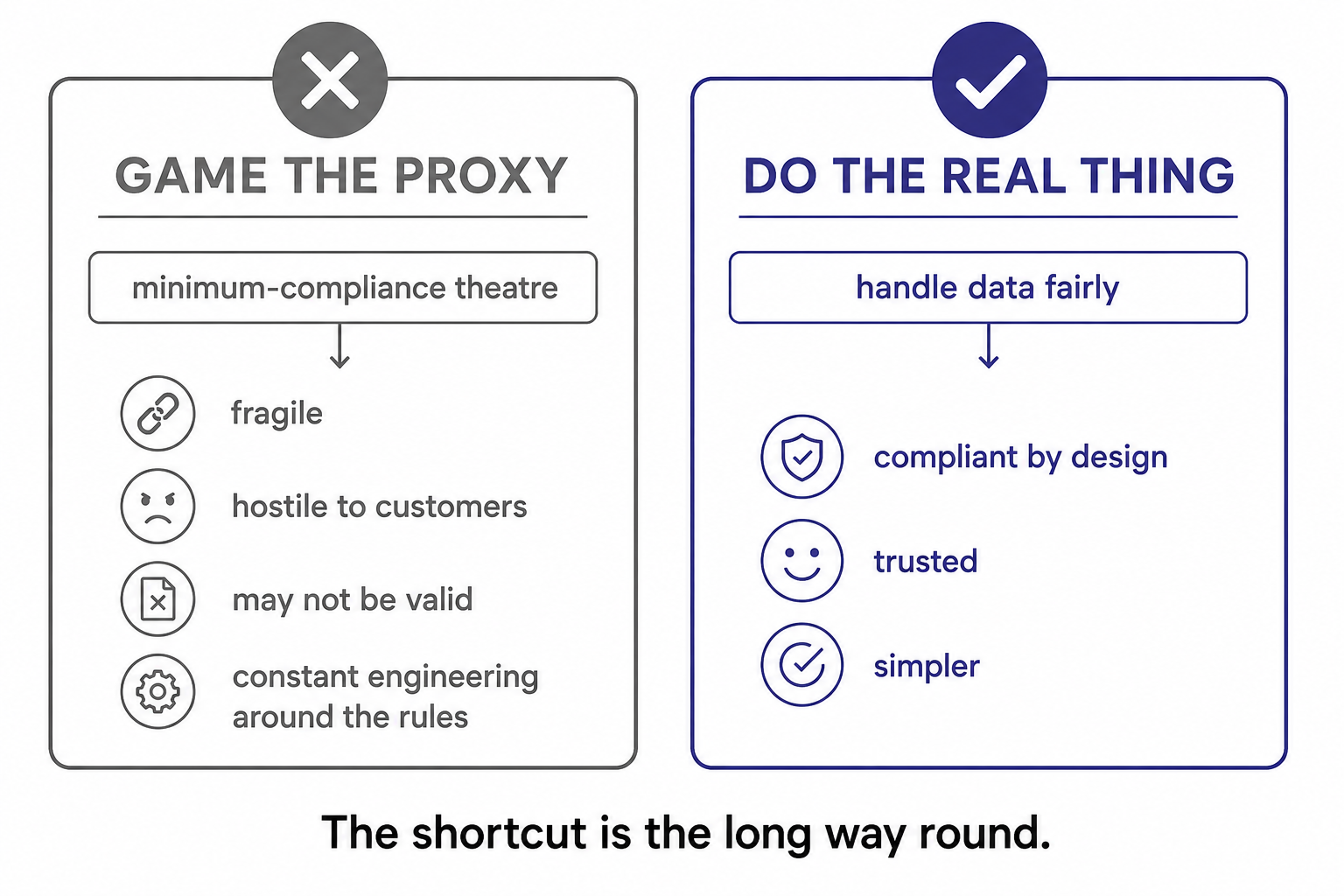
The counterintuitive conclusion: doing the actual thing the law wants is usually less work than engineering a clever way around it. Gaming the proxy means constantly building workarounds, dark patterns, and minimum-effort compliance theatre that's fragile, hostile, and still risky, and that you have to keep re-engineering as scrutiny tightens. Doing the real thing, handling data fairly, collecting less, making consent genuine, means you're compliant largely by design, and you earn customer trust as a bonus rather than spending it.
The shortcut, in other words, is the long way round. The store tying itself in knots to keep extracting data while looking compliant is doing more work, carrying more risk, and damaging more trust than the store that just handles data the way a customer would call fair.
What this comes down to
GDPR and consent aren't a hoop to game; they're the law asking you to handle people's data the way they'd consider fair, which is what you should be doing anyway and what the cornerstone argues is good business in its own right. Stop optimising for the minimum that avoids a fine and start doing the real thing: collect less, be transparent, make consent genuine and freely given, honour people's rights. It's less work than the clever workaround, and it earns the trust the workaround quietly destroys.
And for your specifics, get proper counsel and read the official guidance. This is the shape of the idea, not a substitute for legal advice, the point is the posture, and the posture is simply: be fair with people's data, and the compliance mostly takes care of itself.
A few common questions
Is GDPR just a compliance burden? It's better understood as the law codifying what you should already be doing: handling customer data with genuine consent and care. The stores that experience it as a pure burden are usually the ones trying to do the minimum to dodge a fine while still extracting as much data as possible, which produces the worst of both worlds, hostile compliance theatre that customers hate and an approach that often misses what the law actually wants. Handle data the way a reasonable customer would call fair and most of the compliance follows. (This is a plain-English overview, not legal advice.)
What counts as valid consent? In plain English, consent that is freely given (a real choice, not a trap where "accept" is easy and "reject" is buried), informed (the person understands what they're agreeing to, not buried in legalese), specific (for a stated purpose, not a blanket yes to everything), and revocable (as easy to withdraw as to give). A pre-ticked box isn't consent, and a consent mechanism designed to trick people into yes is broadly not the genuine consent the law has in mind. Real consent is a real choice, clearly offered. Confirm specifics with qualified counsel.
Why are dark-pattern cookie banners a bad idea? Because they fail on every axis at once. They're hostile to the customer (which erodes the trust your whole data relationship rests on), they're transparent theatre, and they often don't even deliver the genuine, freely-given consent they're supposed to, since tricked consent may not be valid. A banner that makes "accept all" one click and "reject" a chore isn't a free choice. Done right, a consent banner is a clear, honest, equally-easy choice, which is also the lower-risk and better-converting version.
Isn't doing full GDPR compliance more work than the minimum? Usually it's the opposite. Gaming the proxy, dark patterns and minimum-effort compliance theatre, means constantly engineering workarounds that are fragile, hostile, still risky, and need re-doing as scrutiny tightens. Doing the real thing, collecting less, being transparent, making consent genuine, means you're compliant largely by design and earn trust as a bonus. The shortcut is the long way round. (For your specific obligations, get qualified counsel, this is not legal advice.)
You should also read:
Server-to-Server (S2S) and Postback Tracking, Explained
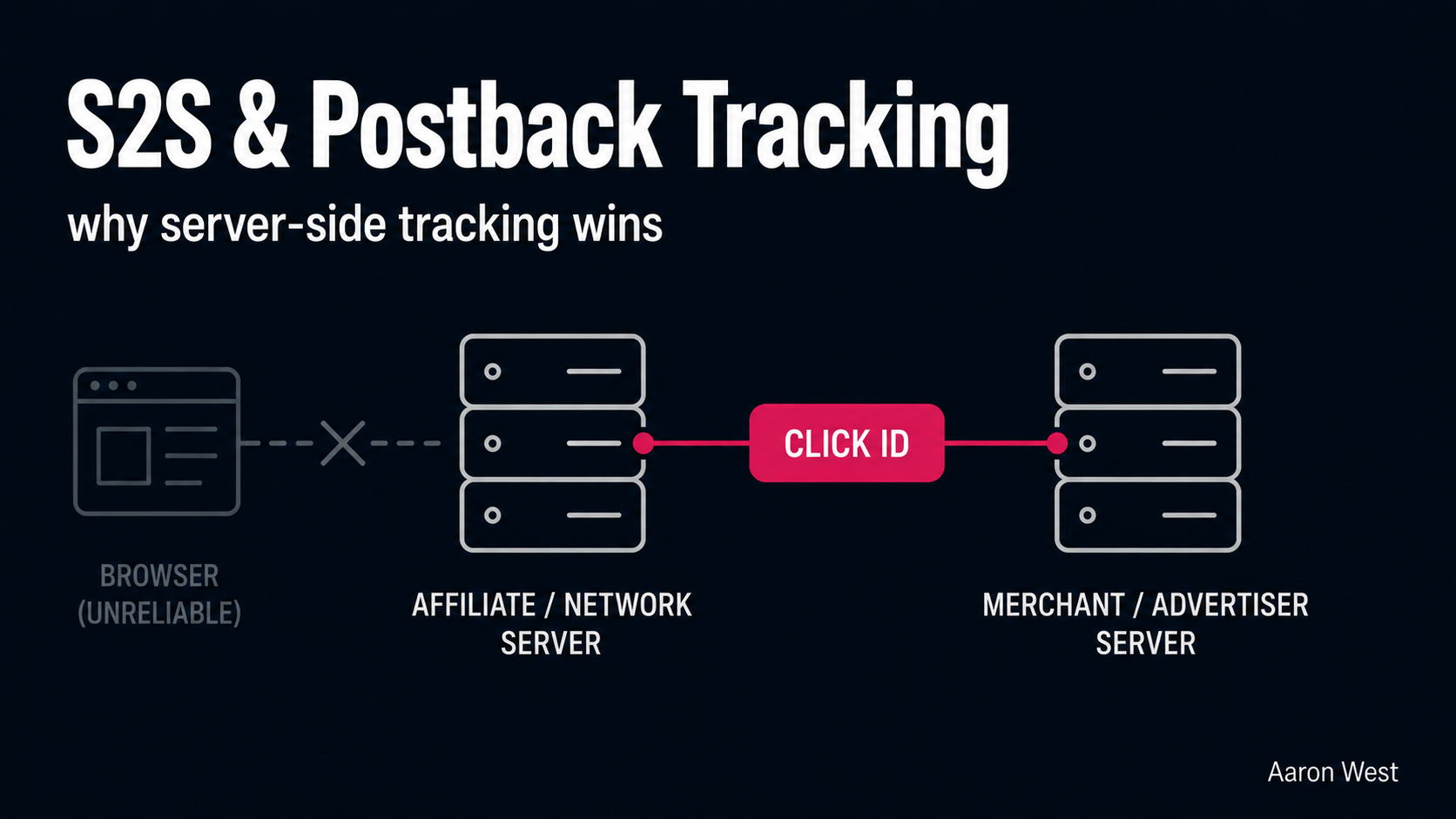
Server-to-server (S2S) tracking, also called postback tracking, records an affiliate conversion by having the merchant's server send the sale data directly to the affiliate platform's server, with no cookie and no browser involved. That one architectural change, moving the conversion record off the shopper's browser…
Continue reading...
The Affiliate Marketing Glossary: Every Term, in Plain English
Affiliate marketing is full of acronyms and jargon, CPS, EPC, S2S, dedup, postback, cookie window, that can make a simple channel sound impenetrable. This glossary defines the terms that actually matter, in plain English, grouped so you can see how they fit together. Each definition…
Continue reading...
The Affiliate Publisher Landscape: Every Partner Type, Explained
"Affiliate" covers wildly different kinds of partner, content sites, cashback platforms, coupon sites, influencers, comparison engines, and the single most important thing to understand is that they do fundamentally different jobs. Some genuinely introduce new customers to your brand; others mostly intercept customers who were…
Continue reading...