The Five Things You Should Never Automate

Table of Contents
Most automation advice is a list of things you should automate. This is the opposite list, and it is more useful, because the expensive mistakes in automation are almost never "we failed to automate something." They are "we automated something we should have left alone." A workflow that should not exist, running flawlessly, is still a problem. It is just a faster, more confident problem.
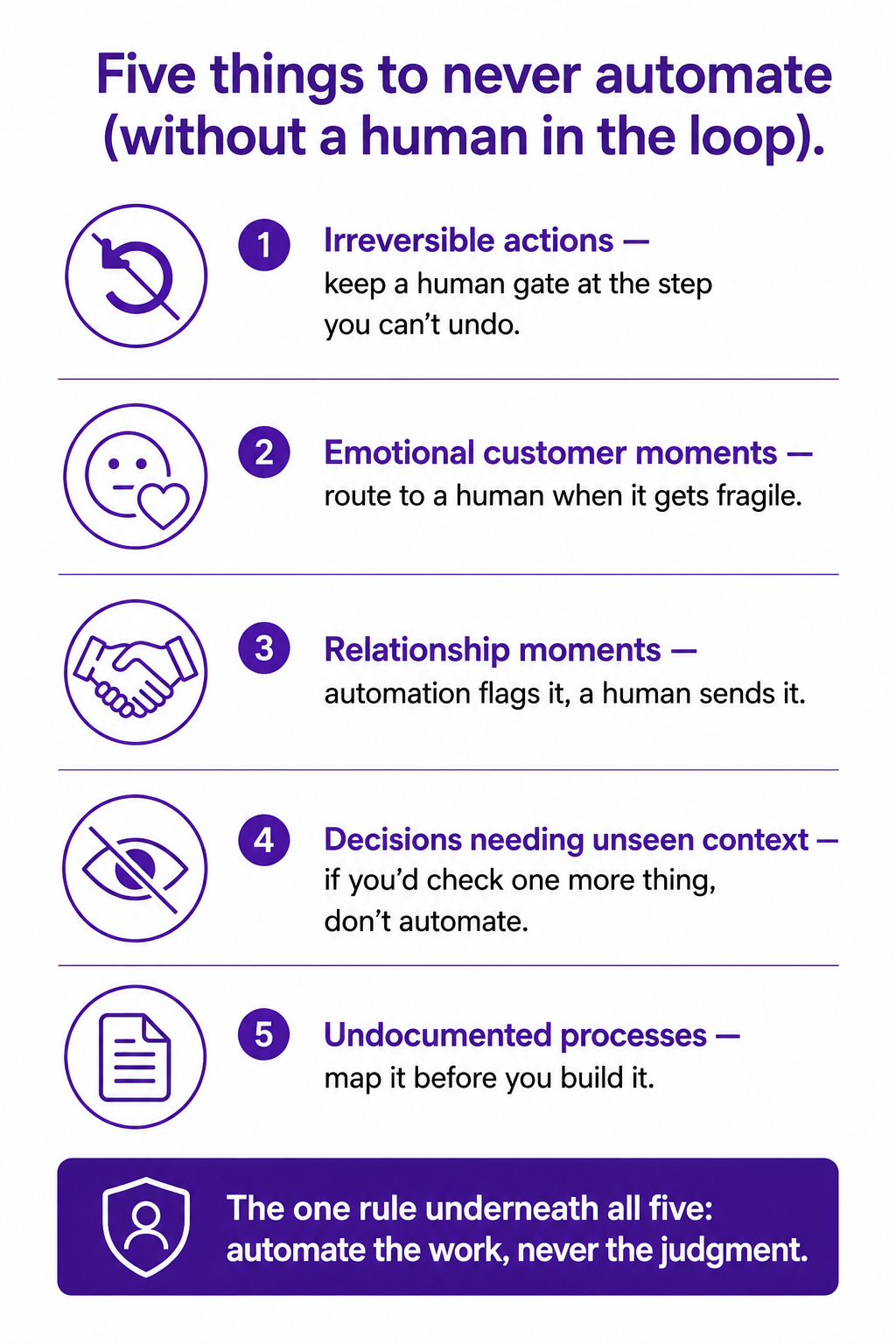
I have a simple rule for where the line sits, and everything below is really one idea applied five times: automate the work, never the judgment. The moment a task needs a human to weigh something the system cannot see, or to be a human to another human, automation stops helping and starts quietly costing you. Here are the five places that line gets crossed most often.
1. Irreversible actions, without a human gate
The first rule is about damage you cannot take back. Some actions can be undone if they go wrong. A mistimed reminder email is embarrassing but recoverable. Other actions cannot. A refund issued before the returned item is confirmed received. A payment sent. An account deleted. A bulk price change pushed live to every product. When automation fires one of these and it is wrong, there is no undo button, only cleanup.
This does not mean these processes stay fully manual. It means they keep a human gate at the irreversible step. The system can do all the preparation, gather the data, draft the action, queue it up, and then stop and wait for a person to approve the one step that cannot be reversed. The pattern that works in practice is exactly this: let automation draft and prepare anything involving refunds, damaged items, or money leaving the business, but require a human to approve before it executes. You keep the speed on the reversible ninety percent and the judgment on the irreversible ten percent.
The test is simple. For any action, ask: if this fires wrongly, can I undo it? If the answer is no, it needs a human gate.
2. Emotionally charged customer moments
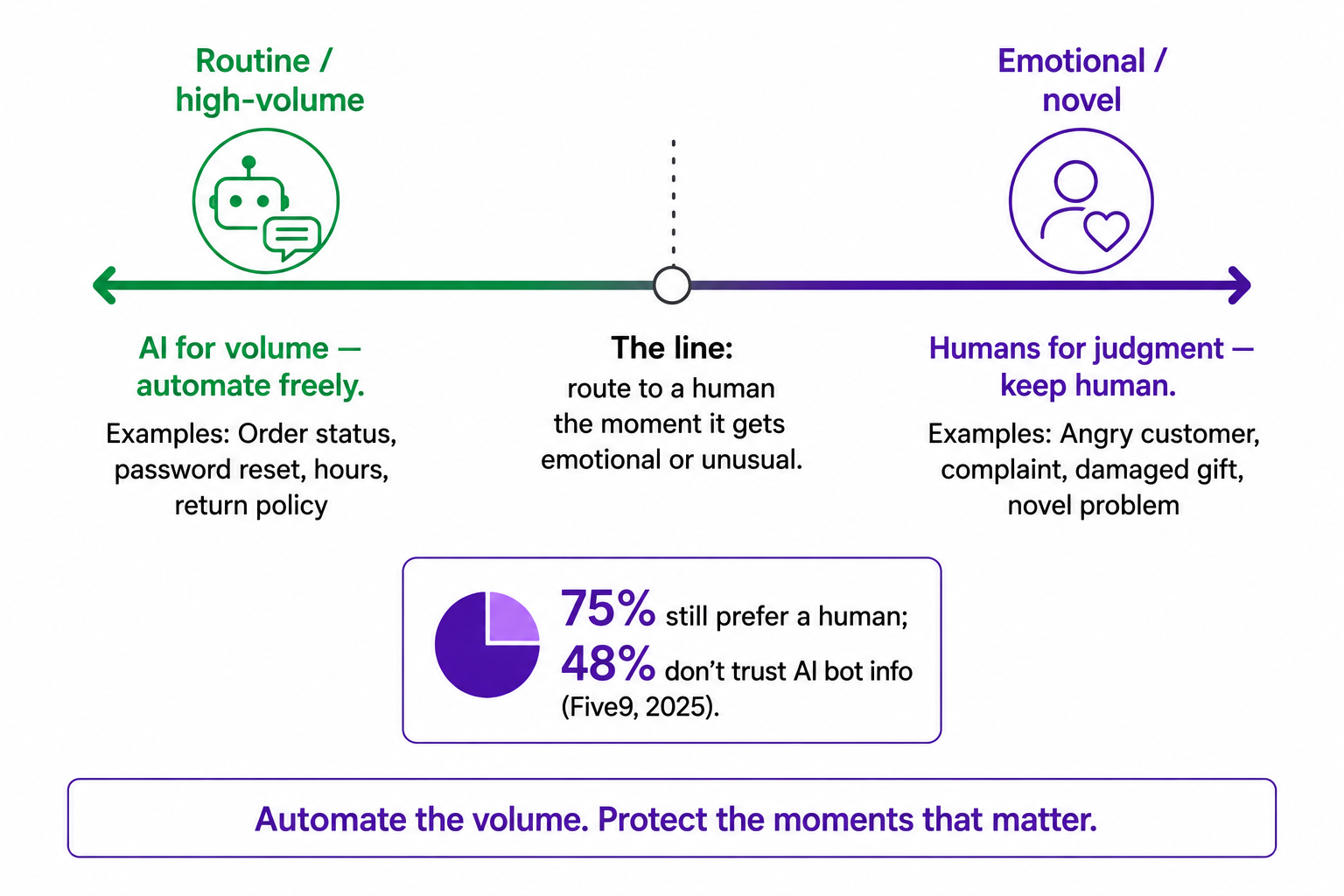
This is the one businesses get wrong most often, because the pressure to automate customer service is enormous and the savings look real on a spreadsheet. The data is worth sitting with, though. A 2025 Five9 study found that 75% of consumers still prefer speaking to a real human for support, and 48% say they do not trust the information an AI bot gives them. That is not a fringe minority. That is most of your customers.
The nuance that matters: automating customer service is fine, often excellent, for the routine, high-volume questions. Order status, password resets, business hours, return policy. The model that works in 2026 is "AI for volume, humans for judgment." Let automation absorb the repetitive tickets so your people have the capacity for the ones that need them. The mistake is pushing automation past that line into the moments that are emotional, novel, or fragile. A furious customer whose order vanished. A complaint about a damaged gift. A situation where someone is already upset. Automating those does not save money, it converts a recoverable relationship into a lost one, efficiently.
Remember what online retail actually is. The customer cannot touch the product or speak to anyone face to face. Your support is often their only human touchpoint with your brand. Automating away the one human moment, precisely when the customer most needs it, is a false economy. Nobody ever finished an interaction thinking "what made my day was that perfectly templated robotic reply."
3. Relationship moments
Close cousin to the last one, but worth its own place because it applies even when nobody is upset. Some communications are valuable precisely because a human chose to send them. The personal note to your best affiliate partner. The thank-you to a customer who has bought from you for five years. The apology, in your own words, when you genuinely let someone down. The check-in with a supplier you want to keep close.
Automate these and you destroy the exact thing that made them worth doing. A "personal" message that everyone knows was triggered by a workflow is worse than no message, because it signals that the relationship is being managed rather than valued. The recipient can tell. They always can.
The line here is subtle, because automation can absolutely help with relationships. It can remind you that a partner's contract is up for renewal, or surface that a customer hit a milestone. That is good. The automation flags the moment and prepares the context. The human writes the actual message. Use automation to make sure relationship moments do not get missed, never to perform them on your behalf.
4. Decisions that need information the system cannot see
Some decisions look automatable because the inputs are all sitting in a database, but the right call depends on things that are not in any system. Whether to kill an underperforming campaign might depend on a conversation you had with the founder about brand strategy last week. Whether to extend credit to a wholesale customer might depend on a relationship and a context no dataset captures. Whether to push a risky price change might depend on what a competitor is rumoured to be about to do.
Automation is brilliant at deciding based on the data it has. It is blind to everything it does not have, and it does not know what it is missing. That is the danger. A rule-based system will confidently make the wrong call because the deciding factor was never in its inputs, and it has no way of knowing that. This is also true of AI agents, which can reason more flexibly but still only over the information they are given.
The honest test: if you, the expert, would want to "check one more thing" before deciding, that decision is not ready to automate. The instinct to check one more thing is you knowing that the data on screen is not the whole picture. Respect it.
5. Any process you have not documented
The last one is different in kind, and it is the one that catches careful people. Do not automate a process you have not fully written down first. Not because documenting is good hygiene, though it is, but because automating an undocumented process means automating your assumptions about that process rather than the process itself.
When you actually map a workflow step by step, you almost always find things you did not know were there. A step that exists for a reason nobody remembers. An exception the person handling it has been quietly managing for years without telling anyone. An edge case that breaks the whole thing the first week it occurs. Automate before you find these, and you have built a fast, reliable machine for doing the wrong thing in all the cases you did not know about.
This is why the two-week automation audit puts mapping before building. The map is not paperwork. It is how you discover what you are actually automating. Skip it and the process you encoded is the one you imagined, not the one that was really running.
The thread: automate the work, not the judgment
Look back at the five and the same line runs through all of them. Irreversible actions, emotional moments, relationships, context-dependent decisions, undocumented processes. In every case, what makes the task unautomatable is that being wrong is expensive and the situation varies. A human is there not to do the mechanical work, but to exercise judgment the machine cannot.
This is the exact mirror of how I decide what to automate, which I laid out in how I think about automation. The work that is repetitive, rules-based, and low-stakes when it goes wrong should be automated without hesitation. The work that needs a brain, a heart, or a piece of context that lives outside your systems should stay human, or stay human-gated. Most of the value in automation comes from getting that division right, not from automating as much as possible.
There is a quiet cost to ignoring this that does not show up immediately. Over-automate, and you slowly strip the judgment and the human contact out of your operation, and you do not notice until a customer relationship breaks, or a confident automated decision turns out to have been wrong for weeks. Automating is easy now. The skill is knowing where to stop. And one more thing worth saying, because it sits underneath all of this: whatever you do automate should be built to tell you when it breaks, which is the case I made in the error notification is the workflow.
The best automated operations are not the most automated ones. They are the ones that automated exactly the right things and deliberately, thoughtfully, left the rest alone.
A few common questions
What should you never automate in e-commerce? Five things, without a human in the loop: irreversible actions (refunds, payments, deletions), emotionally charged customer moments, genuine relationship communications, decisions that depend on information outside your systems, and any process you have not fully documented first.
Is it bad to automate customer service? No, for routine high-volume questions it is excellent. The mistake is automating the emotional or novel moments. The working 2026 model is "AI for volume, humans for judgment": let automation handle order status and FAQs, route anything fragile to a person. A 2025 Five9 study found 75% of customers still prefer a human for support.
How do I know if a task is safe to automate? Ask whether being wrong would be expensive and whether the situation varies a lot. If both are true, keep a human involved. If you would instinctively want to "check one more thing" before acting, that judgment is not ready to automate.
Why shouldn't I automate an undocumented process? Because you would be automating your assumptions about the process, not the process itself. Mapping it first almost always reveals forgotten steps, silent exceptions, and edge cases that would break the automation. Map before you build.
You should also read:
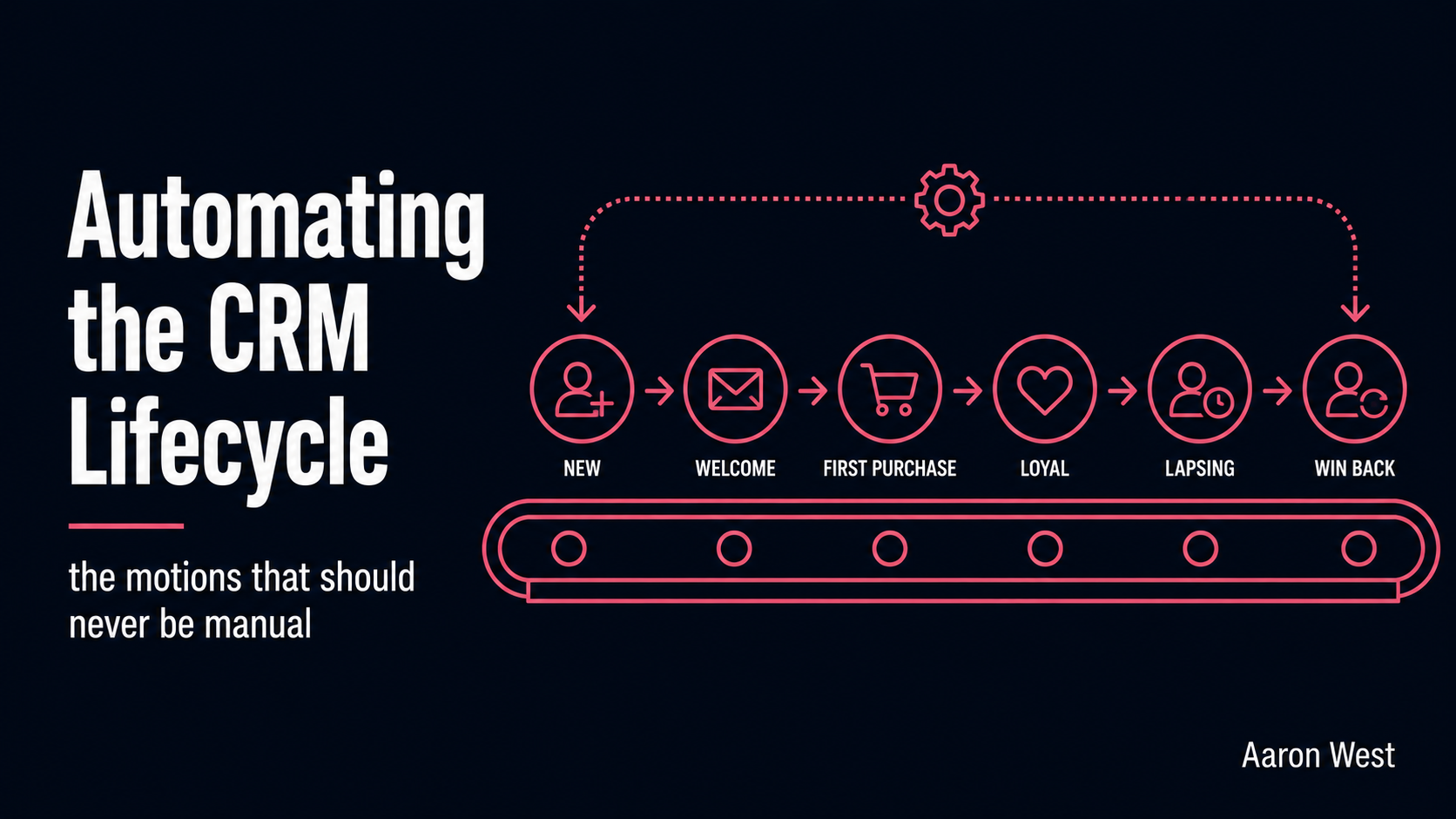
Automating the CRM Lifecycle: The Customer Motions That Should Never Be Manual
The cornerstone of this pillar made one demand that quietly does most of the work: decide what should happen next for each kind of customer, and then do it consistently. That word, consistently, is where almost every retention effort falls apart. The welcome that goes…
Continue reading...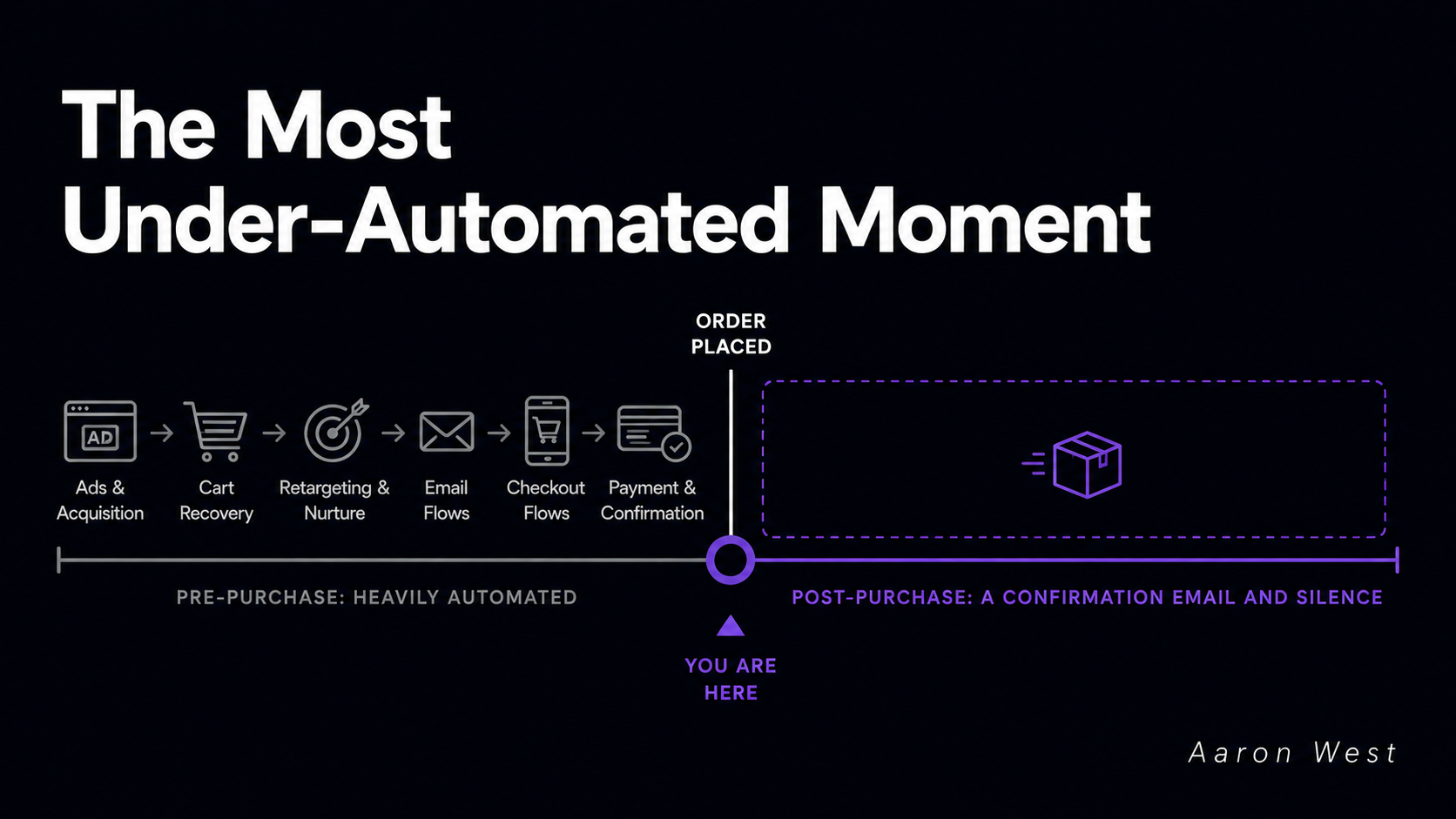
Post-Purchase Is the Most Under-Automated Moment in E-Commerce
Almost every store pours its automation budget into the moment before the sale and abandons the customer the moment after it. Cart recovery, retargeting, checkout nudges, all heavily automated. Then the order goes through, and the experience falls off a cliff into a generic "thanks…
Continue reading...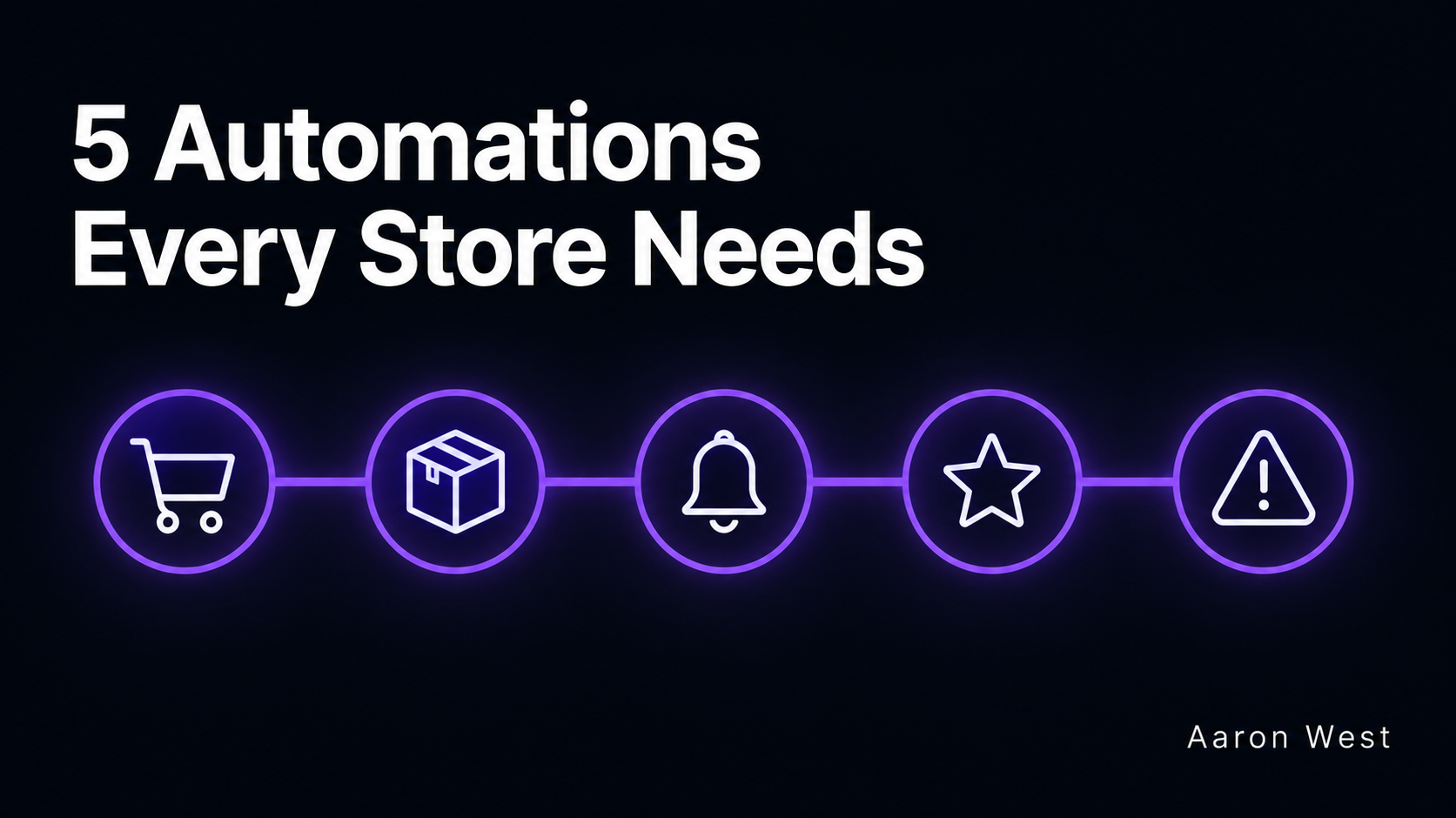
5 Automation Workflows Every E-Commerce Store Should Have
If you run an online store and you only ever build five automations, build these five. They are not the flashiest. They are the ones that quietly cost you money every day they are missing, and the ones that pay for themselves within weeks. I…
Continue reading...