Structured Product Data: How to Make Your Catalog Readable by Machines and AI

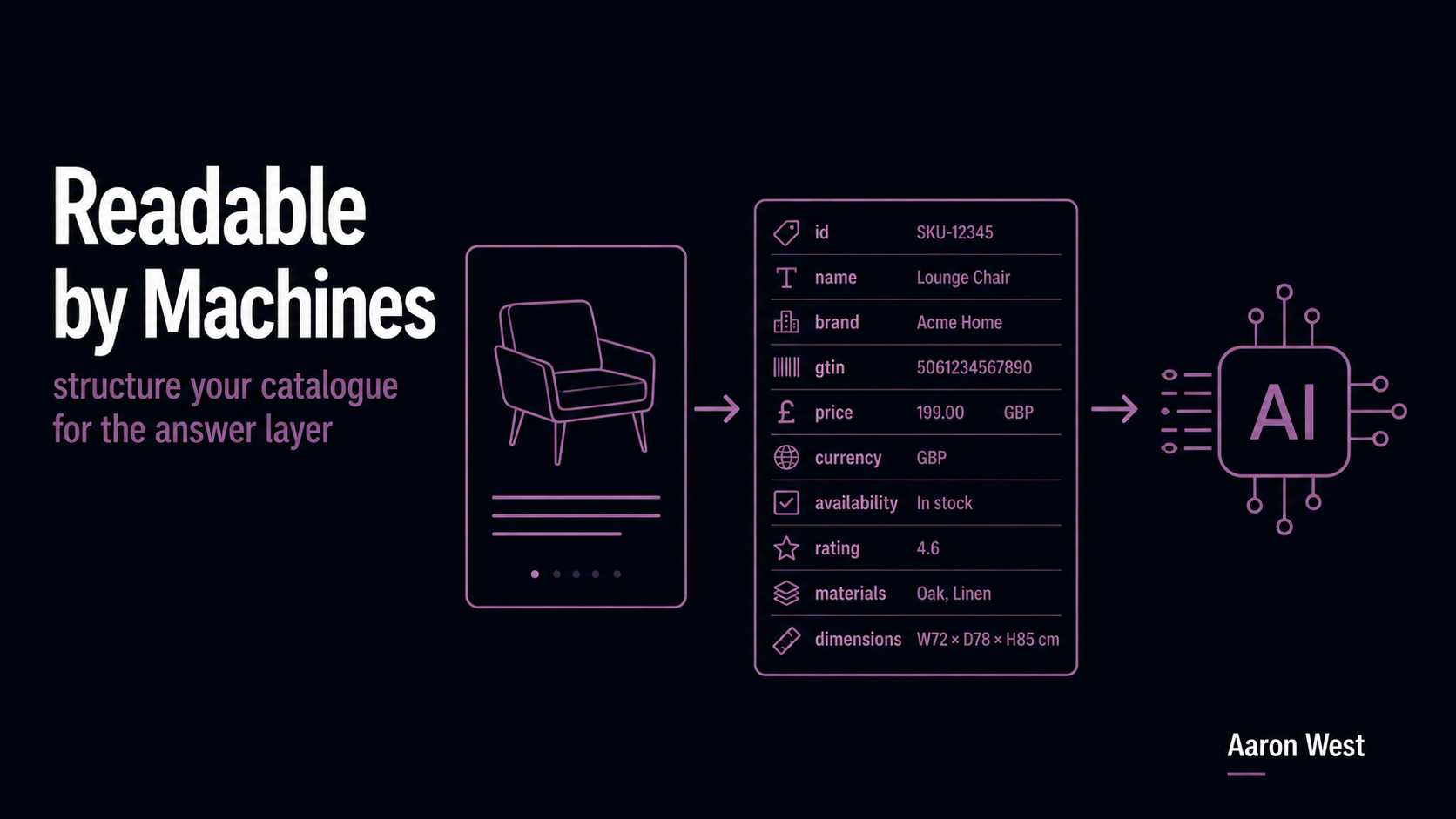
Table of Contents
You've structured your product data for your own site, and you've structured it for your channel feeds. There's a third reader you can't ignore: the open machine world, search engines' rich results and the AI answer and shopping engines that increasingly sit between customers and products. Structured product data, product schema markup, clean attributes, and standard identifiers, is how those machines understand that "this is a product, it costs this, it's in stock, it's this colour and this brand," instead of guessing it from the words on a page. In a world where discovery is moving from the search box to the answer, being cleanly machine-readable is how you stay findable.
This rounds out the Catalog & Product Data pillar, under the cornerstone that product data is the foundation everything runs on. It's the catalogue version of the discoverability shift the rest of the hub has been tracking: structure for the machine, and you get surfaced by it.
The third reader
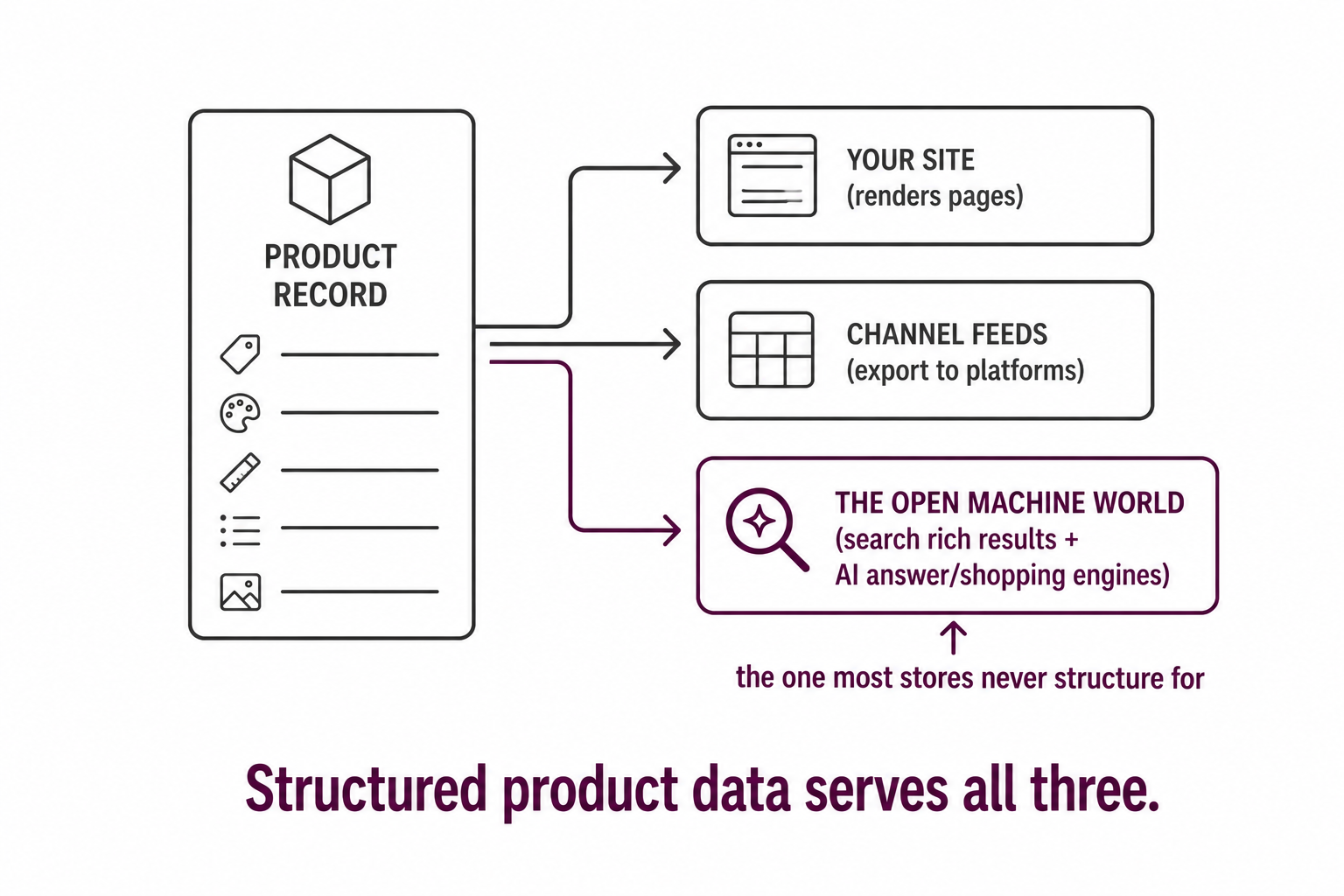
The descriptions piece made the case that a product description serves two readers, the customer and the machine. At the catalogue level there are really three: your own site (which renders the data into pages), your channel feeds (which export the data to other platforms), and the open machine world, search engines and AI engines that read your pages directly and decide whether and how to surface you.
That third reader is the one most stores never structure for, because it's invisible, you don't get a rejection notice from a search engine the way you do from a feed. You just quietly don't get surfaced, and you never see the listings or answers you didn't appear in. Structuring for it is the difference between a catalogue a machine can confidently parse and one it has to guess at.
What structured product data is
In plain terms, structured product data is machine-readable markup plus clean attributes plus standard identifiers that tell a machine explicitly what a product is, rather than leaving it to infer everything from page text.
- Schema markup (the Product vocabulary from schema.org and similar) is code on the page that labels the facts: this number is the price, this is the availability, this is the rating, these are the attributes. It turns "some text that mentions a price somewhere" into "the price is exactly this."
- Clean attributes are the structured facts from the data model, colour, size, material, held consistently so a machine reads one clear value, not four spellings of the same colour.
- Standard identifiers (GTIN, brand, MPN) are the universal IDs that let a machine match your product to the same product everywhere else, which is what makes price comparison and shopping engines work at all.
Together they move your catalogue from "a human can read these pages" to "a machine can confidently understand and reuse these products."
Why this matters more now
Search engines have used product schema for years, it's why a search listing can show a price, a star rating, and availability right there in the results, the rich-result treatment that makes one listing stand out from the plain ones. That alone has long been worth doing.
The new and growing reason is the shift the discoverability work tracks: AI answer and shopping engines now read structured product data to understand, compare, and recommend products inside their answers. When a customer asks an AI assistant for "a waterproof jacket under a certain price in this size," the engine is reaching for products it can cleanly parse, structured, identified, attributed, and skipping the ones it would have to guess about. Cleanly structured products are parseable and therefore surfaceable; prose-only products are harder to read and easier to pass over. It's the generative-engine principle applied to the catalogue: you get surfaced and cited for being clearly, machine-readably useful.
Worth one clear distinction, because the hub covers both: the structured-data-for-citation work on the discoverability side is about content and article schema, making your articles quotable by answer engines. This is product and catalogue schema, making your products surfaceable by shopping and answer engines. Same principle, structure for the machine, different surface.
It's built on the foundation, not bolted on
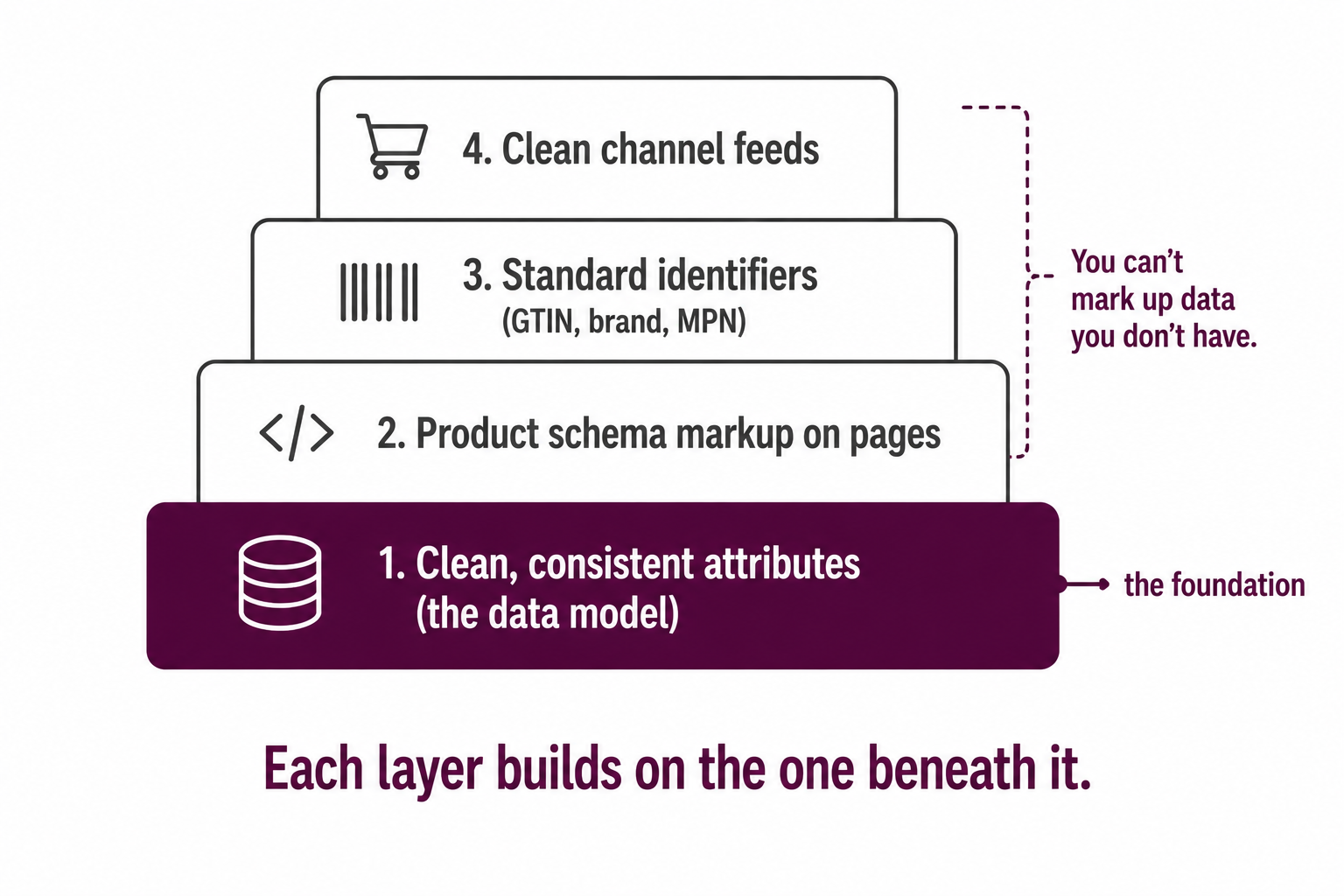
The most important caveat: you cannot mark up structured data you don't have. Schema markup is only ever as good as the attributes underneath it, so it sits on the clean data model, not instead of it. Marking up messy, inconsistent data doesn't help; it just exposes the mess to machines in a more legible form, the garbage-everywhere principle reaching its final surface. Clean the data first, then expose it as structured markup.
So the layers stack in order: clean, consistent attributes (the data model), then product schema markup on the pages, then standard identifiers so machines can match your products to the world's, then clean channel feeds so the platforms get the same structured truth. Each layer builds on the one below it, and all of them rest on the foundation the cornerstone insisted you respect.
Don't over-engineer it
One honest note so this doesn't turn into a markup rabbit hole: you don't need every schema property in existence. You need the ones the engines actually use, price, availability, rating, the key attributes, and the standard identifiers, done accurately and kept current. Match the effort to what gets read. Marking up obscure properties no engine surfaces is busywork; getting the handful that matter right, on clean data, is the win. As with everything in this pillar, accuracy and consistency beat completeness for its own sake.
What this comes down to
You've structured your product data for your own site and for your channel feeds. The last step is making it readable by the open machine world, the search engines' rich results and the AI shopping and answer engines that increasingly stand between a customer and a product. That isn't about keywords. It's clean attributes, product schema markup, and standard identifiers sitting on the data foundation you already built.
Structure your catalogue for machines and you stay findable as discovery moves from the search box to the answer. Leave it as prose and you're betting the machines guess right about your products, and increasingly, they don't have to, because a competitor made theirs easy to read. The catalogue that machines can confidently understand is the one that gets surfaced in the layer that's quietly replacing the blue link.
A few common questions
What is structured product data? Machine-readable markup plus clean attributes plus standard identifiers that tell a machine explicitly what a product is, rather than leaving it to guess from page text. The markup (schema.org Product and similar) labels the facts (this is the price, this is availability, this is the rating); the clean attributes give consistent values; and standard identifiers (GTIN, brand, MPN) let a machine match your product to the same product elsewhere. Together they move a catalogue from "a human can read these pages" to "a machine can confidently understand these products."
Why does machine-readable product data matter now? Because discovery is shifting from the search box to the answer. Search engines have long used product schema for rich results (the price, stars, and availability shown in a listing), and now AI answer and shopping engines read structured product data to understand, compare, and recommend products inside their answers. They reach for products they can cleanly parse and skip the ones they'd have to guess about, so cleanly structured products are surfaceable and prose-only ones are easy to pass over.
Is this the same as the schema you'd add to articles? Same principle, different surface. Article or content schema makes your written content quotable by answer engines; product schema makes your catalogue surfaceable by shopping and answer engines. Both are about structuring information so machines can confidently parse and reuse it, applied to two different kinds of page.
Do I need to mark up everything? No. You need the properties the engines actually use, price, availability, rating, the key attributes, and standard identifiers, done accurately and kept current, not every schema property in existence. And it only works on clean underlying data: you can't mark up data you don't have, and marking up messy data just exposes the mess to machines. Clean the data model first, then add the handful of structured-data layers that matter.
You should also read:
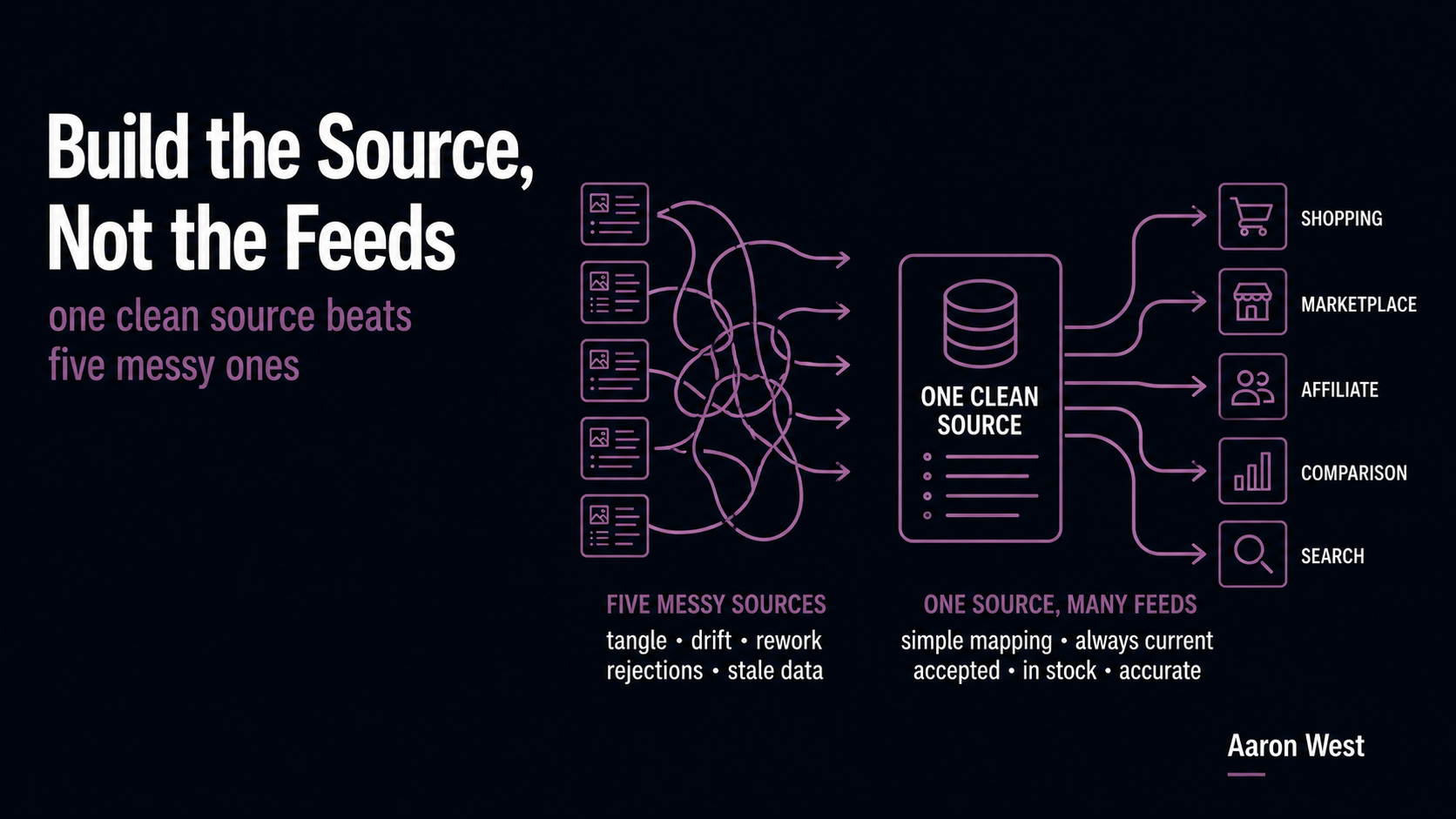
Product Feeds for Every Channel: Why One Clean Source Beats Five Messy Ones
A product feed is a structured export of your catalogue, formatted for a specific channel, and every channel you sell through runs on one: Google Shopping, marketplaces, affiliate networks, comparison sites, social commerce. The single most useful thing to understand about feeds is that they're…
Continue reading...
Product Descriptions: Writing for the Customer and the Machine
A product description has to do two jobs at once that usually pull against each other: persuade the person reading it (sell the product, inform them, reassure them) and feed the machine reading it (search engines, marketplace feeds, and increasingly AI answer engines that parse…
Continue reading...
Product Imagery: The Standards That Quietly Decide Conversion
Product images are product data, not decoration, and online they are the single most important information source you have, because the customer can't touch the product, so the images effectively are the product. Consistent imagery standards, true colour, multiple angles, honest scale, zoom, context, and…
Continue reading...