Product Imagery: The Standards That Quietly Decide Conversion

Table of Contents
Product images are product data, not decoration, and online they are the single most important information source you have, because the customer can't touch the product, so the images effectively are the product. Consistent imagery standards, true colour, multiple angles, honest scale, zoom, context, and visual consistency across the catalogue, quietly decide both conversion (whether someone buys) and returns (whether what arrives matches what they expected). That makes imagery one of the highest-leverage parts of the catalogue, and one of the most carelessly handled.
This is a core of the Catalog & Product Data pillar, under the cornerstone that product data is the foundation everything runs on. Images are part of that data, with their own standards and their own outsized effect on whether the rest of the work pays off.
Online, the images are the product
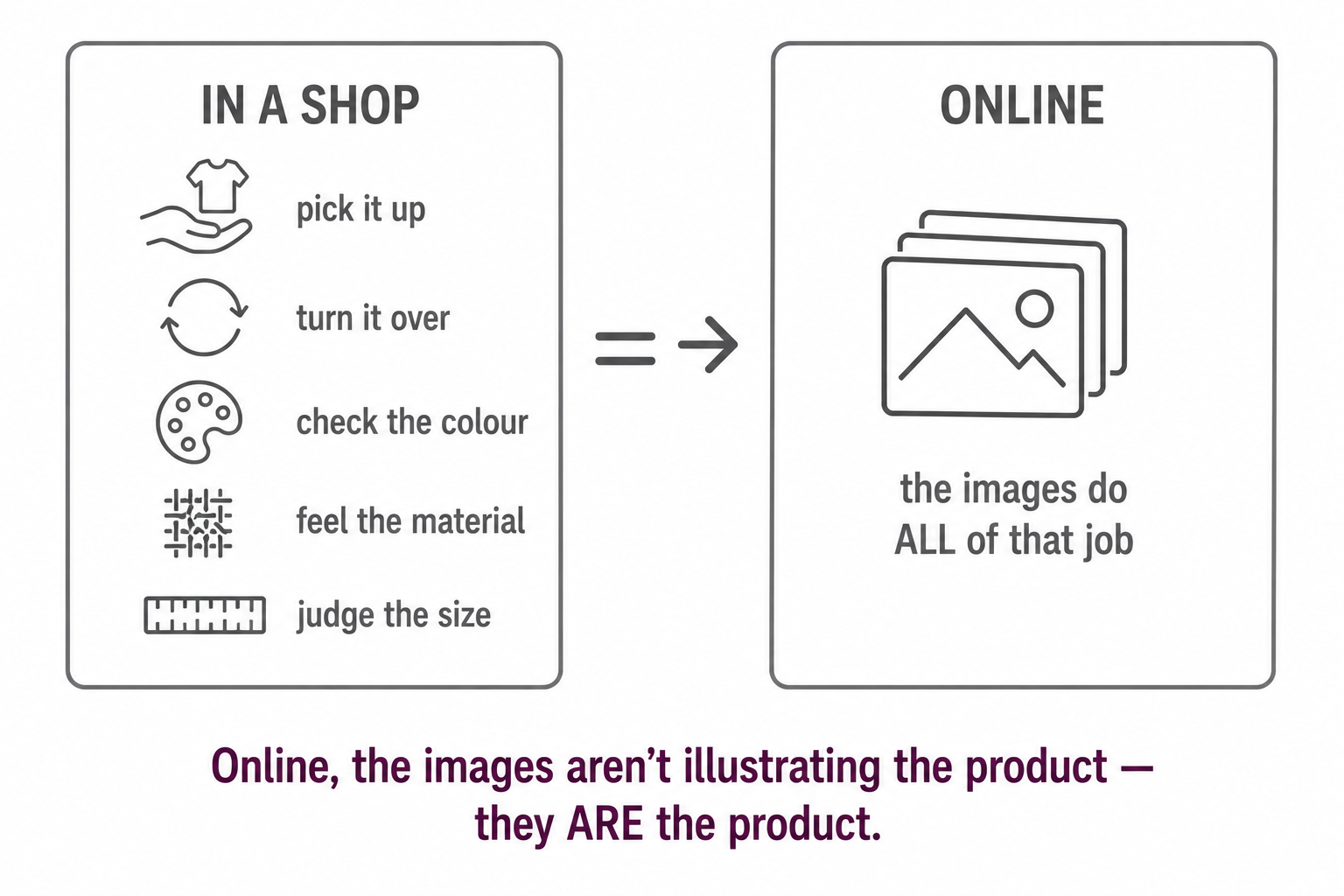
The deepest difference between an online store and a physical shop is that the customer can't handle the product. In a shop they pick it up, turn it over, check the colour in the light, feel the material, judge the size against their hand. Online, none of that is available, and the images and video have to carry the entire weight of that job.
Which means the images aren't illustrating the product information. Online, they are the primary product information. The words help, the attributes inform, but the images are the closest a customer gets to holding the thing before they commit money to it. Once you see imagery that way, as the product itself rather than decoration on top of it, the case for taking it seriously stops being an aesthetic argument and becomes a data-quality one.
The two jobs imagery quietly does
Imagery works on both sides of the sale, and stores usually under-resource both.
The conversion side. Good imagery sells: it shows the product clearly, builds confidence, and answers the silent "what is this really" question that decides whether the product page converts. A single small photo on a white background tells the customer almost nothing, and "I can't quite tell what it's like" is a reason to leave, not to buy. Sparse or poor imagery loses the sale right at the moment of decision.
The returns side. This is the one stores forget. Misleading imagery is one of the biggest controllable causes of the expectation gap that drives returns: a colour that looks different in reality, no sense of scale, lighting that flatters past the truth. The product arrives, it isn't what the customer saw, and back it comes, with a dent in trust attached. Honest, accurate imagery is the cheapest returns prevention there is, because it fixes the cause (a wrong expectation) rather than fighting the symptom, exactly the principle the returns work is built on. Imagery is a returns cause you fully control.
The standards that actually matter
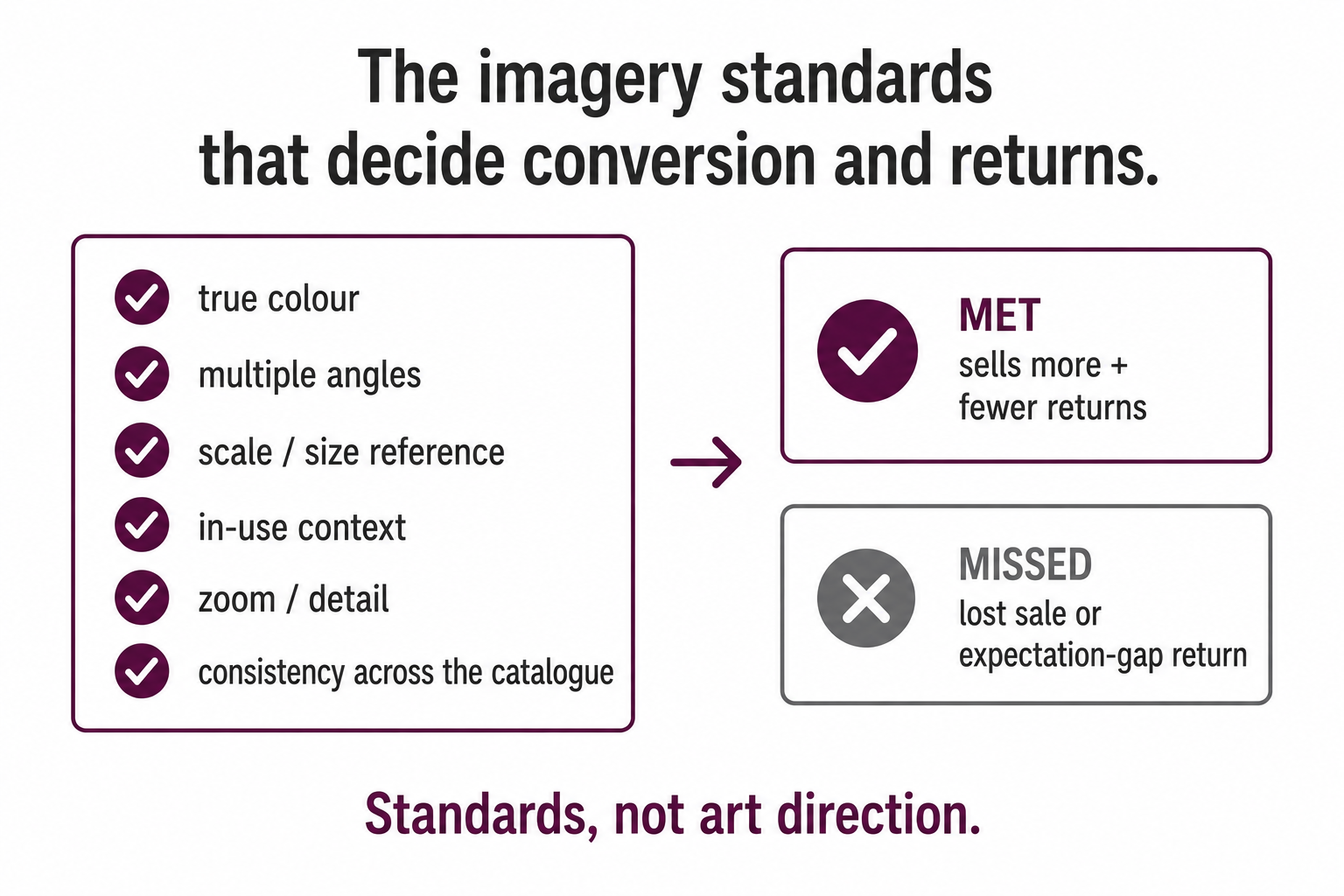
The word "standards" is doing real work here, because good imagery isn't about expensive art direction; it's about meeting a consistent, honest bar on a handful of durable things:
- True colour. The image has to match reality. Colour mismatch is the most common way imagery causes a return, and it's worth real effort to get right, even though screens vary, because "it looked burgundy online and it's bright red" is a guaranteed return and a lost bit of trust.
- Multiple angles. Front, back, sides, detail. Show the whole product, not one flattering hero shot, because the customer is trying to build a complete picture and a single angle leaves them guessing.
- Scale and size reference. Show how big it is, on a body, in a hand, beside a familiar object. "I didn't realise it was that small" is one of the most common and most avoidable returns.
- In-use context. The product worn, used, or in a room, so the customer can imagine owning it, not just see it floating on white.
- Zoom and detail. Let them inspect texture, material, and finish closely. This is the nearest thing to letting them touch it, and it answers the questions that otherwise become a return or a no-sale.
- Consistency across the catalogue. The same framing, background, and lighting standards across products. This reads as trustworthy and professional, makes comparison easy, and, crucially, keeps you compliant with the image requirements that marketplaces and ad channels impose, an inconsistent catalogue looks amateur to customers and gets listings rejected by feeds.
None of these is exotic. They're a checklist, and the difference between a store that meets them and one that doesn't is visible in both the conversion rate and the returns rate of the very same products.
Imagery is data (and speed is a separate job)
Two points that connect imagery back to the rest of the catalogue.
First, imagery is part of the structured product record, not a loose creative asset. Each image has requirements, resolution, aspect ratio, format, minimum count, that vary by channel and feed, and a missing or wrong-format image is a rejected listing or a broken ad just as surely as a missing attribute is. So imagery standards are data standards, and they belong in the same single-source-of-truth discipline as the rest of the catalogue.
Second, images are also the heaviest thing on a page, which makes them a speed and performance problem as well, but that's the delivery side of imagery (sizing, formats, and fast delivery), and it's covered separately in the work on image performance and delivery. The distinction is worth keeping clean: this piece is about the content of the images (what they show and to what standard), and that piece is about getting them to the customer fast. Both matter, especially on mobile, where most browsing happens and images have to look right small, load fast, and zoom on a phone.
What this comes down to
Online, your product images aren't decoration on top of the information. They are the information, the closest a customer gets to holding the thing before they buy it. Hold them to real standards, true colour, every angle, honest scale, the ability to zoom, and consistency across the catalogue, and you will sell more and get fewer returns from the exact same products, with no change to the products themselves.
Treat imagery as an afterthought, "just get a photo up", and you've blurred the one window the customer has into what they're actually buying, which costs you the sale when the image is too thin to convince, and costs you the return when it's too flattering to be true. The photo isn't illustrating the product. Online, it is the product.
A few common questions
Why do product images matter so much online? Because the customer can't touch the product, so the images carry the entire job that handling it does in a shop, picking it up, checking the colour, judging the size. That makes the images the primary product information, not decoration on top of it. They decide both conversion (a thin, single photo gives the customer no reason to buy) and returns (a misleading image creates a wrong expectation that comes back as a return).
What are the standards a good product image set should meet? True colour (the most common imagery cause of returns), multiple angles (front, back, sides, detail), a scale or size reference (so "I didn't realise it was that small" doesn't become a return), in-use context (the product worn or used), zoom and detail (the nearest thing to touching it), and consistency across the catalogue (which builds trust, eases comparison, and keeps you compliant with marketplace and ad feed image requirements). It's a checklist, not expensive art direction.
How does imagery affect returns? Misleading imagery is one of the biggest controllable causes of the expectation gap that drives returns: wrong colour, no sense of scale, over-flattering lighting. The product arrives, it isn't what the customer saw, and it comes back with a dent in trust. Honest, accurate imagery is the cheapest returns prevention there is, because it fixes the cause (a wrong expectation) rather than the symptom, and imagery is a returns cause you fully control.
Isn't image quality just about file size and loading speed? Those are a real concern, but a separate one. Speed and delivery (resolution, format, fast loading, especially on mobile) is the delivery side of imagery and is handled separately. This is about the content of the images, what they show and to what standard, which is what decides conversion and returns. Both matter; a fast-loading image of a product the customer can't properly judge still loses the sale or earns the return.
You should also read:
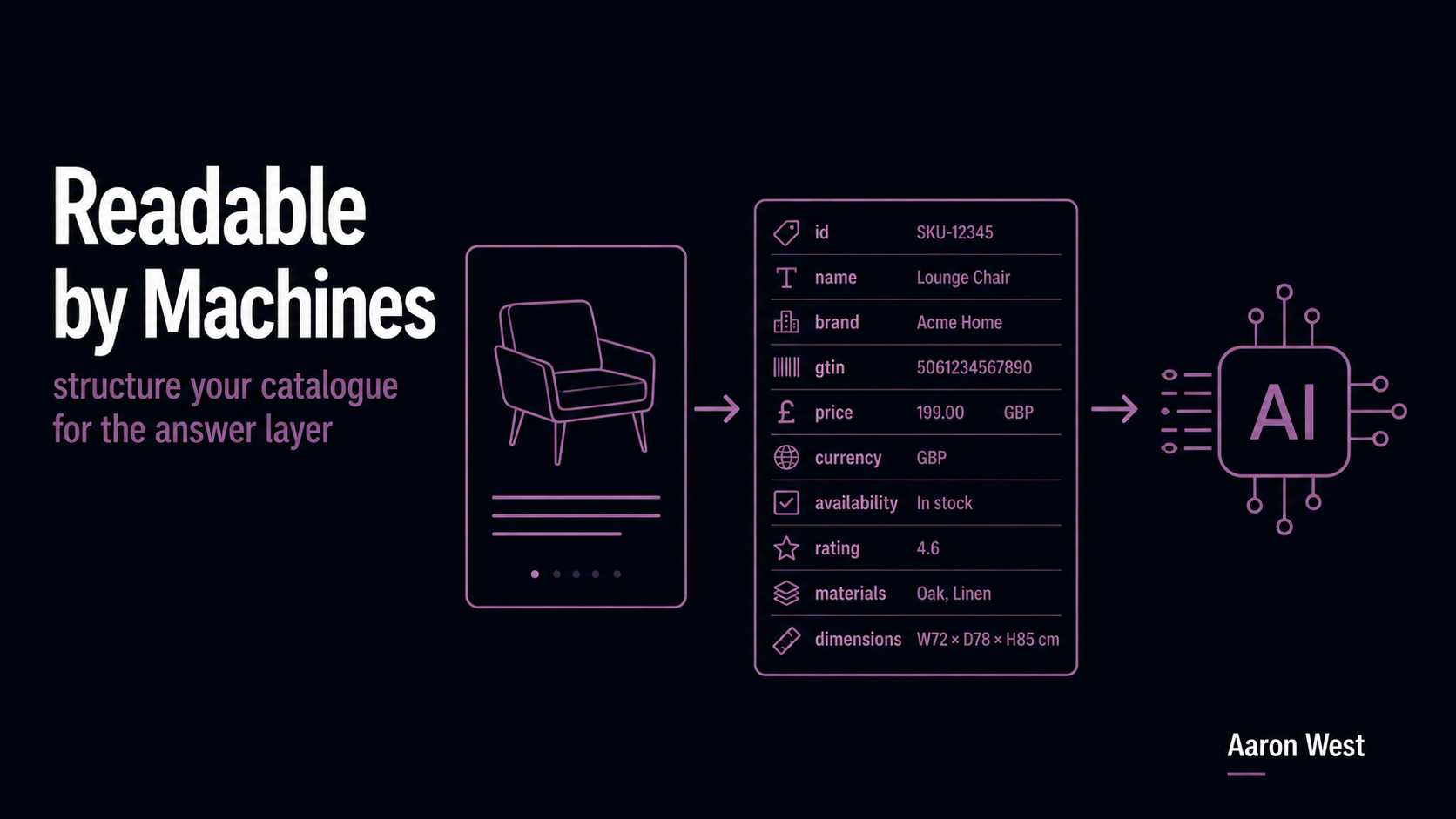
Structured Product Data: How to Make Your Catalog Readable by Machines and AI
You've structured your product data for your own site, and you've structured it for your channel feeds. There's a third reader you can't ignore: the open machine world, search engines' rich results and the AI answer and shopping engines that increasingly sit between customers and…
Continue reading...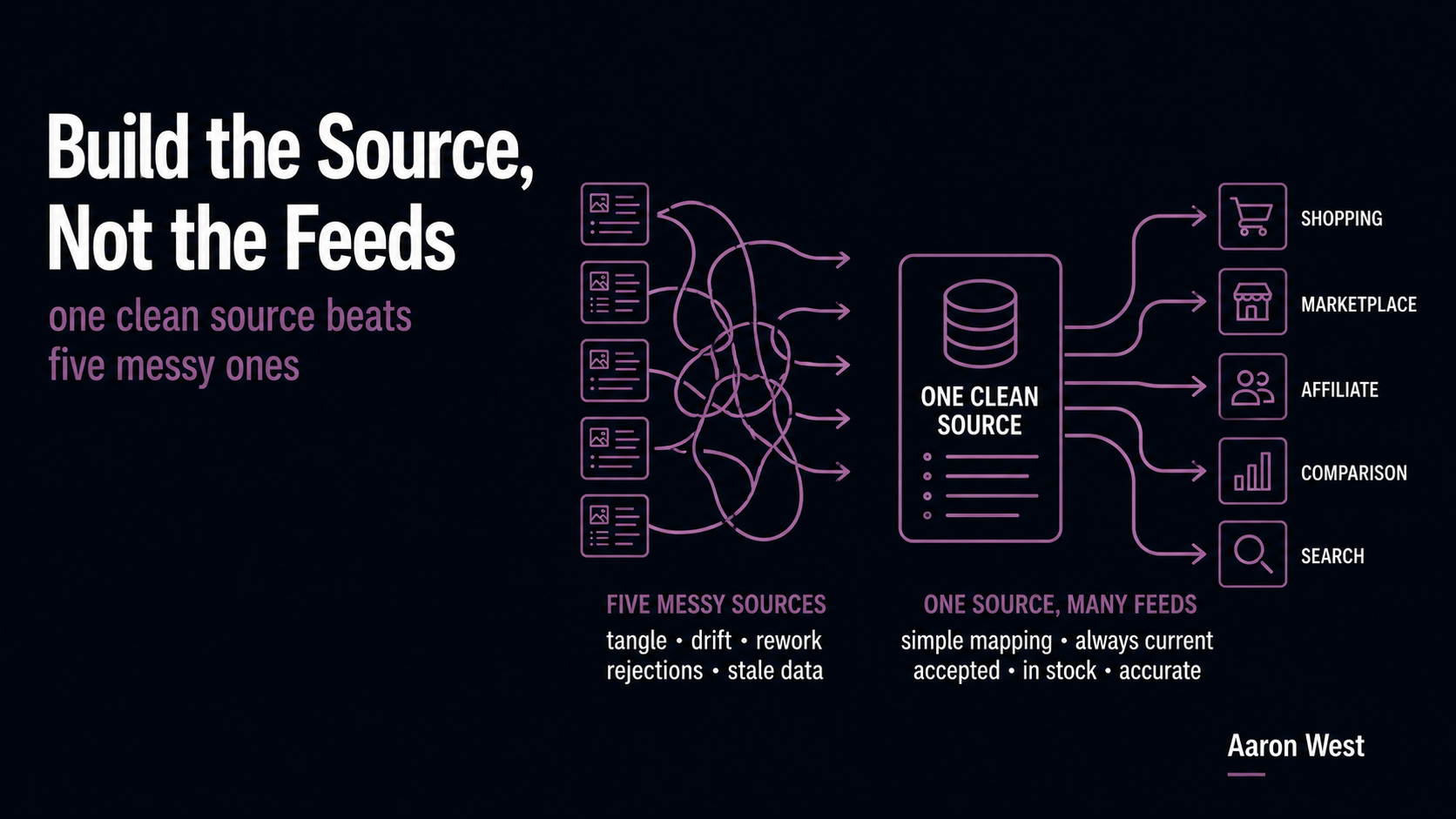
Product Feeds for Every Channel: Why One Clean Source Beats Five Messy Ones
A product feed is a structured export of your catalogue, formatted for a specific channel, and every channel you sell through runs on one: Google Shopping, marketplaces, affiliate networks, comparison sites, social commerce. The single most useful thing to understand about feeds is that they're…
Continue reading...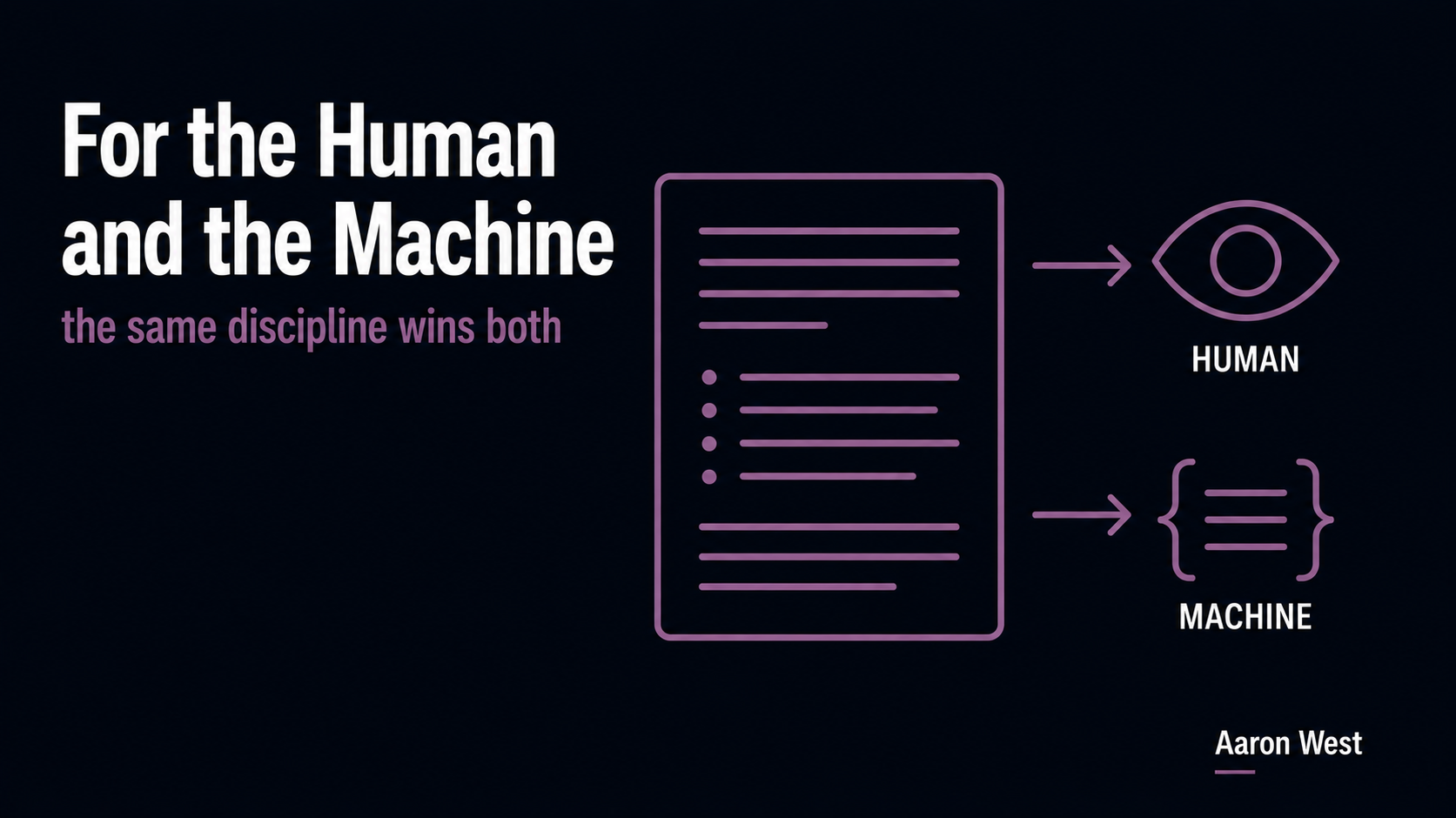
Product Descriptions: Writing for the Customer and the Machine
A product description has to do two jobs at once that usually pull against each other: persuade the person reading it (sell the product, inform them, reassure them) and feed the machine reading it (search engines, marketplace feeds, and increasingly AI answer engines that parse…
Continue reading...