Product Feeds for Every Channel: Why One Clean Source Beats Five Messy Ones

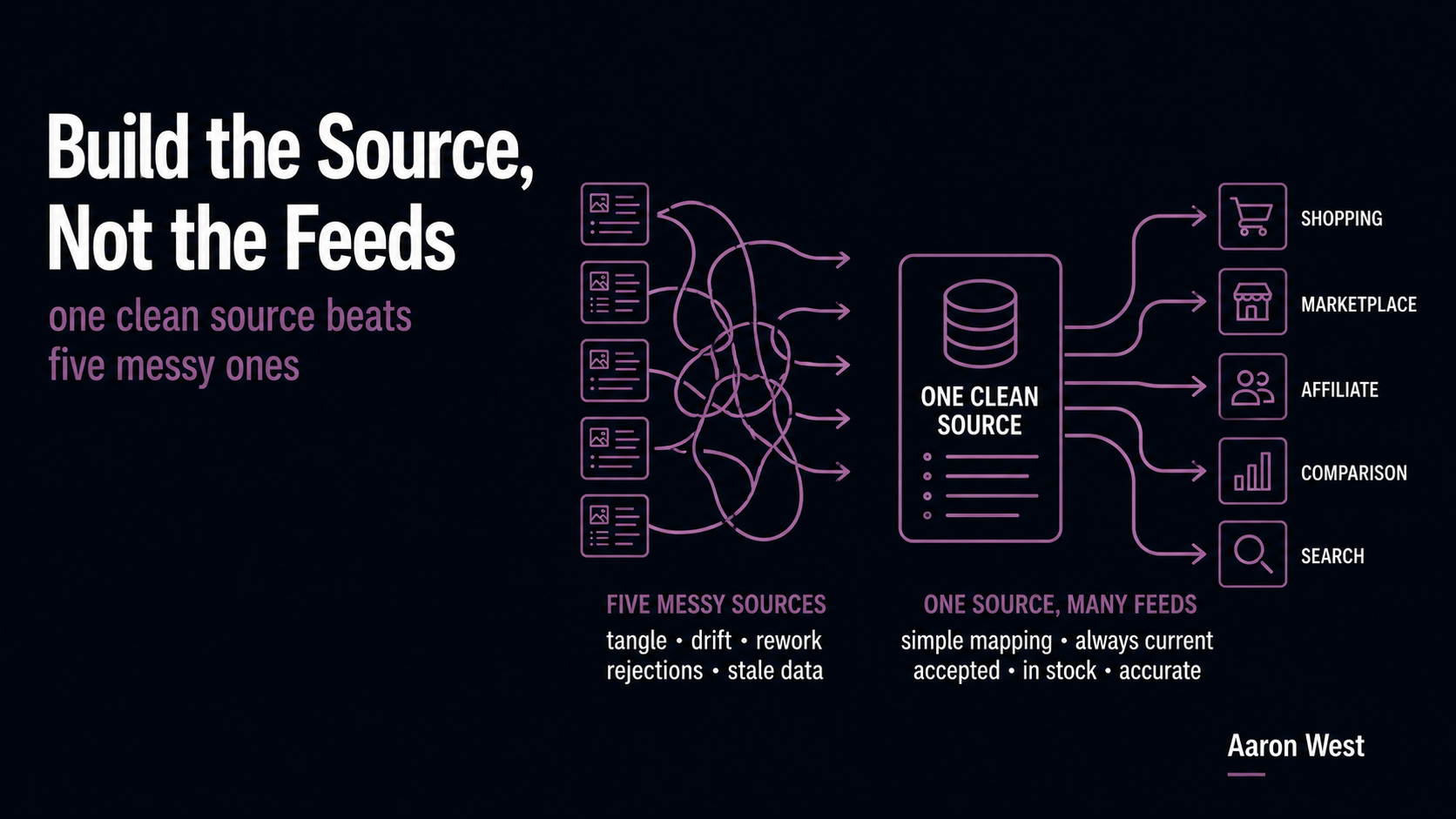
Table of Contents
A product feed is a structured export of your catalogue, formatted for a specific channel, and every channel you sell through runs on one: Google Shopping, marketplaces, affiliate networks, comparison sites, social commerce. The single most useful thing to understand about feeds is that they're only ever as good as the catalogue behind them. Build them one at a time from messy, scattered data and you'll firefight rejections and drift forever; build one clean, structured source of truth and the feeds fall out of it, each a simple mapping, all of them current, because you fixed it once at the source.
This closes the Catalog & Product Data pillar, under the cornerstone that product data is the foundation everything runs on. Feeds are where the whole pillar's payoff lands, or fails to.
What a feed actually is
In plain terms, a product feed is a structured file or export of your products, title, price, image, availability, attributes, identifiers, in the format a particular channel requires, kept up to date. Channels run on feeds. Your products appear on Google Shopping, in a marketplace listing, or across an affiliate network only because a correct, current feed is feeding them. No feed, no presence; bad feed, bad presence.
Each channel demands its own version: its own required fields, its own format, its own category taxonomy, its own rules about what's allowed. So selling on five channels means producing and maintaining five feeds, each a transformation of the same underlying catalogue into a different shape.
The multiplication problem
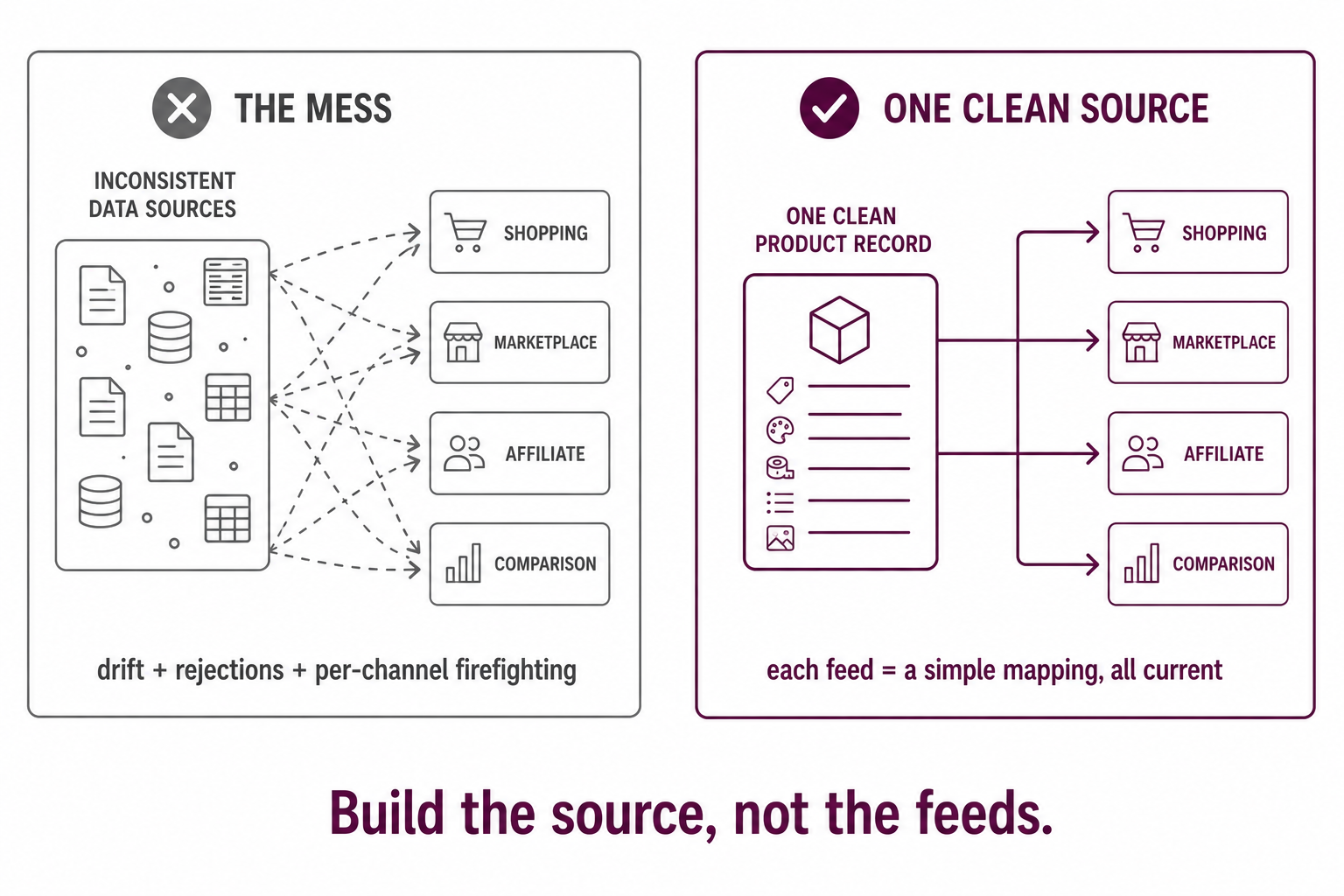
That multiplication is where most stores get into trouble. If you treat each feed as a separate project, building it by hand from whatever data you can scrape together for that channel, you end up with several independent feeds, each maintained separately, each drifting out of sync with the others and with reality. A price changes in one place and not another. A product goes out of stock on the site but stays live in the Shopping feed. A corrected colour gets fixed for the marketplace and not the affiliate network. Every channel becomes its own maintenance burden, and the burden multiplies with each channel you add.
This is the trap: the instinct is to manage feeds channel by channel, and that's exactly what doesn't scale. Each new channel adds a new firefight rather than reusing the work you already did.
The payoff of a clean source
Here's where everything the pillar argued pays off. If you have one clean, structured, authoritative source, good attributes, consistent values, properly modelled variants, then each feed stops being a project and becomes a mapping: take the clean source, transform it into the channel's required format, done. Mechanical, repeatable, reliable. Adding a new channel is configuring a new mapping, not rebuilding your data.
And if your source is messy, the opposite is true with equal force: every feed inherits the mess, which is the garbage-everywhere principle showing up at the channel layer. You can't produce a clean feed from a dirty catalogue; the channel just receives the dirt in its own format. So the leverage isn't in better per-channel feed management; it's in the source the feeds derive from.
The name for doing this properly is a single source of truth, the idea (often a PIM, product information management) that you maintain product data in one authoritative place and generate every feed from it, rather than hand-maintaining each channel. The practical payoff is the one the whole pillar was building toward: you update once, a price, a stock level, a corrected attribute, and it propagates to every channel automatically. Fix "crimson" to "Red" in the source, and it's right everywhere at once. That single behaviour is most of why respecting product data is worth it.
Freshness and rejections: where the debt comes due
Two realities make the case concrete.
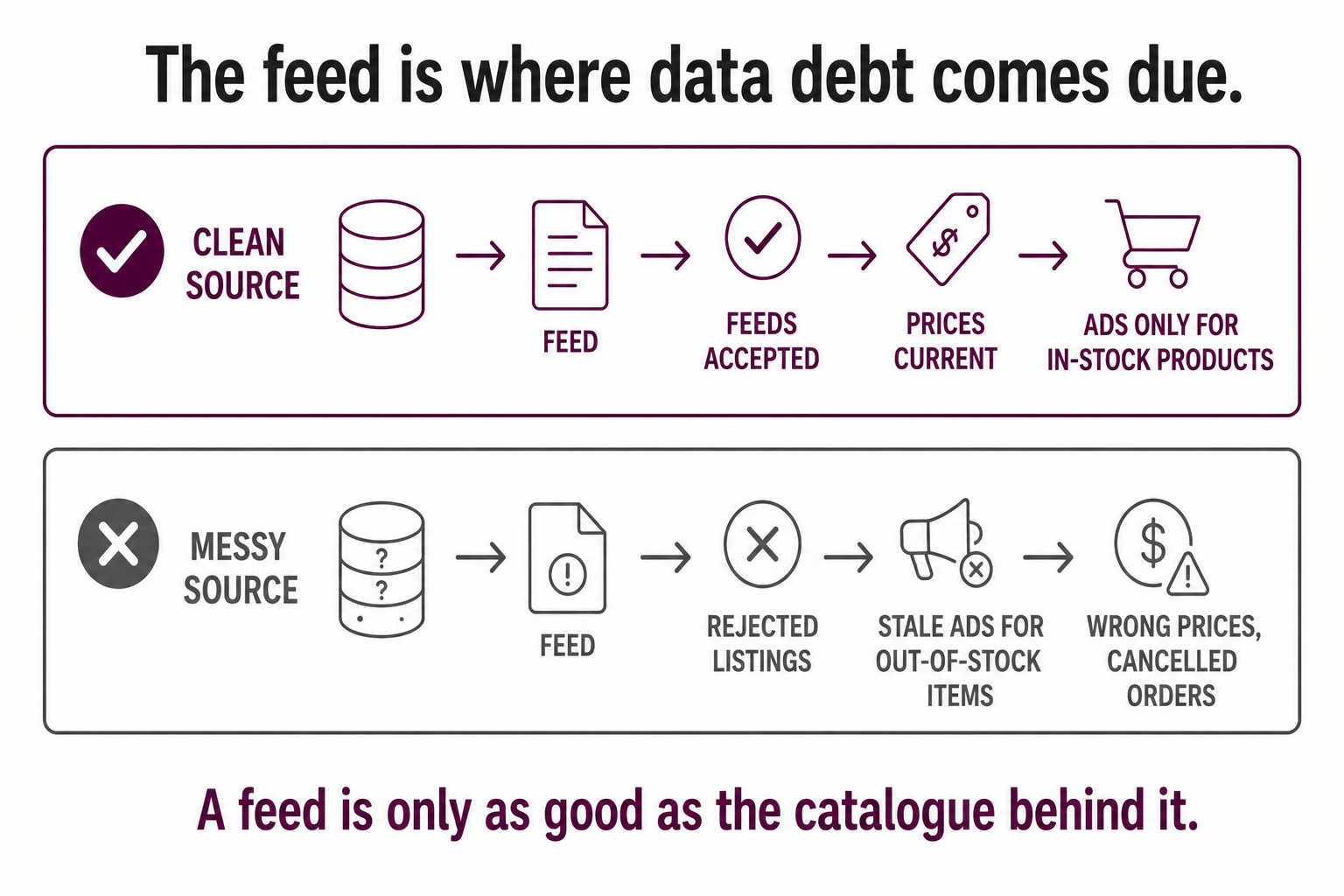
Freshness. Feeds have to stay current, and the cost of staleness is direct: a feed that still lists an out-of-stock product runs ads for something nobody can buy (wasted spend), a feed with an old price produces cancelled orders and channel penalties, and a feed that lags reality erodes trust with both customers and the platform. This is where feeds meet the inventory real-time-sync discipline: the same event-driven updates that keep your stock count honest have to keep your feeds honest too, which is exactly the kind of high-frequency, low-judgment work that should be automated.
Rejections. Channels reject listings for missing required fields, wrong image formats, disallowed content, or missing and invalid identifiers like GTINs. A store with clean, structured data sails through; a store with messy data lives in a permanent rejection firefight, fixing one listing at a time while new ones break. The feed is simply where your data-quality debt comes due, visibly, in the form of rejected products and the revenue they'd have earned. Clean the source and the rejections largely stop, because the thing being exported is finally correct.
Where this connects
Feeds are the channel layer of product data, so they touch the channels directly. Affiliate networks, comparison sites, and shopping ads all run on the product feed, the affiliate feeds work goes deeper on the affiliate-specific side, and shopping and marketplace ads depend on feed quality for both eligibility and performance. The point that unifies them: the quality of every one of those channels is capped by the quality of the feed, which is capped by the quality of the source. You don't fix a channel's performance at the channel; you fix it at the source.
What this comes down to
Every channel you sell on runs on a feed, and a feed is only ever as good as the catalogue behind it. Build feeds one at a time from messy, scattered data and you'll spend forever firefighting rejections and chasing drift across channels that never quite agree with each other or with reality. Build one clean, structured source of truth and the feeds fall out of it, each a simple mapping, all of them current, because you fixed it once where it mattered.
That's the real payoff of respecting product data, and the reason the whole pillar exists: not a tidy database for its own sake, but every channel you sell on working from the same clean truth, updated in one place, correct everywhere. Build the source, not the feeds.
A few common questions
What is a product feed? A structured export of your catalogue, with each product's title, price, image, availability, attributes, and identifiers, formatted to a specific channel's requirements and kept up to date. Channels run on feeds: your products appear on Google Shopping, in a marketplace, or across an affiliate network only because a correct, current feed is feeding them. Each channel demands its own format, fields, and rules, so selling on several channels means maintaining several feeds.
Why is managing feeds per channel a problem? Because each feed becomes its own maintenance burden, and the burden multiplies with every channel. Built and maintained separately from scattered data, feeds drift out of sync with each other and with reality, a price changes in one place and not another, a product goes out of stock on the site but stays live in the Shopping feed. The instinct to manage feeds channel by channel is exactly what doesn't scale, since each new channel adds a firefight instead of reusing work.
What's the fix for messy, drifting feeds? One clean, structured source of truth that every feed is generated from, often a PIM (product information management). With a clean source, each feed becomes a simple mapping into the channel's format rather than a separate project, and you update once, a price, a stock level, a corrected attribute, and it propagates everywhere automatically. You can't produce a clean feed from a dirty catalogue, so the leverage is in the source, not in per-channel feed management.
Why do my listings keep getting rejected? Usually missing required fields, wrong image formats, disallowed content, or missing or invalid identifiers like GTINs, which all trace back to the underlying data quality. The feed is simply where your data-quality debt comes due, visibly, as rejected products and lost revenue. A store with clean, structured data sails through; a messy one lives in a permanent rejection firefight. Clean the source and the rejections largely stop, because the thing being exported is finally correct.
You should also read:
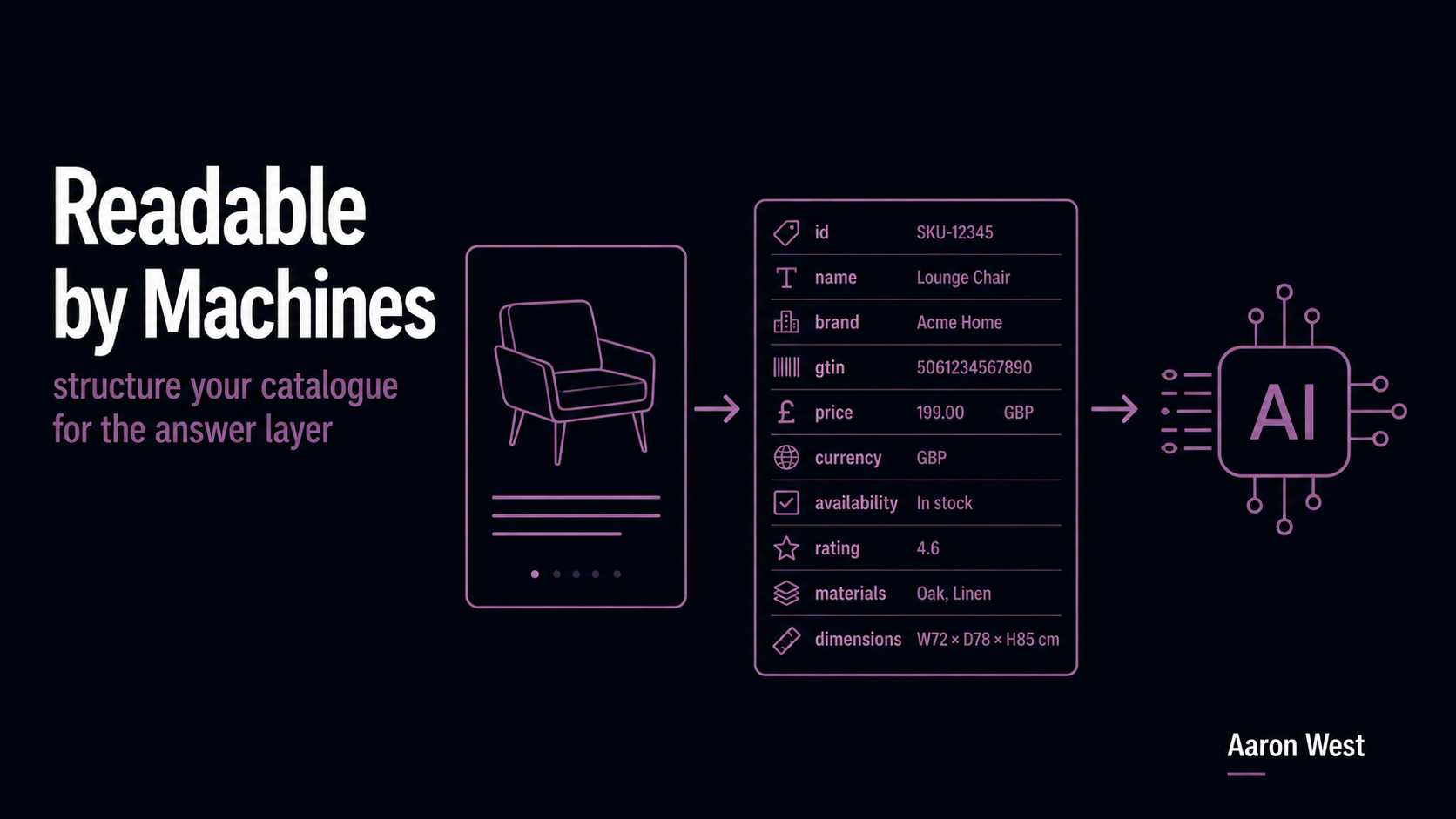
Structured Product Data: How to Make Your Catalog Readable by Machines and AI
You've structured your product data for your own site, and you've structured it for your channel feeds. There's a third reader you can't ignore: the open machine world, search engines' rich results and the AI answer and shopping engines that increasingly sit between customers and…
Continue reading...
Product Descriptions: Writing for the Customer and the Machine
A product description has to do two jobs at once that usually pull against each other: persuade the person reading it (sell the product, inform them, reassure them) and feed the machine reading it (search engines, marketplace feeds, and increasingly AI answer engines that parse…
Continue reading...
Product Imagery: The Standards That Quietly Decide Conversion
Product images are product data, not decoration, and online they are the single most important information source you have, because the customer can't touch the product, so the images effectively are the product. Consistent imagery standards, true colour, multiple angles, honest scale, zoom, context, and…
Continue reading...