Selling on a Marketplace: The Rules of Someone Else's House

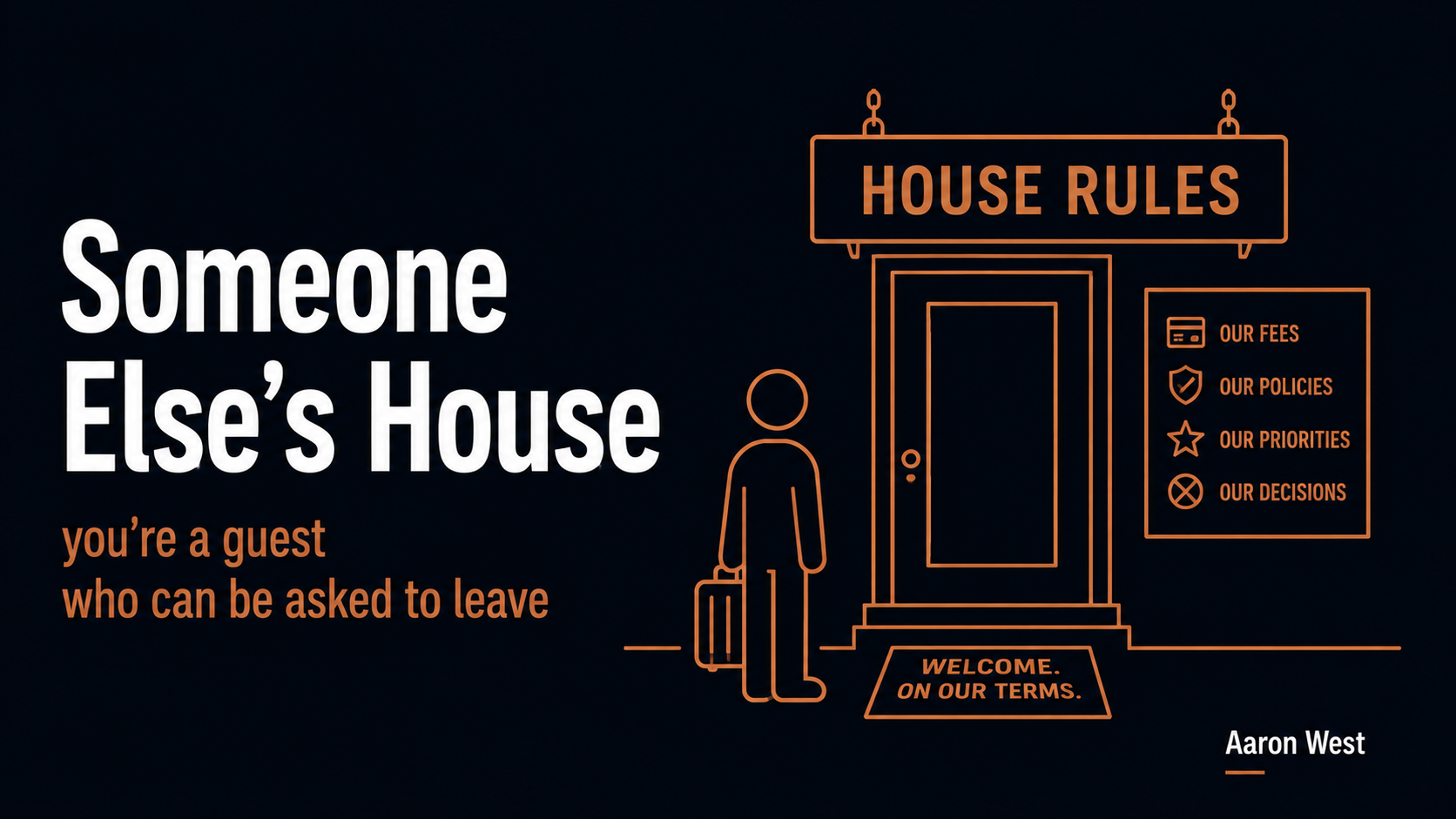
Table of Contents
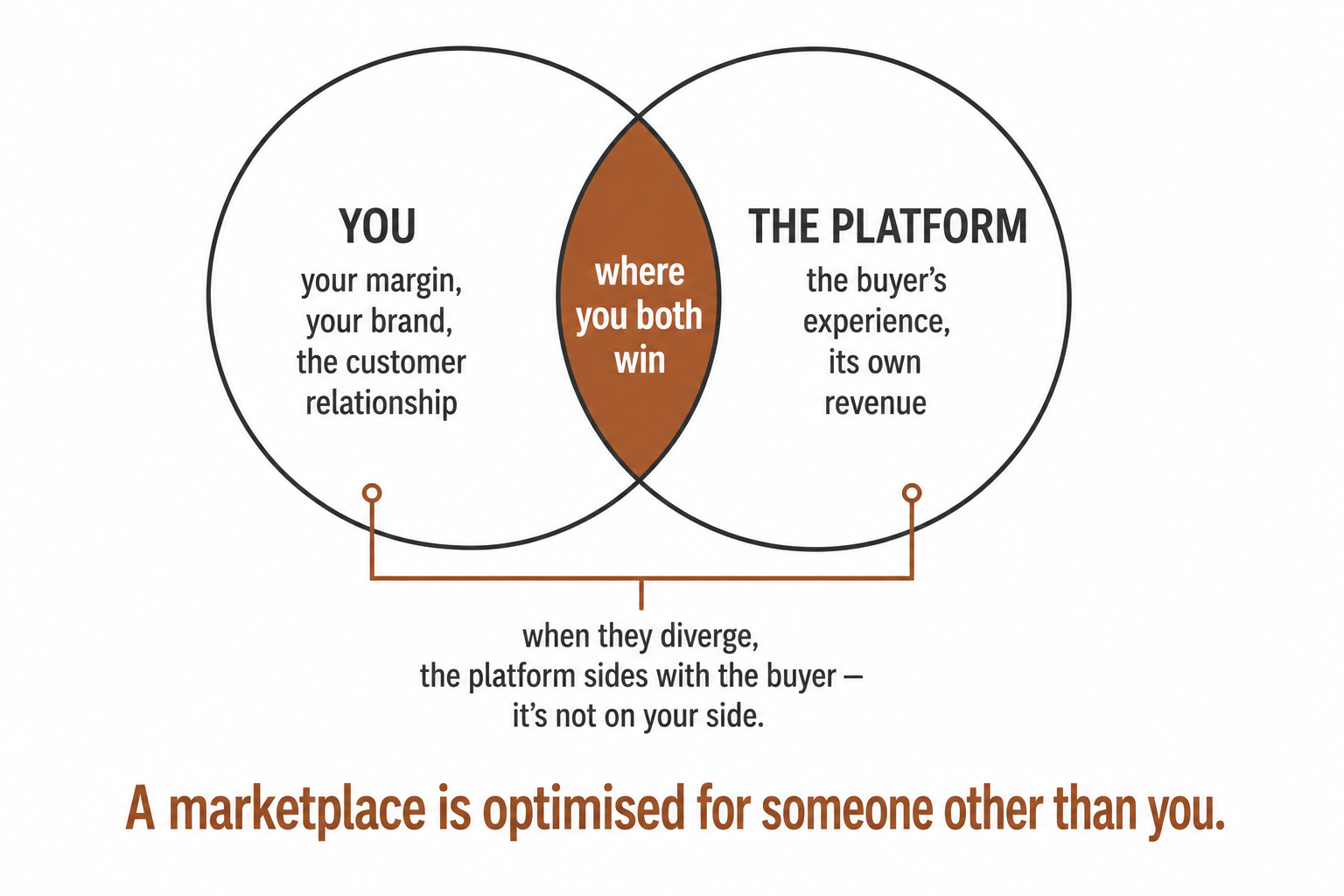
Selling on a marketplace means operating in someone else's house, and the rule that governs everything is this: the platform's interests overlap with yours, but they are not the same. It optimises for the buyer's experience and for its own revenue, not for any individual seller's margin or brand. Succeeding on a marketplace is less about your brand story and more about understanding the platform's rules, fees, competition, and risks, and playing well inside a game whose rules you don't set and can't change.
This is a core of the Marketplaces & Multichannel pillar, under the cornerstone that own store versus marketplace is a reach-versus-control trade-off. The cornerstone made the strategic case for using marketplaces. This piece is about what it's actually like to operate inside one, and how not to get burned.
The mental shift that changes everything
On your own store, you set the rules. On a marketplace, you follow them. That sounds obvious and it's the thing most sellers fail to truly absorb, because they bring own-store instincts, brand loyalty, telling their story, doing things their way, into a place that doesn't run on any of that.
The platform's north star is the buyer's experience and its own revenue. That alignment is real and it's why marketplaces work, a great buyer experience sells your product too, but it is not the same as being on your side. When your interest and the buyer's experience diverge, the platform sides with the buyer, every time, because that's its business. Once you accept that you're operating in a house optimised for someone other than you, every rule below stops feeling unfair and starts looking like the cost of the reach.
The rules, the fees, the competition
Three realities define life inside the house.
The rules. Marketplaces enforce strict policies on listings, content, service standards, response times, and returns, because they're protecting a consistent buyer experience across thousands of sellers. Break them and you're penalised or suspended. You comply with the platform's standard, or you don't sell there. This is the tenant reality from the cornerstone, made operational: the house has rules, and the house enforces them.
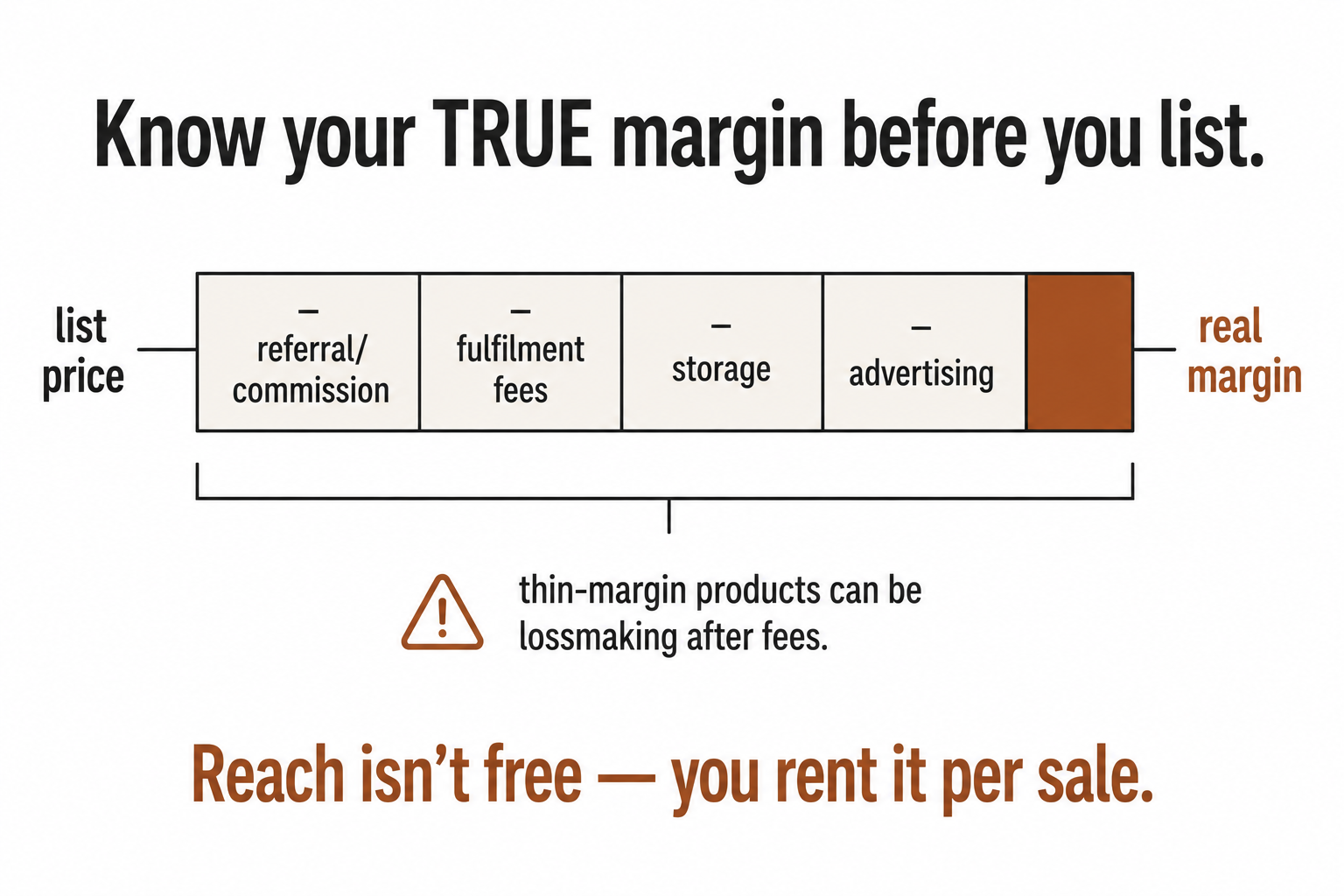
The fees. Reach is not free; you rent it per sale. A referral or commission comes off every order, and depending on the marketplace there may be fulfilment fees, storage fees, and advertising costs on top. These stack, and they mean the single most important number before you list anything is your true margin after all marketplace fees, not your list price. A product that's healthily profitable on your own store can be lossmaking on a marketplace once the fees are counted, and plenty of sellers discover this only after the volume arrives.
The competition. On many marketplaces, multiple sellers compete for the same listing or the same prime placement, and the platform decides who wins based on price, availability, fulfilment, and service metrics, a buy-box-style contest you win by serving the platform's priorities, not by having the best brand. And the platform itself may compete: one that sells its own products can see exactly what's working and launch a rival. You're competing on the platform's terms, sometimes against the platform.
Your metrics are your fate
This is the part own-store sellers underestimate most. On a marketplace, your standing is governed by service metrics the platform measures and you don't get to override: shipping speed and reliability, defect and cancellation rates, response times, return handling. Miss them and your ranking, your eligibility for prime placement, even your account, take the hit. The platform's metrics, not your own judgment about what matters, decide whether you're visible and whether you're allowed to keep selling.
The practical consequence is that operational excellence isn't a nice-to-have on a marketplace; it's survival. The reliable, fast, low-defect seller wins placement and stays in good standing; the one who's casual about fulfilment quietly slides down the rankings or gets suspended, often without a conversation. You're being continuously graded, and the grade is your business.
Account risk: the rented-land reality made concrete
Which leads to the risk that should shape how much weight you put on any single marketplace: suspension. Accounts get suspended, sometimes by an algorithm, sometimes wrongly, and the appeal process is slow and opaque. Your entire revenue on that platform can vanish overnight, on a decision you didn't make and can't easily reverse.
This is the rented-land risk from the cornerstone made painfully concrete. It doesn't mean avoid marketplaces; it means never let a single platform become a floor you can't afford to lose. Use the reach, but keep building the owned store and customer relationship that no suspension can touch, so that if the worst happens on one channel, your business survives it. A marketplace should be a powerful channel, never your only one.
The brand limit
One more constraint worth naming. A marketplace gives you a constrained storefront, your product shown beside direct competitors and often beside the platform's own-brand version, with little room to tell your story or build a relationship. You're renting shelf space in a crowded shop, not building a brand home. That's fine, as long as you know it: use the marketplace for the reach it's genuinely good at, and build the brand, the story, and the customer relationship on the store you own, where you actually have room to do it.
What this comes down to
Sellers fail on marketplaces by treating them like their own store, expecting brand loyalty that doesn't exist there, ignoring the metrics they're graded on, and under-pricing the true load of the fees. A marketplace is a different game with its own rules, refereed by a platform that isn't on your side and was never meant to be.
So learn the rules. Count the true cost after every fee before you list. Win the service metrics the platform actually grades you on. And never let one marketplace become the single floor you can't afford to lose. Played that way, it's a powerful reach channel. Mistaken for your own store, it's a trap with a landlord. It's someone else's house, and you're a guest who can be asked to leave, so respect the house rules, or don't play.
A few common questions
What's the most important thing to understand about selling on a marketplace? That you're operating in someone else's house, and the platform's interests overlap with yours but aren't the same, it optimises for the buyer's experience and its own revenue, not your margin or brand. That alignment is real and it's why marketplaces work, but when your interest and the buyer's experience diverge, the platform sides with the buyer. Once you accept that, the rules, fees, and metrics stop feeling unfair and start looking like the price of the reach.
How do marketplace fees affect profitability? Significantly, and often more than sellers expect. A referral or commission comes off every order, with possible fulfilment, storage, and advertising costs on top, and they stack. The number that matters before you list anything is your true margin after all marketplace fees, not your list price, because a product that's profitable on your own store can be lossmaking on a marketplace once the fees are counted. Reach isn't free; you rent it per sale.
Why do marketplace accounts get suspended, and why does it matter so much? Marketplaces enforce strict rules and grade sellers on service metrics (shipping speed, defect and cancellation rates, response times), and falling short, or sometimes an algorithmic flag, can lead to suspension with a slow, opaque appeal. Your entire revenue on that platform can vanish overnight on a decision you don't control. It matters because it's the rented-land risk made concrete: never let a single marketplace become a floor you can't afford to lose, and keep building an owned store and relationship no suspension can touch.
Can I build my brand on a marketplace? Only to a limited extent. A marketplace gives you a constrained storefront, your product beside competitors and often the platform's own-brand version, with little room to tell your story or own the customer relationship. You're renting shelf space, not building a brand home. The better split is to use the marketplace for the reach it's good at and build the brand, story, and customer relationship on the store you own, where you actually have the room to do it.
You should also read:
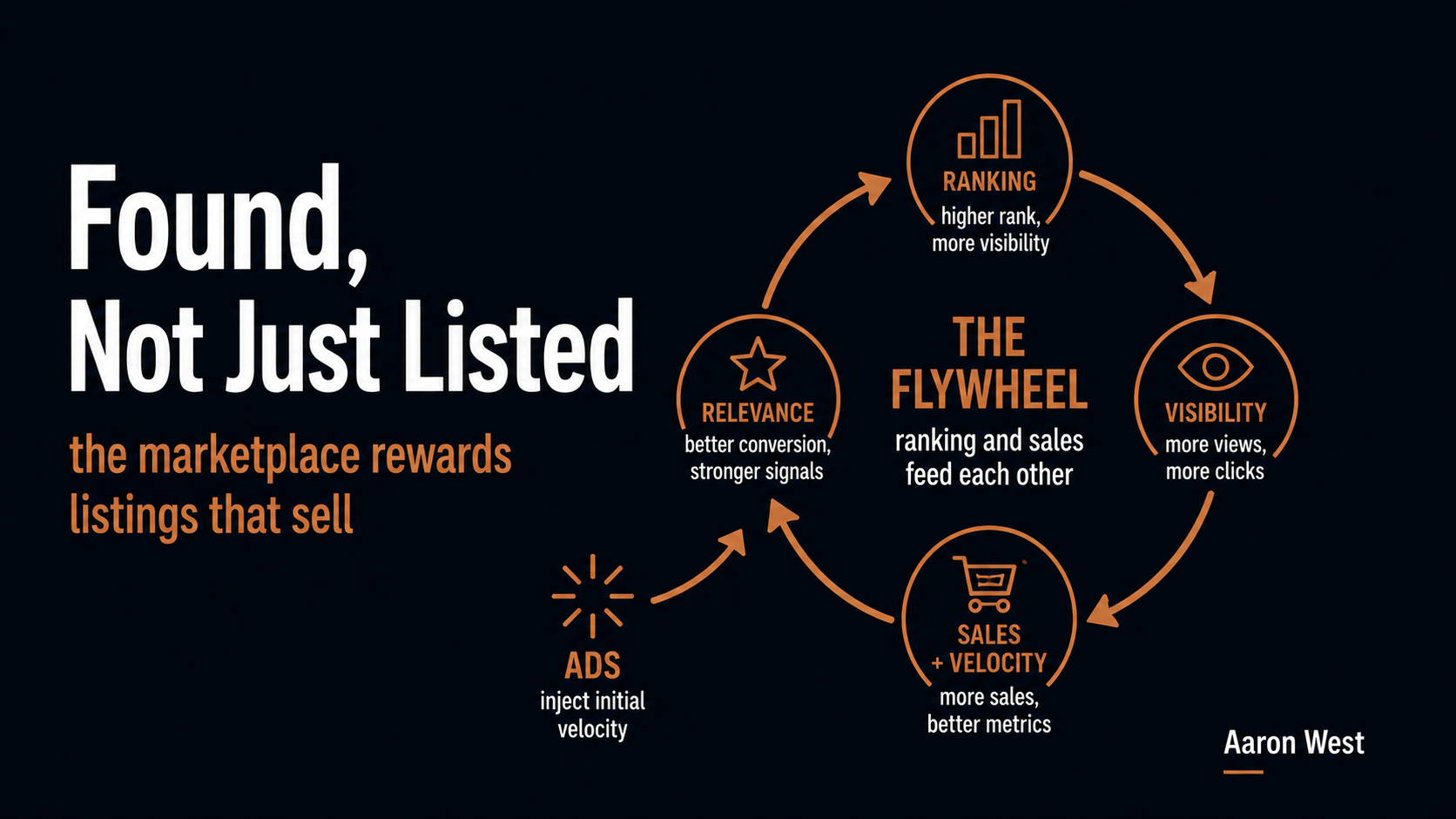
Getting Found Inside a Marketplace: Listing SEO and Marketplace Ads
Being listed on a marketplace is not the same as being found on it. Inside a marketplace, visibility is its own competition, won through the marketplace's search algorithm (listing optimisation) and its advertising system (paid placement). The defining mechanic is that marketplace search rewards listings…
Continue reading...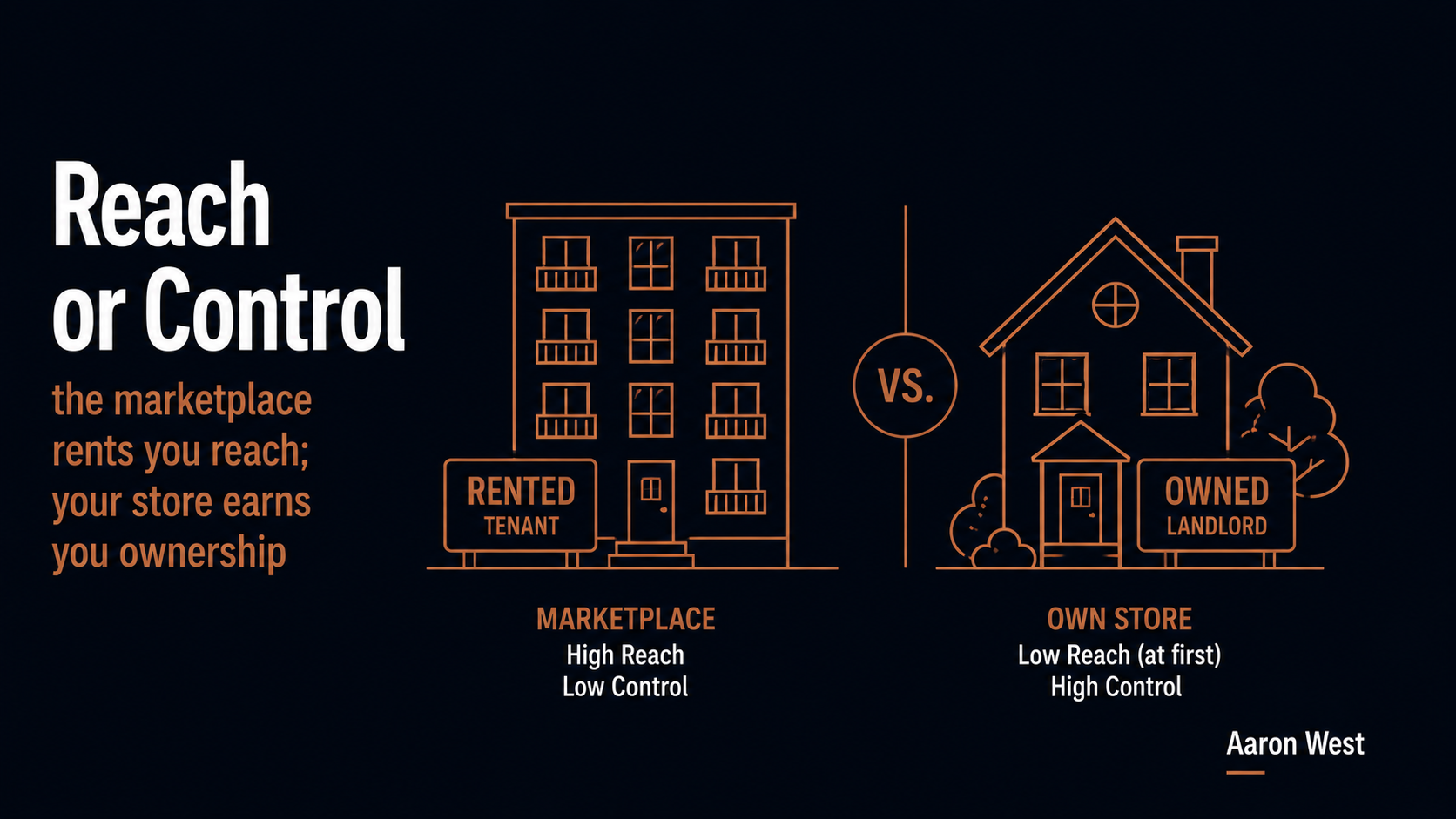
Your Own Store vs the Marketplace: The Strategic Trade-Off
The choice between selling on your own store and selling on a marketplace isn't about which is better. It's about what you're willing to trade. A marketplace gives you instant reach, access to enormous existing demand, in exchange for operating in someone else's house: their…
Continue reading...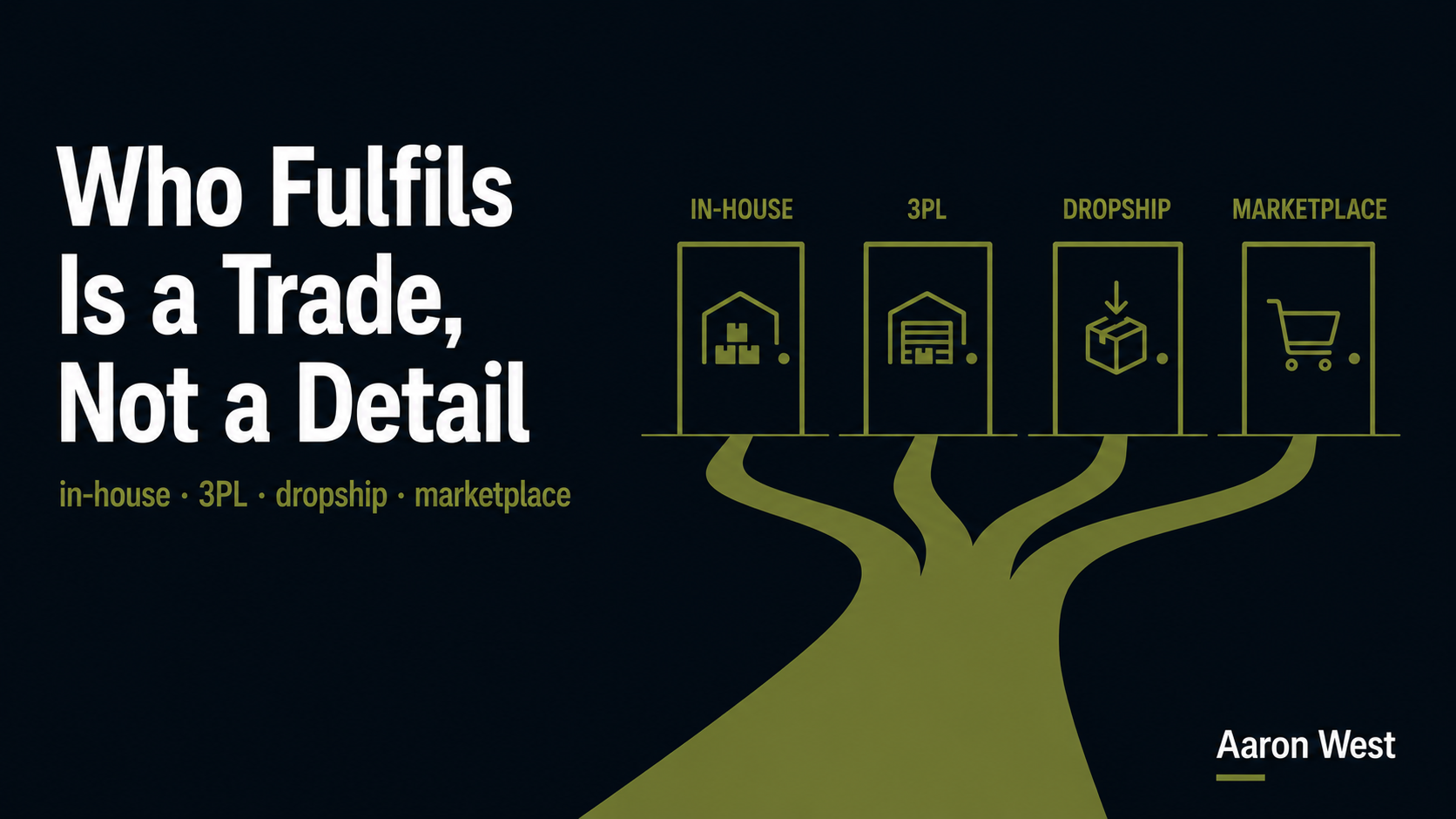
In-House vs 3PL vs Dropship vs Marketplace Fulfilment: The Real Trade-Offs
The core fulfilment question is who actually does it, and the four main models, in-house, third-party logistics (3PL), dropshipping, and marketplace fulfilment, trade control, cost, scale, and customer experience against each other differently. There's no best model, only the right fit for your stage, your…
Continue reading...