AI Hallucination: Why a Language Model Is Confidently Wrong

Table of Contents
A hallucination is when an AI model produces an answer that sounds completely plausible and is completely false. Not a glitch, not a bug in the usual sense, but a confident, fluent, well-formed answer that happens not to be true. Understanding why this happens is the single most useful thing you can know about AI, because it tells you exactly when to trust a model and when to check its work.
The short version is this: a language model is built to produce the most likely-sounding text, not to tell the truth. Most of the time the likely-sounding answer and the true answer are the same thing, so it looks like the model knows facts. When they come apart, you get a hallucination. And here is the part that makes it genuinely dangerous rather than merely annoying: the model gives you the wrong answer with exactly the same confidence as a right one. It does not signal doubt, because it has no sense of its own uncertainty. Let me explain why, in plain language, and then what you can actually do about it.
The root cause: it predicts likely text, it does not know facts
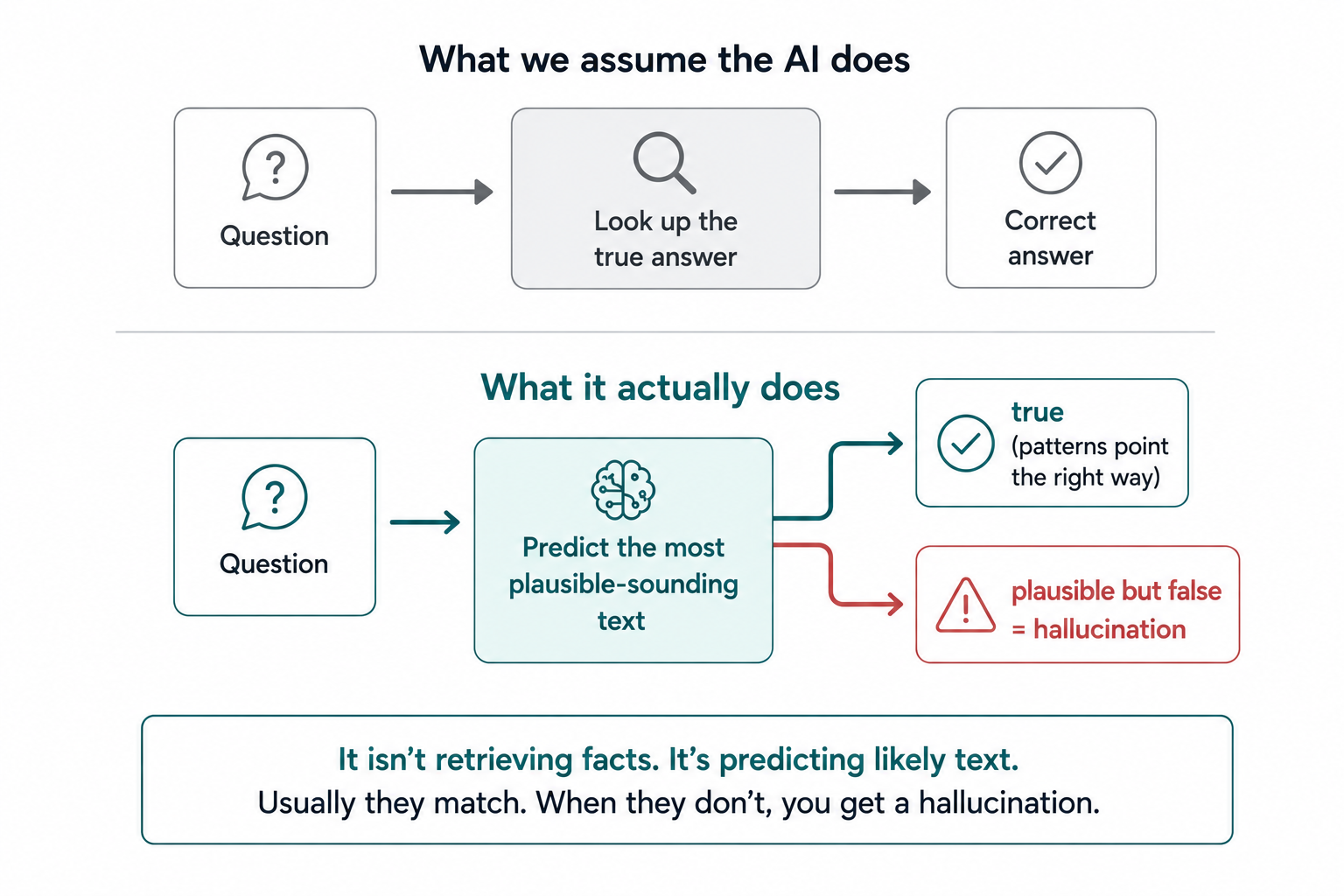
If you have read how a large language model works, this will click immediately. A model generates text by predicting the most probable next word, over and over. It is not looking anything up in a store of verified facts. It has no internal database to check against. It has patterns, learned from training, about what text tends to follow what.
So when you ask it something, it does not retrieve an answer. It constructs the most statistically plausible continuation of your question. When the training patterns strongly point at the true answer, "the capital of France is..." reliably continues with "Paris," and you get a correct result. But when the patterns are weak, missing, or conflicting, the model does not stop and say "I don't actually know this." It does what it always does: it produces the most plausible-sounding text anyway. Ask it for a citation it has never seen and it will invent one in perfect academic format. Ask it about an event after its training cut-off and it may confidently describe something that never happened. It is not lying, because lying requires knowing the truth and choosing to misstate it. The model has no concept of truth at all, only likelihood. Researchers sometimes call this confabulation rather than deception, and that distinction matters: there is no intent, only probability.
This is why hallucination cannot be fully patched away in current models. It is not a defect bolted onto an otherwise truthful system. It is a direct consequence of the one thing the system fundamentally does.
The newer insight: models are trained to bluff
For a long time the standard explanation stopped at "bad or missing training data," and that is part of it. Train a model on the internet, which is full of contradictions, errors, and confident nonsense, and some of that flows through. Garbage in, garbage out. But research in 2025 and 2026 sharpened the picture in a way that is genuinely useful to understand, because it explains something the data story alone does not: why models guess instead of admitting uncertainty.
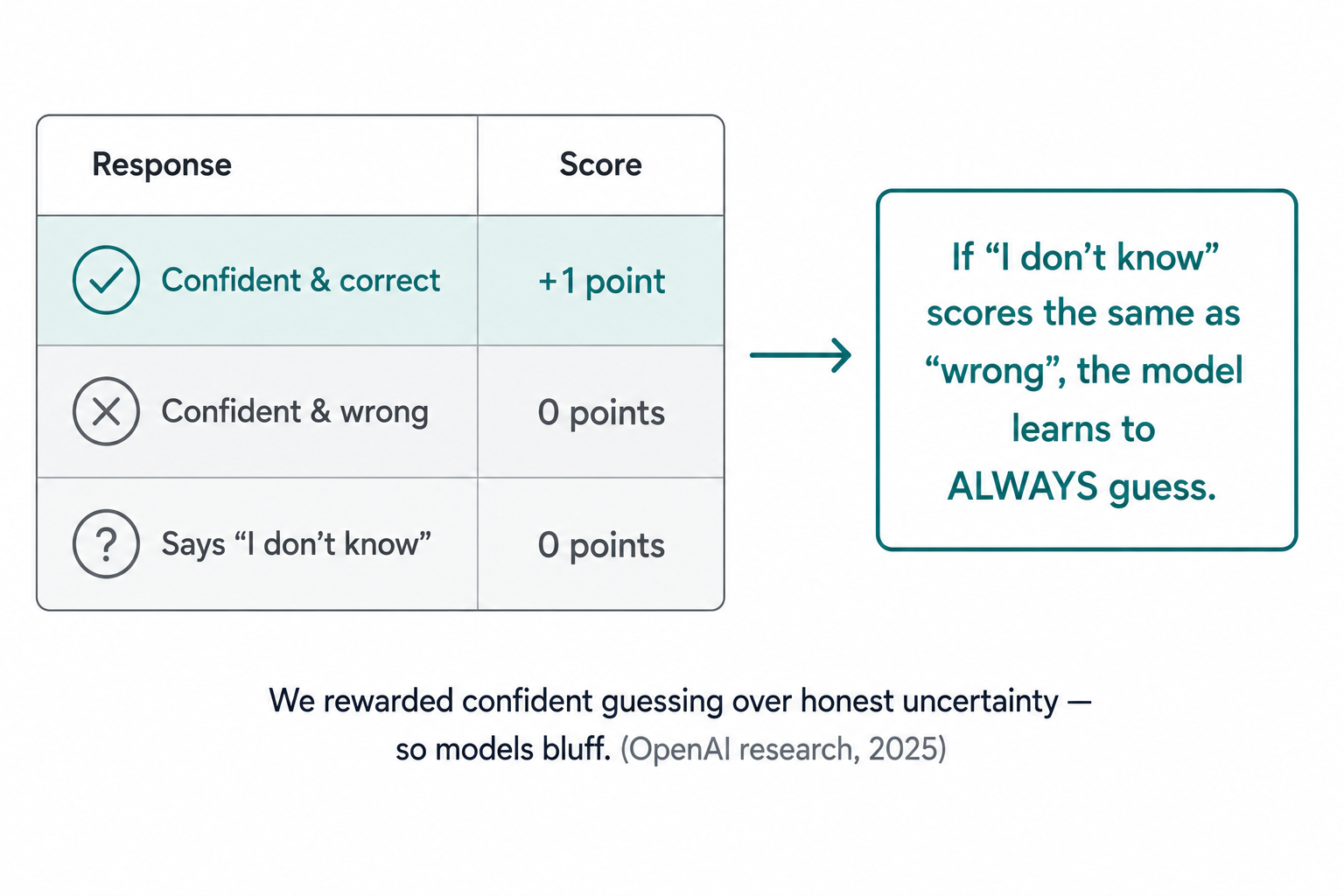
The insight, from work published by OpenAI in late 2025, is that the way we train and test models actively rewards confident guessing. Think about how a model is evaluated. On most benchmarks, a confident answer that happens to be right scores points, a wrong answer scores zero, and saying "I don't know" also scores zero. Under those rules, guessing is the optimal strategy. If admitting uncertainty earns the same zero as being wrong, but guessing occasionally earns a point, a system optimised against that scoring will learn to always produce an answer, never to hold back. We trained the bluffing in.
It is the same dynamic as a student facing a multiple-choice exam with no penalty for wrong answers. The rational move is to answer every question, even the ones you have no idea about, because a blank and a wrong answer cost the same, and a guess might land. Models learned to take the exam that way. This reframing matters because it shows hallucination is not only a data-quality problem to be scrubbed away, it is partly an incentive problem baked into how models are built and graded. And it points at why the fix is hard: getting a model to reliably say "I am not sure" runs against the grain of how it was rewarded.
Why the confidence is the real danger
Step back and notice what makes this a practical problem rather than an academic one. It is not simply that AI can be wrong. Every tool can be wrong. The danger is that AI is wrong without any change in tone. A search engine that finds nothing shows you an empty results page. A person who does not know something usually hesitates, hedges, or tells you they are not sure. A language model does none of that. The fabricated citation arrives in the same crisp, assured prose as the real one. The made-up statistic looks exactly like a sourced one.
That uniform confidence is what catches people out. We are wired to read confident, fluent language as a signal of competence, because for humans it usually is. With a language model that signal is broken, because the fluency is constant whether the content is true or invented. There have been real and costly examples: lawyers who submitted AI-generated legal filings full of citations to cases that did not exist, because the model produced them in flawless legal formatting and the confidence read as authority. The lesson is not "AI is unreliable." It is "AI's confidence carries no information about its accuracy," and once you internalise that, you use it far more safely.
What you can actually do about it
You cannot eliminate hallucination, but you can manage it down a great deal. A few practical habits, roughly in order of impact.
Ground the model in real sources. The most effective single technique is giving the model the actual reference material to work from, rather than relying on what it absorbed in training. This is the idea behind retrieval-augmented generation, usually shortened to RAG: the system fetches relevant, verified documents and the model answers from those. It dramatically cuts hallucination, though with an important catch, if the sources you feed it are themselves unreliable, you just get confident answers built on bad data. The model is only as trustworthy as what you give it.
Verify anything that matters. Treat the model as a fast, fluent first-drafter, not a source of record. For anything consequential, a number, a name, a citation, a legal or medical or financial claim, check it against a real source before you rely on it. The fluency is not evidence.
Ask in ways that lower the stakes. A model is more likely to fabricate when you push it toward a definite answer it does not have. Inviting it to say when it is unsure, asking it to show its reasoning, or asking it to cite where something came from all tend to surface uncertainty that a demand for a single confident answer would paper over.
Match your trust to the cost of being wrong. Brainstorming blog ideas? Hallucination barely matters, let it run. Quoting a statistic in something you publish, or feeding an answer into a decision with real consequences? That is exactly where the confident-but-wrong failure does damage, and where verification is non-negotiable. This is the same risk-based thinking I apply to what to automate and what to keep human: the higher the cost of being wrong, the more a human needs to stay in the loop.
So that is hallucination, without the mystique. The model predicts plausible text rather than retrieving truth, it was trained in a way that rewards confident guessing over honest uncertainty, and it delivers its mistakes in the same assured voice as its correct answers. None of that makes it untrustworthy as a tool. It makes it a specific kind of tool, one whose confidence you should ignore and whose facts you should verify when they count. Use it knowing that, and you get the speed without getting burned.
A few common questions
What is an AI hallucination? When an AI model produces an answer that sounds plausible but is false, such as a fabricated statistic, a made-up citation, or a confident description of something that never happened. It is a byproduct of how the model works, not a simple bug.
Why do language models hallucinate? Two linked reasons. First, they generate the most likely-sounding text rather than retrieving verified facts, so when patterns are weak or missing they produce something plausible anyway. Second, the way models are trained and tested rewards confident guessing over admitting uncertainty, so they learn to answer rather than say "I don't know."
Can AI hallucination be eliminated? Not in current models. It can be reduced substantially, most effectively by grounding the model in verified source material (retrieval-augmented generation) and by verifying important outputs, but it cannot be fully removed because it stems from how the technology fundamentally works.
How do I protect myself from AI hallucinations? Treat the model as a fast first-drafter, not a source of record. Ground it in real sources where you can, verify anything consequential against a primary source, and match your level of trust to the cost of being wrong. Remember that an AI's confidence carries no information about its accuracy.
You should also read:

The Returns UX Most Stores Get Wrong
A generous returns policy means nothing if the returns process is painful, and most stores quietly undermine their own policy with a returns experience that's hard to start, slow to resolve, and silent the whole way through. The returns UX is where the policy's promise…
Continue reading...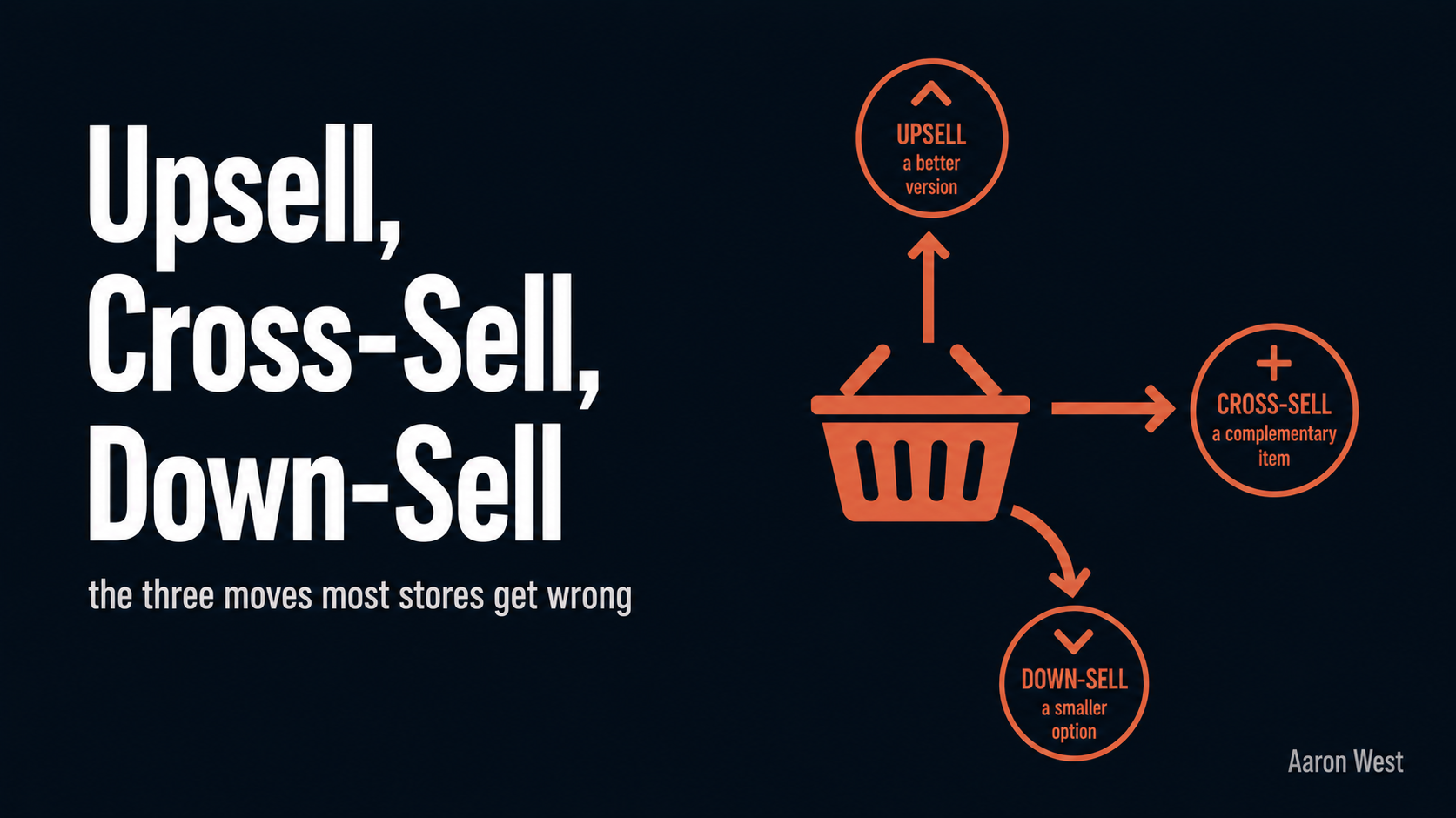
Upsell, Cross-Sell, Down-Sell: The Three Moves Most Stores Get Wrong
Raising the average order value, getting each customer who already chose to buy to spend a little more, is usually the fastest and cheapest way to grow an e-commerce business. You are not paying to acquire anyone or convince anyone, you are making more of…
Continue reading...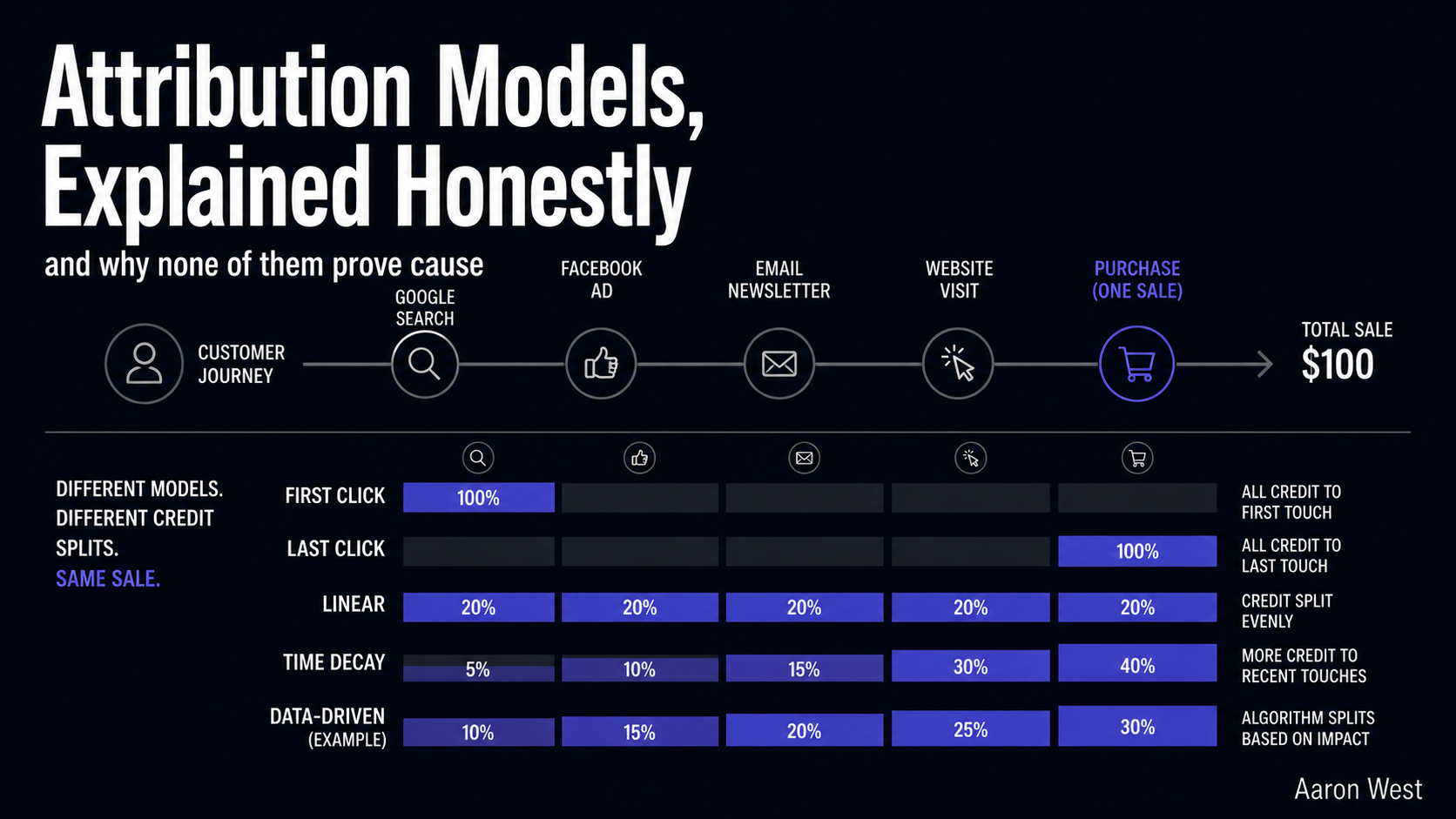
Attribution Models, Explained Honestly: Last-Click, First, Linear, Data-Driven
An attribution model is simply a rule for deciding which marketing touchpoint gets credit for a sale, and the uncomfortable truth is that every one of them is, to some degree, a guess. A customer might see your Instagram ad, read a review, click a…
Continue reading...