Experimentation and CRO: Most of What You Believe About Your Store Is a Guess

Table of Contents
Most of what you believe about your store is a guess. Most e-commerce decisions are made on opinion, intuition, or copying competitors, and experimentation, A/B testing and structured conversion-rate optimisation, is the discipline of replacing those guesses with evidence about what actually works on your store, with your customers. CRO isn't really "running tests"; it's treating your beliefs about what converts as hypotheses to be tested rather than truths to be assumed.
This opens the Experimentation & CRO Methodology pillar, and it's the cornerstone the cluster links up to: the hypothesis comes before the test, and what to test when you don't have the traffic to test cleanly.
How most store decisions actually get made
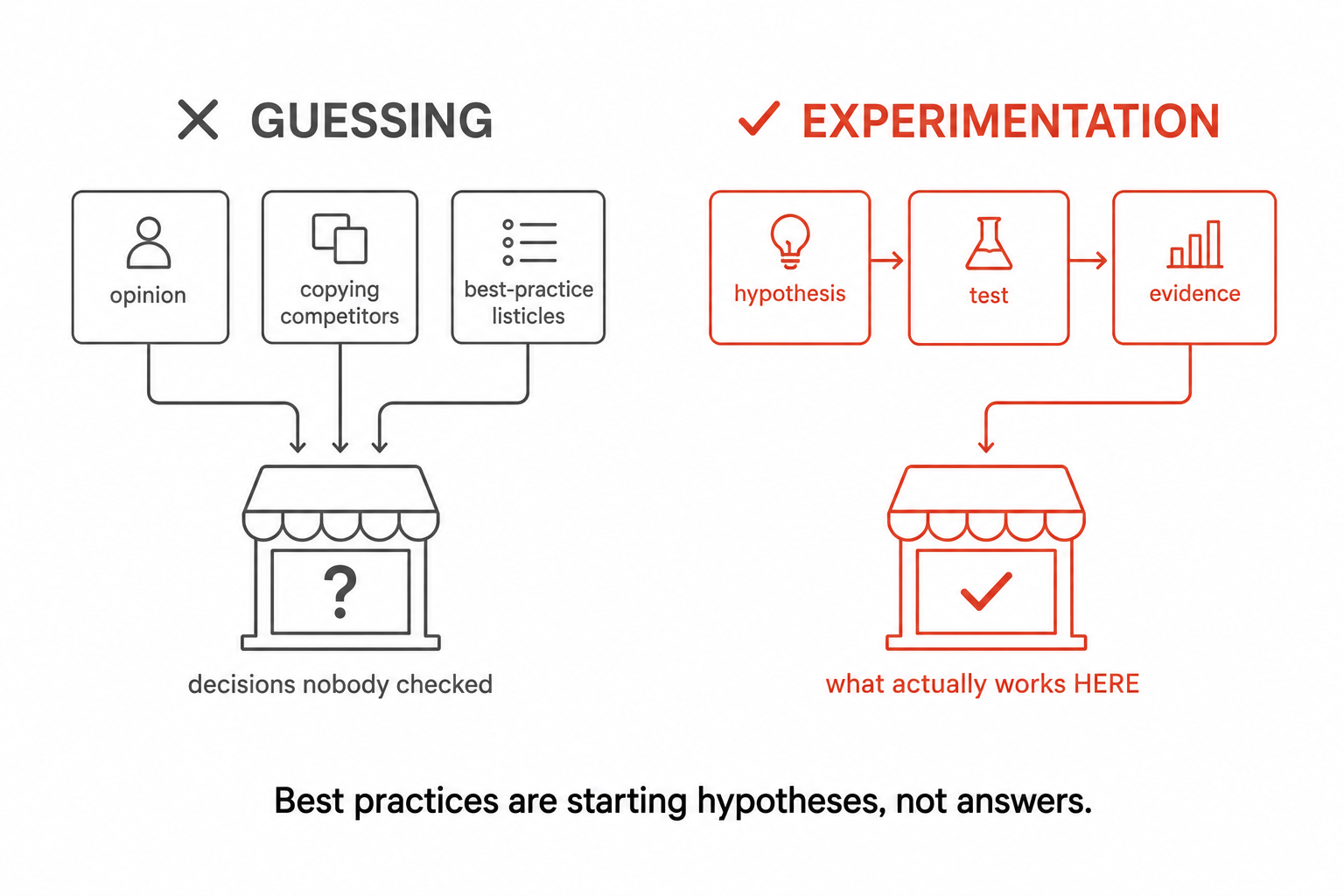
Watch how decisions get made about most e-commerce stores and a pattern appears. Someone has an opinion, the button should be green, customers want this feature, the homepage needs a video. Or someone copies a competitor, they do it, so we should. Or someone follows a best-practice listicle, the article said to, so we did. Then it ships. And at no point did anyone check whether it actually works on this store, with these customers.
The result is a store run on accumulated assumptions nobody ever tested, layers of decisions made confidently and never verified, each one an educated guess wearing the costume of a decision. Some of those guesses are right. Some are quietly costing you sales every single day, and because nobody tested them, nobody knows which is which.
Why guessing fails
The deep reason experimentation matters is that what works is genuinely unpredictable, even for experienced people. The change you're certain will help often does nothing, or actively hurts. The small tweak you'd never have bothered to prioritise sometimes wins big. This isn't because anyone's stupid; it's because customer behaviour is genuinely hard to predict, and confident intuition about it is unreliable, the more confident the intuition, often the less it's been checked.
And crucially, your customers are not other stores' customers. Best practices and competitor moves are starting hypotheses, not answers, what works for a giant marketplace selling commodities may fail completely for your store and your audience. Copying the practice without testing whether it works for you is just inheriting someone else's guess. The only way to know what works on your store is to test it on your store. Everything else is borrowed assumption.
CRO is a way of thinking, not a tactic
Here's the reframe that matters most: the common mistake is to think CRO means "we run A/B tests." That's the instrument, not the discipline. The real thing is a posture, you hold your beliefs about what converts as hypotheses, and you let evidence settle them rather than letting the loudest voice win. The A/B test is just how you check a prediction; the discipline is the willingness to be proven wrong by your own customers.
You can tell the difference easily. A team can run lots of tests and not be doing CRO at all, if they ignore the inconvenient results and ship what they wanted anyway. And a team can be doing genuine CRO thinking even with limited testing capacity, if they respect evidence over opinion and treat their beliefs as provisional. The tool is not the discipline. The discipline is intellectual honesty about what you actually know, which is less than you think.
From the HiPPO to the evidence
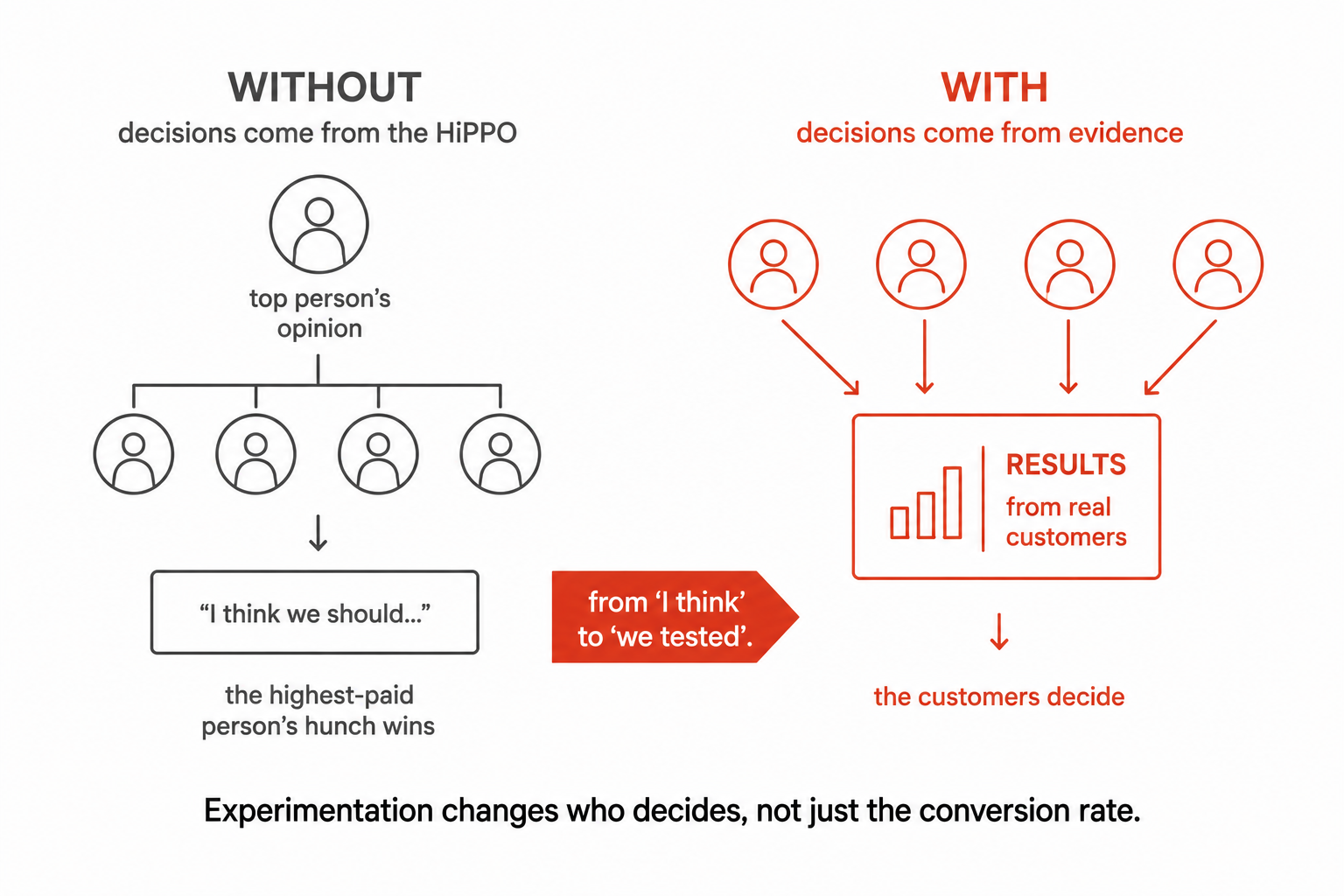
The single biggest thing experimentation changes isn't the conversion rate. It's who decides. In an organisation without it, decisions are settled by the HiPPO, the highest-paid person's opinion. The most senior person in the room has a hunch, and the hunch wins, not because it's right but because of where it sits in the hierarchy. Everyone has sat in that meeting.
With experimentation, the evidence wins instead. "I think customers want X" becomes "let's test whether customers want X," and the customers, not the org chart, settle it. That shift, from I think to we tested, is the real cultural payoff, and it's worth more than any individual test result. It ends the unwinnable opinion arguments, depersonalises disagreement (it's not your idea versus mine, it's both our ideas versus the data), and replaces status-based decisions with customer-based ones. A team that genuinely adopts that is transformed, regardless of any single test outcome.
The honest truth about test results
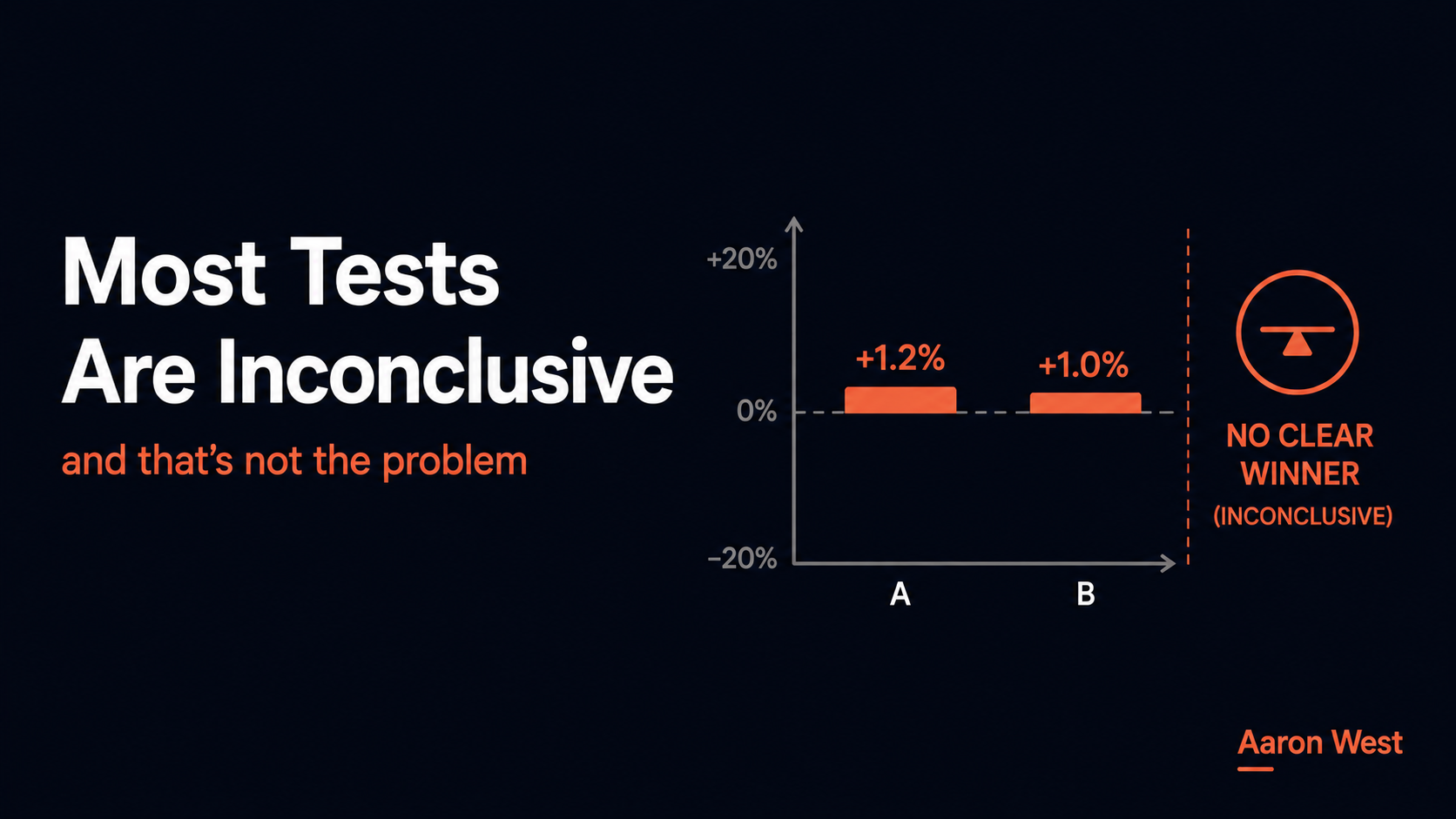
Set expectations correctly or experimentation will feel like failure: most changes don't move the needle. Most tests come back flat or inconclusive. That is not a problem, it's information, and it's completely normal. The point of experimentation was never a steady stream of wins; it's three quieter things:
- Find the few changes that genuinely help. They're rarer than the hype suggests, and worth a lot.
- Avoid shipping the ones that hurt, especially the ones you were certain about, the redesign everyone loved that would have quietly tanked conversion.
- Stop wasting effort on changes that do nothing. A flat test that talks you out of rolling out a pointless redesign just saved you the build, the risk, and the maintenance.
A flat result isn't a wasted test. It's the system working, telling you that thing you were about to invest in doesn't matter, so put the effort elsewhere. Judged honestly, "most of our tests were flat" is a sign of a healthy programme, not a failing one.
The value compounds
Individual test wins are nice, but the cumulative learning is the real asset. Over time, a testing culture builds genuine, specific knowledge of what your customers respond to, which frictions cost you sales, which reassurances unlock them, which assumptions about your audience are just wrong. That knowledge is something no competitor has and no best-practice list can give you, because it's about your customers specifically. Each test, win or flat, adds to it. What to test next gets sharper because you understand more. The wins compound into understanding, and the understanding is the moat.
What this comes down to
Most of what you believe about your store is a guess, and the value of experimentation isn't that it makes you right, it's that it stops you being confidently wrong at scale. CRO is the discipline of holding your beliefs as hypotheses and letting your customers settle them, which ends the opinion arguments and quietly replaces the highest-paid person's hunch with evidence.
Most tests won't hand you a win, and that's fine. The few that do, plus the bad ideas you didn't ship because you tested them first, compound over time into something no competitor can copy: real knowledge of what works on your store. The confidence with which people assert what "customers want" is usually inversely related to how often they've checked. So stop arguing about it. Stop guessing. Start asking the only people who actually know, your customers, and let their behaviour decide.
A few common questions
What is CRO, really? Conversion-rate optimisation is usually described as "running A/B tests," but that's the instrument, not the discipline. CRO is really a way of thinking: holding your beliefs about what converts as hypotheses to be tested rather than truths to be assumed, and letting evidence from your own customers settle them. A team can run lots of tests and not be doing CRO (if they ignore inconvenient results), or do genuine CRO thinking with limited testing (if they respect evidence over opinion). The tool isn't the discipline; intellectual honesty about what you actually know is.
Why isn't intuition or best practice enough? Because what works is genuinely unpredictable, even for experts, the change you're sure will help often does nothing or hurts, and a tweak you'd never prioritise sometimes wins big. And your customers aren't other stores' customers, so best practices and competitor moves are starting hypotheses, not answers; what works for a giant marketplace may fail for your store and audience. Copying a practice without testing it on your store is just inheriting someone else's guess. The only way to know what works on your store is to test it there.
What's the real value of experimentation? It changes who decides. Without it, the highest-paid person's opinion (the HiPPO) wins arguments by seniority rather than correctness. With it, the evidence wins, "I think customers want X" becomes "let's test whether they do," and the customers settle it instead of the org chart. That shift from "I think" to "we tested" ends unwinnable opinion arguments, depersonalises disagreement, and replaces status-based decisions with customer-based ones. That cultural change is worth more than any single test result.
Isn't it discouraging that most tests don't produce a win? Only if you measured it wrong. Most changes genuinely don't move the needle, and most tests come back flat, that's information, not failure, and it's normal. The point isn't a stream of wins; it's to find the few changes that genuinely help, avoid shipping the ones that would have hurt (especially the ones you were certain about), and stop wasting effort on changes that do nothing. A flat test that talks you out of a pointless redesign just saved you the build and the risk. "Most of our tests were flat" is a sign of a healthy programme.
You should also read:
Why Most A/B Tests Are Inconclusive (and Why That's Not the Problem)
Most A/B tests come back inconclusive, with no clear winner, and that's not a failure of the test, it's the honest and common result of testing changes that mostly have small effects. The two ways people get this wrong are peeking and stopping the moment…
Continue reading...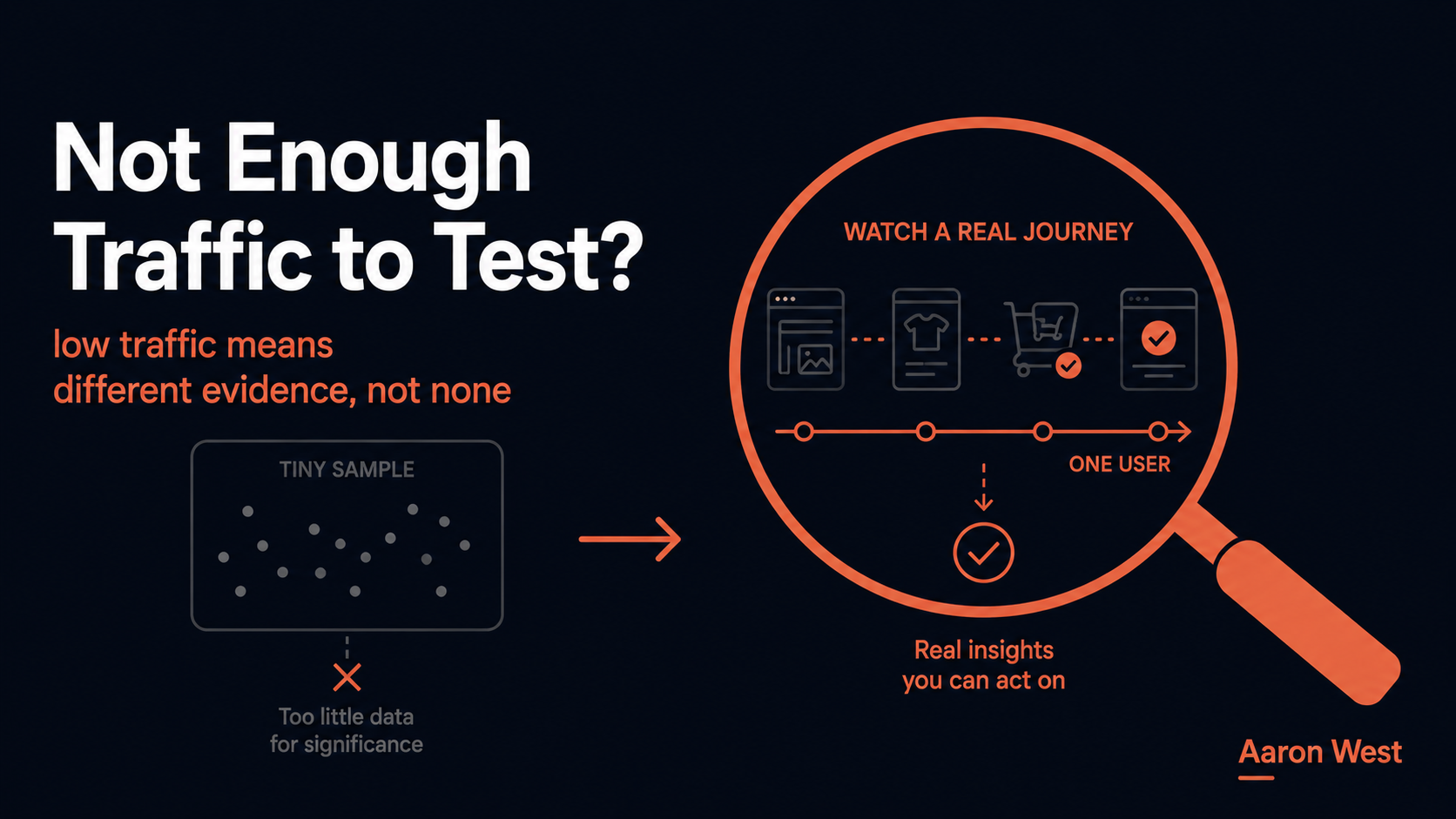
What to Test When You Don't Have the Traffic
Most CRO advice assumes you have the traffic to run clean A/B tests, and most stores don't. Trying to run statistical tests on low traffic produces confident-looking results that are really just noise, which is worse than not testing at all. When you don't have…
Continue reading...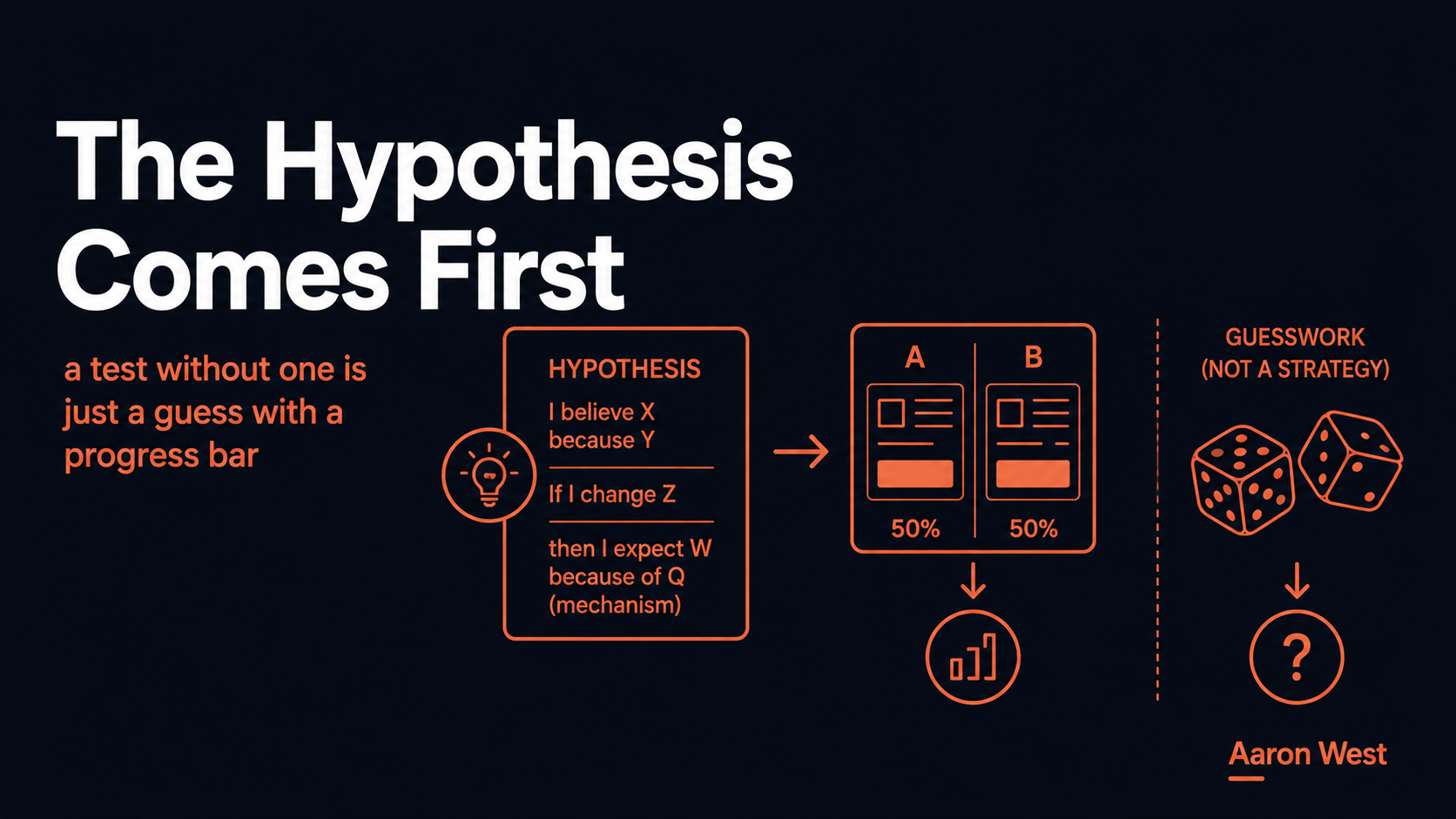
The Hypothesis Comes Before the Test: Why Just Trying Stuff Isn't Experimentation
Running an A/B test without a hypothesis isn't experimentation; it's gambling with extra steps. Without a hypothesis you can't learn anything you can reuse from the result, you just get a number you don't understand. The test isn't the experiment. The hypothesis is, because a…
Continue reading...